Prices as listed by En Route.
The retailer’s price may differ.
Bookstores, parishes, and schools:
Order direct at a discount.
- Subject
- Philosophy
- Reading lists
- The Catholic Philosophical Tradition
- Formats
- Paperback, Kindle
- Publisher
- En Route Books and Media
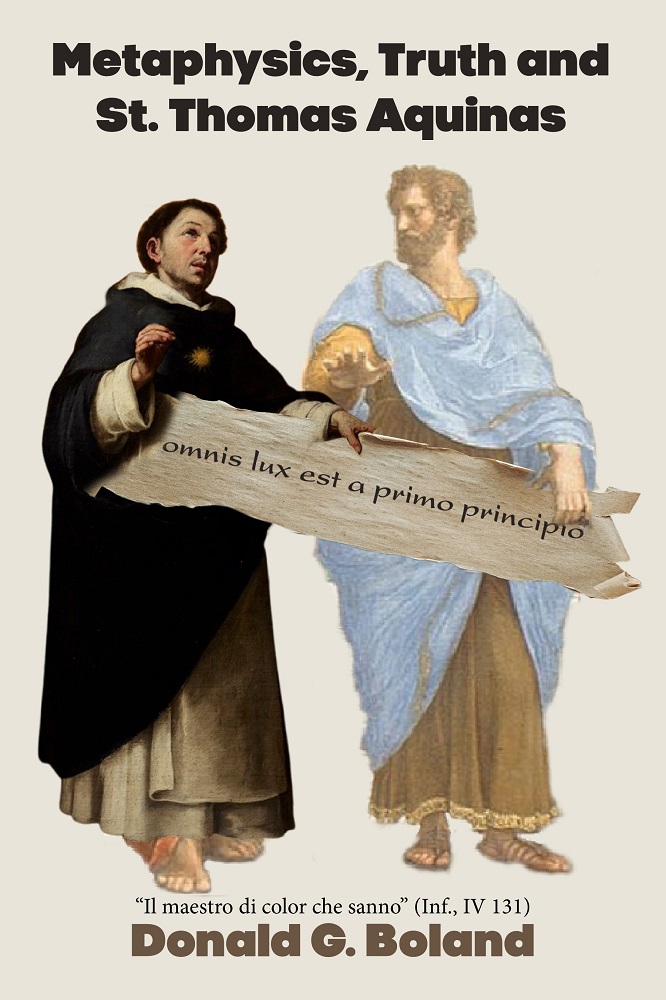
Metaphysics, Truth and St. Thomas Aquinas
In studying natural wisdom, Dr. Boland takes a look at how Aristotle defends the principle of non-contradiction, focusing on the great philosopher’s treatment of the causes that prompted the ancients to deny or doubt it. Boland then examines human knowledge and the problems raised with regard to its truth and certainty, which in essence can be reduced to a denial of this fundamental principle of non-contradiction during the revolt from reason that inevitably followed the rejection of Christian Faith and the divine authority of Christ’s Church.
Praise
Metaphysics, Truth and St Thomas Aquinas is the final book in the series of three devoted by Dr Boland to the queen of philosophical sciences, Metaphysics. In a certain respect it is the most important, for it is principally concerned to justify and defend human intellectual knowledge, all of which has its foundation in the principle of non-contradiction.
In the first part of the book Dr Boland exposes and analyses how Aristotle defended the validity and necessity of this first and self evident principle, and how he corrected the errors the ancients had fallen into about it. He quotes extensively from St Thomas’s commentary on Aristotle’s Metaphysics – providing his own translations of the original Latin to correct the bad and obfuscating English translations generally available. I believe it will be found to be most enlightening.
In the second part of the book Dr Boland shows with great clarity how the epistemological errors solved by Aristotle have reappeared under various guises in the history of modern philosophy. He begins his analysis with the universal doubt of Descartes and then examines the usual line of philosophers who followed – with special attention given to Kant. He concludes with twentieth century thinkers. The influence of the collective errors bequeathed by these historical figures has caused an almost universal scepticism along with the practical moral evils that inevitably follow.
This book provides much necessary instruction in the wisdom of Aristotle and St Thomas (teachers and students of philosophy would do well to assimilate it), and well exposes the variety of appearances the most pernicious of the errors of scepticism has taken in the history of modern philosophy (teachers and students of philosophy would do well to avoid it). I am very grateful that Dr Boland has again shared his profound philosophical wisdom and knowledge in another outstanding book.
About the Author
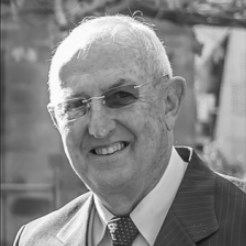
Donald G Boland Ll. B. Ph. D. is a founding member of the Centre for Catholic Studies Inc. in Sydney Australia and is one of its former Presidents. He practiced for a number of years as a lawyer having a degree in law from the University of Sydney. Over much the same time, having obtained a doctorate in philosophy from the University of St. Thomas in Rome, he has taught philosophy and law in both Catholic and secular educational institutions, such as the University of Technology, Sydney, the University of Newcastle, the Aquinas Academy, the Centre for Thomistic Studies Inc., now operating under the name of the Centre for Catholic Studies Inc., and various Catholic seminaries, such as those of the Marists and the Vincentians. His doctoral thesis was on the concepts of utility and value in economics as found in the works of Aristotle and St. Thomas Aquinas.