REVIEW BY FRANCIS ETHEREDGE
Catholic married layman, father of 11, 3 of whom are in heaven,
and an author: https://enroutebooksandmedia.com/francisetheredge/
Do we live without reflecting on whether or not God exists? Do we need a heart attack to examine our lives and live more deeply? Or are we drifting and need a conversation to lift our hearts to the Lord? Or do we want to go deeper, like the diver that has mastered the shore-line?
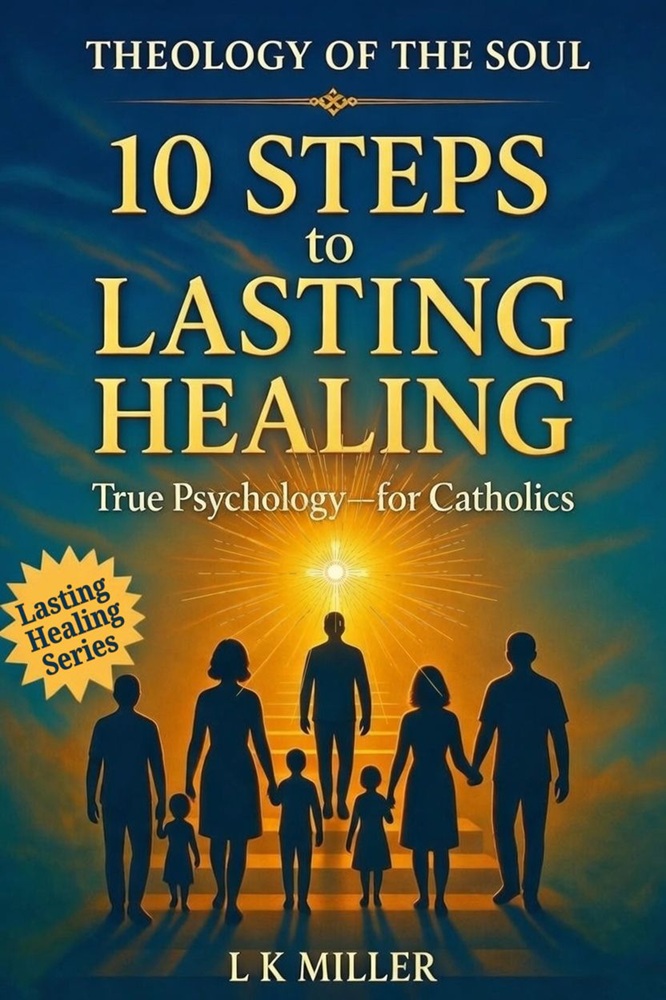
And just as a good counsellor is a help to us all, so L K Miller draws consistently on the wisdom of Archbishop Fulton Sheen. If you are not acquainted with his work this book provides, through various quotations, a good starting point for reading more of what he said and a push to finding out more about what he did. He is now called Venerable, as Pope Francis has recognised the validity of a miracle attributed to him. The miracle was of a still-born baby recovering completely after no heartbeat and not breathing for just over an hour. Lara draws, moreover, very fully, on the Scriptures and, in addition, on various people from the Christian Tradition. But whether you draw on Fulton Sheen or others, there is wisdom in ‘many counsellors’, according to the book of Proverbs 15: 22.
On the one hand, L K Miller invites us to consider how we understand the origin of what we feel and think and do. She invites us to reconsider whether we are engaging with the reality of our own reactions or living, as it were, as a victim of what does not originate within us. In addition, this is not a book without personal experience; rather, Miller intermittently and throughout the book admits her own experience of coming to a deeper and deeper healing of her own life of sin. This book, then, is not so much a “read” as a source of pondering and focusing our dialogue with Christ. Be willing to be led to the Sacraments of the Catholic Church, particularly Reconciliation and the Eucharist; and, if you already go, then this book will encourage you to go more frequently. For one of the principal benefits of this book is raising awareness of what our real relationship is to ourselves and to Christ and the many and varied ways that Miller counsels us to seek and obtain healing, where necessary, and as frequently as necessary, whether it is through a prayer dialogue with Christ or the sacraments of His Church.
This rather unusual book is probably good to read in the silence of the Church, when there is simply you and Jesus Christ in the Tabernacle or, if that is not possible, then read it with you ‘in the presence of Christ’ wherever you are. Indeed, there are many questions and sayings in this book which could be read like prompts for a courting, or married couple, to engage in dialogue. In other words, this book helps us to see that our relationship to Jesus Christ and His Church is an ongoing dialogue, and, like all relationships, it benefits from what refreshes it! Thus, this book could also be used along with regular visits to a confessor or spiritual guide. And, practically, while Miller herself has obviously been engaged in dialogue with Jesus for some time it is necessary to adopt the wisdom of St. Francis de Sales and ask, realistically, what is a suitable amount of time for me to spend in beginning this dialogue with the Lord.
Pray and beg God to make this more than a fruitful read! Whether in Lent, Advent or indeed any time of year, especially if we need help to respond more wholeheartedly to the Lord.