No Results Found
The page you requested could not be found. Try refining your search, or use the navigation above to locate the post.

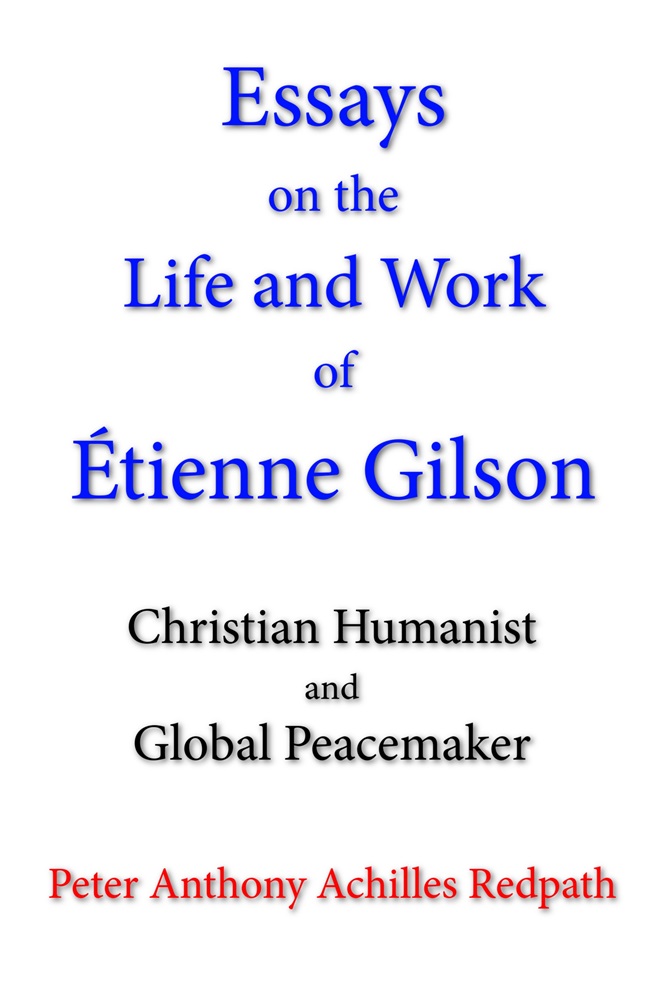
The book of essays offers a comprehensive exploration of the intellectual life of Étienne Gilson, generally considered to be the leading historian of Western philosophy. Gilson’s founding the Pontifical Institute of Mediaeval Studies (PIMS) revolutionized the study of medieval philosophy in universities worldwide and the history of Western philosophy leading up to it.
Gilson, born in 1884 in Paris, received his early education in philosophy at the Lycée Henri IV and the Sorbonne. His philosophical career took him through various teaching roles and scholarly work, with notable contributions in the study of medieval philosophy, particularly the thought of St. Thomas Aquinas. His works, such as Le Thomisme and The Spirit of Medieval Philosophy, are foundational in the integration of Christian philosophy with modern thought. Gilson’s intellectual evolution shifted from a focus on Descartes to a deep engagement with medieval thinkers like St. Thomas and St. Bonaventure, shaping his views on metaphysics and the relationship between faith and reason.
Gilson’s involvement in World War I, where he served as a soldier and a prisoner of war, influenced his philosophical inquiries, especially his reflections on humanism, freedom, and truth. Throughout his life, he engaged in intellectual debates on Christian philosophy, particularly defending the notion of “Christian philosophy” as an authentic intellectual tradition. After World War II, Gilson became involved in international educational and political efforts, contributing to UNESCO and advocating for a Catholic order in education. His later years were marked by an increased focus on existential themes, particularly through his writings on St. Augustine and Duns Scotus.
The book explores both his philosophical contributions and his role as a global intellectual peacemaker, emphasizing his belief in the integration of Christian philosophy within modern intellectual life.
Paperback: $14.95 | Kindle: $9.99
TBA
 Peter A. Redpath (retired Full Professor of Philosophy at St. John’s University, New York) is author, editor, co-editor of 22 books and many dozens of articles and book reviews. An internationally recognized scholar, since 1980 he has given over 200 invited guest lectures nationally and internationally. Among his many accomplishments, he is CEO of the Aquinas School of Leadership, LLC; former Founder and Chair of the Thomistic Studies Graduate Concentration in Christian Wisdom for Holy Apostles College and Seminary (USA); an Affiliate Scholar with the University Abat Oliba Graduate program (Barcelona, Spain). Peter is also co-founder of the Gilson Society (USA) and the International Etienne Gilson Society, the Adler-Aquinas Institute, and the Angelicum Academy and Great Books Academy homeschool programs (both founded with the help of Mortimer J. Adler); former executive editor of the Value Inquiry Book Series (VIBS) for the Dutch publisher Editions Rodopi, B.V., and special series editor for Rodopi and Brill/Rodopi. Presently, he is a member of the editorial board of Brill Publishing’s Philosophy and Religion (PAR) series, a member of the Advisory Board of the Lyceum Institute, and Officer in Charge of Medieval Christian Philosophy and Academic Liaison to the Holy See for Global Scholarly Publications. For a list of articles published on the Catholic World Report, see http://www.catholicworldreport.com/author/redpath-peter/
The page you requested could not be found. Try refining your search, or use the navigation above to locate the post.
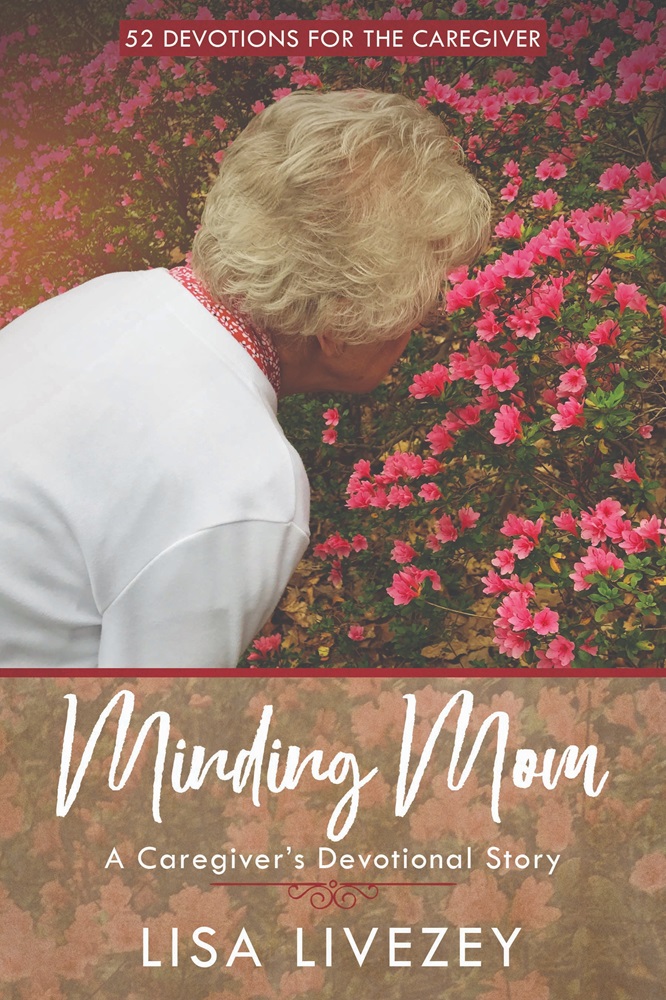
Devotional writer Lisa Livezey understands the challenges of full-time caregiving atop an already-full life. Following her father’s sudden death, Lisa was plunged headlong into caring for her mother who was battling Alzheimer’s. With wisdom and candor, Lisa pairs every-day and extraordinary caregiving moments with scriptures, prayers, and reflections. Caregivers will:

“I loved every page. I find it helped me to reflect on my last few months with Tony in a different way. Lisa’s thoughtful treatment of each situation encourages me to live in the moment more recognizing that every experience comes with eternal significance if we take the time to notice.” – Cathy Witczak, Worldwide Marriage Encounter International Leader 2009-2014
“Through scripture and thought-provoking questions, Lisa has given us a guide to reflect on God’s goodness in our most difficult, heart wrenching circumstances. Her devotional is a gift to caregivers, family members and anyone seeking solace as they give of themselves to serve another.” – Janet Lozano, Co-Founder, Heart of the Father Ministries
“This is a heart-warming, gut-wrenching (in a good way), true life story that would touch all people. Caregivers can especially relate but death touches us all so everyone could benefit by reading this book. It isn’t a one-time read either – definitely something that will be referred to often and a “go-to” in trying times for comfort.” – Ave G., who retired early to care for her mother at home
“I love the blending of scripture, reflection, and real-life observations. Lisa’s very personal and insightful view sets Minding Mom apart from other books in this genre. I highly recommend that anyone who wants to contemplate life, where they’re going, and where they’ve been, not just read this book but sit with it and let it become absorbed into their system. They will be the richer for it.” – Ben Bongers, KM, Gerontologist, author, and contributor to eldercare textbooks
 Lisa Livezey is a faith-filled devotional writer, essayist and blogger from the Philly suburbs. She contributes to Guideposts publications, publishes weekly photo devotions, and serves on the executive team at Heart of the Father Ministries. On summer weekends, Lisa sometimes can be spotted sailing the Chesapeake Bay alongside her husband. Visit Lisa online at lisalivezey.com
The page you requested could not be found. Try refining your search, or use the navigation above to locate the post.
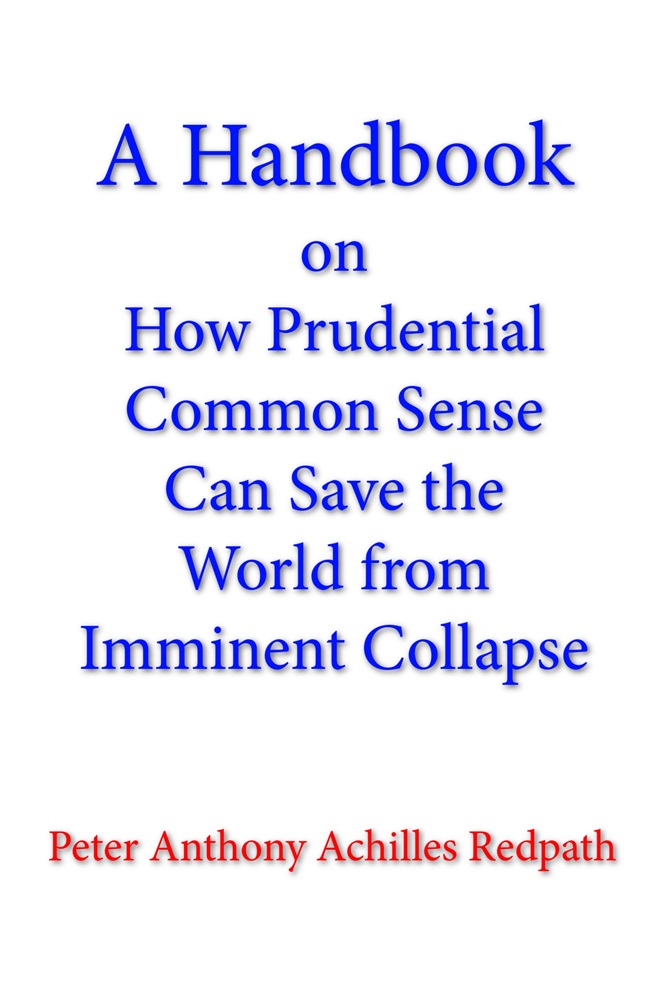
Ever since the start of the twentieth century, and especially toward the rise and end of World War II, some Western intellectuals started to recognize that something was radically wrong with modern Western civilization and culture, that these appeared to be in their twilight years. Starting in the 1930s, these thinkers began to diagnose the problem in some detail. In doing so, in one way or another, they tended to arrive at the same conclusion: outside of the intellectual order of what, even today, Westerners call ‘science’ or ‘physical science,’ the West had largely lost its conviction that any truth or wisdom existed. Outside this narrow intellectual sphere, most Westerners had largely turned into skeptics and sophists.
While many contemporary Westerners tend to view the West’s present decline to be due to a loss of faith, these intellectuals disagreed. They attributed this decay to a loss of logos, of reason, especially of wisdom and prudence in touch with sense reality and common sense.
Belief has not been something in decline in the modern West, or world in general. It has existed, is, everywhere. Even ‘science’ is supposed to be simply one more ‘belief system,’ or ‘feeling,’ supposedly superior to other forms of belief or feeling because it is an ‘Enlightened,’ not a backward, ‘religious belief system’ or ‘feeling.’ The problem with the modern world is not that we believe in nothing. It is that we believe in everything except religion in touch with commonsense reality. We have lost our understanding of the range of reason and have largely turned into skeptics and sophists: secularized fideists.
Anyone familiar with Western intellectual history knows: (1) metaphysical principles and the moral and intellectual virtue of prudence found civilizations and that, based upon these principles, civilizations generate cultures of different kinds; and (2) once cultures lose their conviction about the truth of their founding principles of metaphysics and prudence, they decay from within. Hence, the existence of strong metaphysical and prudential commonsense convictions generates civilizations, and skepticism and doubt about them kill civilizations.
Realizing these truths about civilizational and cultural experience, some Western thinkers of the last century recognized that the West needed a renaissance of metaphysical and moral reason to bridge the gap between wisdom and science that appeared to be the root cause of the skeptical and sophistic mindset that, for centuries, has been causing the West progressively to rot from within. Unhappily, having spent most of their lives diagnosing the problem, these scholars did not have time to do what, with their help, I have tried to do in this collection of essays—write the full story they had sought to tell.
Paperback: $14.95 | Kindle: $9.99
“Practical, thought-provoking, ‘on the mark’, within a philosophical context!!” – Angela Puglisi, Professorial Lecturer, Georgetown University
“I find that it is opening new inroads for me into Dr. Redpath’s thinking about organisational wholes, and about his customary method of dividing into genus and species (which I am beginning to appreciate as a way of differentiating in order to relate). I especially find that anchoring all of these concepts into Dr. Redpath’s lived experience makes that much difference!” – Luigi Rossi, Assistant Professor (Maître de Conférences) of Education at the Catholic University of the West in Angers (France), and a member of the scientific committee of the “John Henry Newman” Chair at the Catholic University of Ávila (Spain)
Peter A. Redpath (retired Full Professor of Philosophy at St. John’s University, New York) is author, editor, co-editor of 22 books and many dozens of articles and book reviews. An internationally recognized scholar, since 1980 he has given over 200 invited guest lectures nationally and internationally. Among his many accomplishments, he is CEO of the Aquinas School of Leadership, LLC; former Founder and Chair of the Thomistic Studies Graduate Concentration in Christian Wisdom for Holy Apostles College and Seminary (USA); an Affiliate Scholar with the University Abat Oliba Graduate program (Barcelona, Spain). Peter is also co-founder of the Gilson Society (USA) and the International Etienne Gilson Society, the Adler-Aquinas Institute, and the Angelicum Academy and Great Books Academy homeschool programs (both founded with the help of Mortimer J. Adler); former executive editor of the Value Inquiry Book Series (VIBS) for the Dutch publisher Editions Rodopi, B.V., and special series editor for Rodopi and Brill/Rodopi. Presently, he is a member of the editorial board of Brill Publishing’s Philosophy and Religion (PAR) series, a member of the Advisory Board of the Lyceum Institute, and Officer in Charge of Medieval Christian Philosophy and Academic Liaison to the Holy See for Global Scholarly Publications. For a list of articles published on the Catholic World Report, see http://www.catholicworldreport.com/author/redpath-peter/
The page you requested could not be found. Try refining your search, or use the navigation above to locate the post.
“Husbands, love your wives, as Christ loved the church and gave himself up for her” (Eph 5:25).
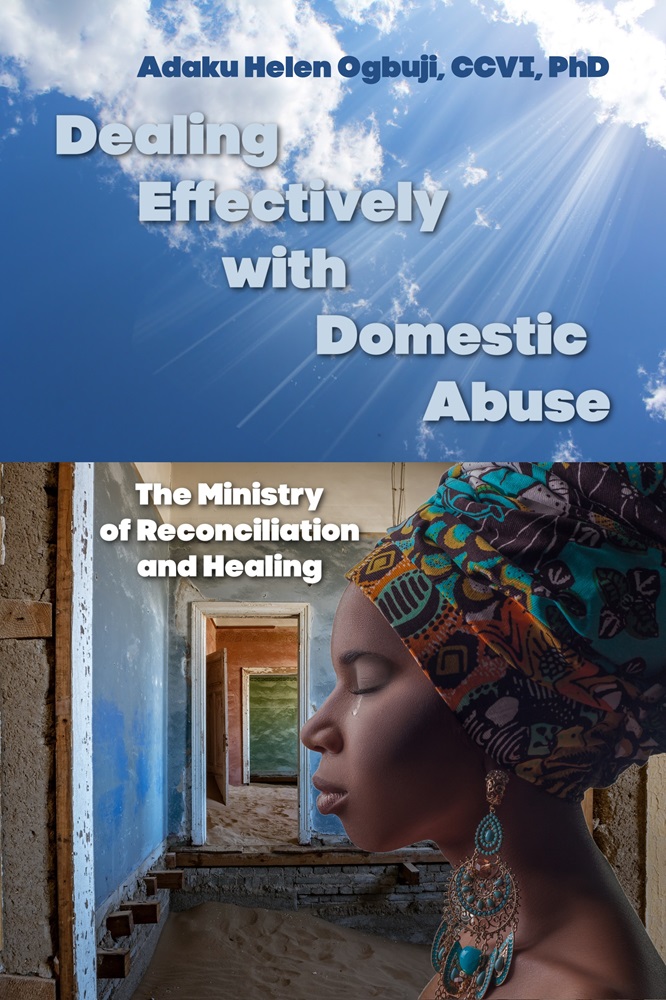
This work examines the different faces of violence in our society and how a woman’s body is sometimes treated as an object to be used. When one gender dominates and oppresses another, then the system needs to change. Following this line of argument, the African patriarchal society needs transformation.
Many women have suffered abuse at home and in society. Often removed from decisions that affect them, these women live with false stories of violence at home, suffering psychological, sexual, physical, cultural, and economic abuse. Through the grace of God, the reconciliation process starts with the victim of violence. However, the Church must create certain local conditions before reconciliation can take place, including interpreting and using specific gospel passages that refute domestic abuse, emphasizing the recent documents of the Church that promote the dignity of women and family life values, and forming parish support groups to allow victims of abuse to experience healing through rituals, prayers, the sharing of stories, seminars, and workshops.
The recommendations and methods enumerated in this work can be effective and fruitful in giving voice to the voiceless, liberation to the oppressed, and healing to the wounded women seeking redemption from their tragic stories.
Paperback: $14.95 | Kindle: $9.99
“Lost in the political and economic challenges/upheavals and violence that threaten society at the national and global scenes, most people seldom look down and around them to perceive a worse crime that scourge humanity – Domestic Violence. Sr. Helen Ogbuji in her beautifully and lucidly articulated book draws our attention to the ravages of this monster that dwells among us. Dealing Effectively with Domestic Abuse very importantly is largely a fruit of the author’s ministerial experience that does not end at exposing the cruelty of Domestic Abuse in Africa but proffers universally praxis-based solutions. The application of the theological concept of reconciliation is uniquely ad rem. The thrust that genuine reconciliation precedes true healing is empowering to abused persons and transforming to the social structures that bolster violence. Dealing Effectively with Domestic Abuse is a handy tool for all in ministry, both ordained and non-ordained. It is a ‘must read‘ for all men and women in relationships especially those facing abuse in their relationships. As an advocate of empowerment and emancipation of abused persons, I found the book enriching.” – Rev. Fr. Dr. Henry Ogbuji, author of From Where Shall Come Our Help? The Lament of Abused Persons
“Violence in our society is the antithesis of what it means to be human, and to live like one. Sr. Adaku, in this well-researched and finely articulated book, adds to the moral voice of awareness, caution, and solution. I do recommend this book to those who seek enlightenment and desire to stop domestic violence.” — Rev. Udo Ogbuji, author of The Peace I Know
“Sr. Adaku’s work in this text is a testimony of hope and compassion. Grounded in faith, she believes in the power of the Risen Christ to undo all the wrongs of violence inflicted on the innocent. The book seeks to be a concrete expression of God’s love directed towards those most in need of healing from domestic violence.” – Sr. Collen Mary Mallon, OP, PhD
“This book is appropriate for families who are finding it difficult to come out from their debased life of hatred, violence, and unforgiving heart… It is valid for formators, educators, and those who journey with the vulnerable people as it offers relevant perspectives for an approach to interpreting the domestic life situation in general and the steps to move towards healing and reconciliation. I recommend this book to everyone because we all come from families.” – Sr. Dr. Elizabeth Ngozi Okpalaenwe, MSHR
“A refreshing and reshaping text. Sister Helen invites carefully but energetically to compassionate relations among Christians–the core of our faith: forgive as you breathe. Must read for all concerned leaders.” – Rev. Dr. Emmanuel Foro, SJ
 Sister Adaku Helen (Helena) Ogbuji, CCVI, PhD, belongs to the Congregation of the Sisters of Charity of the Incarnate Word, Houston, Texas. She is an author of several books: Dealing Effectively with Domestic Abuse: The Ministry of Reconciliation and Healing; Influence of Childhood Experiences on Faith Development: A Journey Towards Wholeness; Out of the Lips of Infants, Wisdom Comes: Retelling the Bible Stories. Recently, she edited and co-authored Incarnational Spirituality: Embodying the Love of the Incarnate Word. She holds a master’s in Theology, Divinity and Psychology and a PhD in Counseling Psychology. Presently, she is the Formation Director and the Novice Director in their formation house in St. Louis, Missouri, USA.
The page you requested could not be found. Try refining your search, or use the navigation above to locate the post.
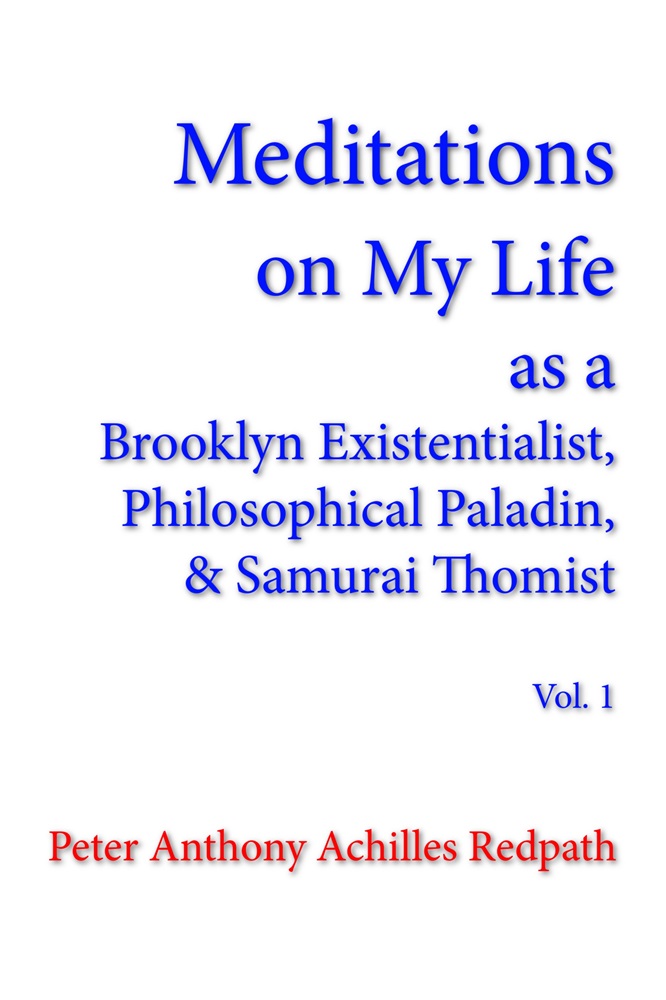
An autobiography written as a pedagogical aid to help listeners and readers intellectually grasp how Peter Anthony Achilles Redpath came to arrive at his unusual way of viewing philosophy and science and their relationship to each other.
Paperback: $14.95 | Kindle: $9.99
“I’ve been sharing a few of Peter Redpath’s Meditations with several of my undergraduate students. They are delighted to hear of a mobster discovering a new moral insight about his imprudence in having had an adulterous affair with his wife’s best girlfriend. Even gangsters and professional politicians want to be happy. Redpath communicates serious philosophical thought with a light anecdotal tone. Witty, engaging, and delivered in three- or four-page installments, these forty meditations each last one attention-span. Redpath introduces us to some very interesting people—Thomas Aquinas and Carlo Gambino, for example. Even the chapter headings catch our attention: “How ‘Augustinian-Sicilian, Political Prudence’ is an Essential First Principle of the Colorful and Unconventional Behavior of ‘Brooklyn Existentialist’ Friends from My Youth.” This unacademic and funny collection of essays turns out to be philosophically informative and free from stodginess.” – E. M. Macierowski, Benedictine College
“What has Brooklyn to do with Athens? A good deal, it turns out. In this intimate account, Professor Redpath teaches us what philosophy is really all about—and how even the “Wise Guys” he grew up with demonstrated more common sense than Descartes, Rousseau, Kant, or Hegel.” – Eduardo Bernot, Holy Apostles College and Seminary, Aquinas School of Leadership
“In weaving together his personal biography with his intellectual development, Peter Redpath offers a colorful blend of inimitable characters and philosophical meditations, which led him to define himself as a Brooklyn Existentialist, a Philosophical Paladin and a Samurai Thomist. Growing up in Dyker Heights, Brooklyn, Redpath interacted with a ‘rogues gallery’ of Cosa Nostra figures, some lovable and others deadly. It was there that he first learned the uncommon common sense of Brooklyn Existentialism, which matured into his practice of philosophy as a Paladin – one who battles for an honorable cause – and as a Samurai Thomist, a member of a professional class of noble fighters after the fashion of St. Thomas Aquinas. Redpath’s Thomism is unconventionally scholastic as it focuses on organizational psychology and leadership, aiming to elucidate what is genuinely good leadership, so rare in today’s politicized, declining culture. This autobiography confirms that Redpath’s career is truly that of a noble, patriotic, and hopeful ‘knight without armor in a savage land.’” – Tom Michaud, Retired Dean of School of Professional Studies, West Liberty University, Wheeling, West Virginia, and author of After Justice: Catholic Challenges to Progressive Culture, Politics, Economics and Education
“Cleverly presented for widespread readership as a short series of wise and witty musings about the nature of philosophy by a street-smart cultural critic like Eric Hoffer, Peter Redpath’s Autobiography is much more than this. Calling upon his early childhood Brooklyn upbringing surrounded by organized crime bosses and their children (who were personal friends of his and his family) from whom he acquired many philosophical truths in the form of practical and productive common sense, Redpath extends his reflections to subsequent, philosophical truths he learned from lifelong experience working with students and colleagues ranging from sociopaths to saints. Doing this causes him completely to reinterpret the nature and history of philosophy and every species of higher learning whenever and wherever it exists. By nature, wherever and whenever they live, Redpath argues all somewhat psychologically healthy human beings are convinced that: (1) their lives are providentially guided by a prudent, commonsense, natural inclination to live a life of perfect virtue—a life of uncommon common sense; (2) all species of higher learning and cultural and civilizational development essentially grow out of this natural desire; (3) if this natural desire disappears from an individual, culture, or civilization that individual, culture, or civilization becomes sociopathic, and commits suicide. Peter Redpath’s Meditations are written in the form of a literary thriller that could easily become a best seller and produce an Oscar-winning movie. The truths they contain constitute a primer about how to survive and thrive in a contemporary world that is increasingly losing its common sense and going mad. For this reason alone, it is well worth reading.” – Dennis Bonnette, Retired Chairman, Philosophy Department, Niagara University, New York, and author of Rational Responses to Skepticism: A Catholic Philosopher Defends Intellectual Foundations for Traditional Belief
Peter A. Redpath (retired Full Professor of Philosophy at St. John’s University, New York) is author, editor, co-editor of 22 books and many dozens of articles and book reviews. An internationally recognized scholar, since 1980 he has given over 200 invited guest lectures nationally and internationally. Among his many accomplishments, he is CEO of the Aquinas School of Leadership, LLC; former Founder and Chair of the Thomistic Studies Graduate Concentration in Christian Wisdom for Holy Apostles College and Seminary (USA); an Affiliate Scholar with the University Abat Oliba Graduate program (Barcelona, Spain). Peter is also co-founder of the Gilson Society (USA) and the International Etienne Gilson Society, the Adler-Aquinas Institute, and the Angelicum Academy and Great Books Academy homeschool programs (both founded with the help of Mortimer J. Adler); former executive editor of the Value Inquiry Book Series (VIBS) for the Dutch publisher Editions Rodopi, B.V., and special series editor for Rodopi and Brill/Rodopi. Presently, he is a member of the editorial board of Brill Publishing’s Philosophy and Religion (PAR) series, a member of the Advisory Board of the Lyceum Institute, and Officer in Charge of Medieval Christian Philosophy and Academic Liaison to the Holy See for Global Scholarly Publications. For a list of articles published on the Catholic World Report, see http://www.catholicworldreport.com/author/redpath-peter/
The page you requested could not be found. Try refining your search, or use the navigation above to locate the post.