No Results Found
The page you requested could not be found. Try refining your search, or use the navigation above to locate the post.

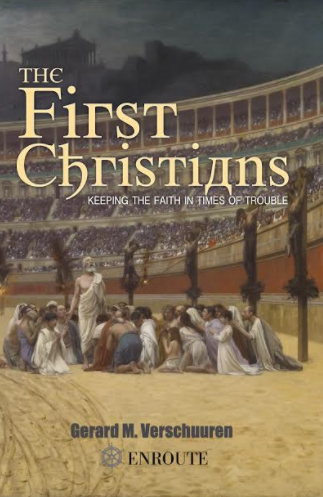
In this book, we speak about these first Christians mainly through the people who gave them a voice and a compass: the Church Fathers. They were their leaders and their teachers, heirs to the apostles. They were also the ones to tell us, present-day Christians, about the deep Faith of the first Christians. They told us how these Christians could keep the Faith in times of trouble—even in very tumultuous times, when they were constantly besieged from two sides: by prosecution from without and by heresies from within. The Church Fathers kept their flock together and kept them on the right path. We can only understand the Church Fathers if we understand them as fathers who deeply cared about the newborn Church as if it were their own family. They are Fathers with a “pedigree.”
Verschuuren has tried to let the Church Fathers speak for themselves, as much as possible. To do so, he used a translation of their words that is easily accessible on the Internet, so readers can check the accuracy and the context in which these words were spoken and written. This translation may not always be smooth, and the way the Church Fathers expressed themselves may not always be clear to modern ears, but their words deserve serious attention, for they are the pillars on which the Church has built what Catholics believe—now and then. They are a vital part of our history and tradition, dating back to Jesus Christ himself.
Paperback: $18.99 | Kindle: $9.99
“This book should be in every home, offering every family the opportunity to learn more about how our Church was born and how she developed her core beliefs. The author wrote a very informative book that gives us a deep insight into what the early Church Fathers taught us about who Jesus Christ really is. The author has a true gift of laying out positions quickly with a few strokes of the pen. Easy to read, this book is full of insights and apt quotations – a real gift to Catholics. Buy it and read it.” — Fr. C. John McCloskey, STD, Former Director of the Catholic Information Center of the Archdiocese of Washington, Research Fellow at the Faith and Reason Institute, Washington, D.C.
“Many of us wish we knew more about the early Church Fathers but we are not scholars of Church history.
Here is an excitingly readable book with great quotations from the Fathers in context of the troubles of their times. It will give you courage to read how the Church survived all those heresies, as we believe today that the Church will survive our troubles. I recommend it as a book that will benefit college students, thoughtful adult Catholics, and all defenders of the faith.” — Ronda Chervin, Ph.D., A Jewish convert to Catholicism, Professor of Philosophy, writer, and Catholic speaker
“Verschuuren ably sets forth the often bewildering struggles of the early Catholics to understand and precisely articulate the deepest truths of our faith. He accurately and yet concisely presents an immensely helpful portrait of those times. The book is sure to remain a great resource for all who seek to understand the early Church. An excellent book. A great summary.” — Msgr. Charles Pope, Our Sunday Visitor Columnist and blogger, Pastor at Holy Comforter – St Cyprian Parish, Washington, D.C.
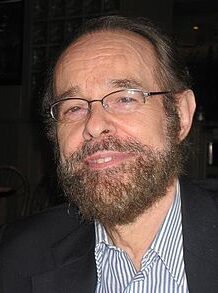
Gerard M. Verschuuren is a human geneticist who also earned a doctorate in the philosophy of science. He studied and worked at universities in Europe and the United States. Currently semi-retired, he spends most of his time as a writer, speaker, and consultant on the interface of science and religion, faith and reason.
Currently, while semi-retired, he writes about issues at the interface of
All his books can be found at: www.where-do-we-come-from.com
The page you requested could not be found. Try refining your search, or use the navigation above to locate the post.

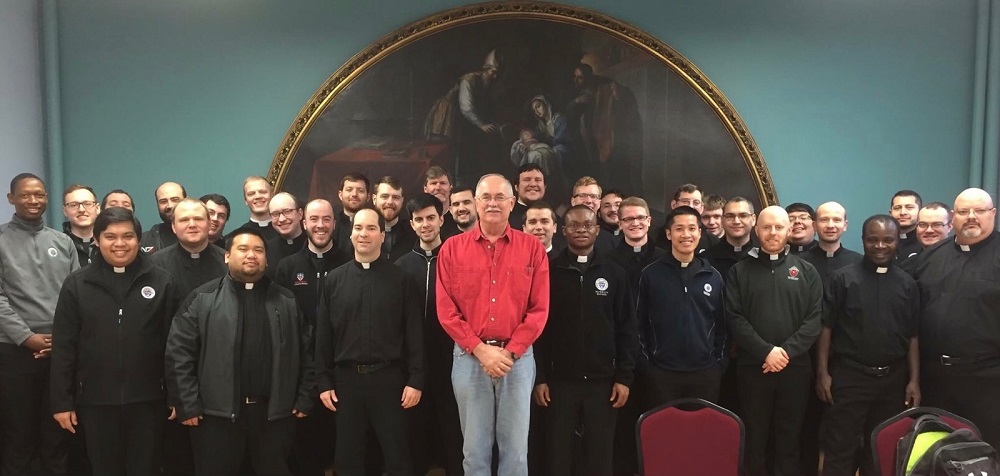
Prof. Brinda, pictured here below with his students at Mundelein Seminary in Chicago in February, 2017, may be reached at mikebrinda5@gmail.com.
Paperback: $22.95 | Hardback: $34.95 | Kindle: $9.99
WCAT Radio Interview of Michael A. Brinda on the “I Thought You’d Like to Know Show.”
Listen to “Michael Mahfood interviews Michael Brinda, author of “Parish Management and Operations: The Buck Stops Here”” on Spreaker.
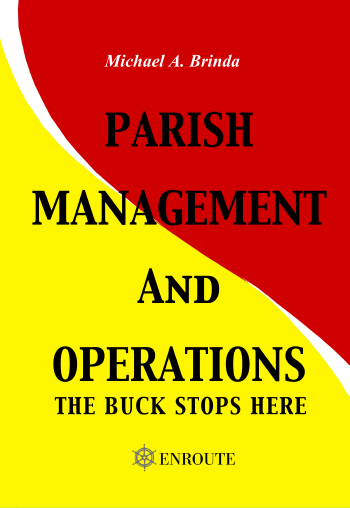
“Michael Brinda’s Parish Management and Operations: The Buck Stops Here is an excellent contribution to our work in parish ministry. It provides useful tools based upon sound principles. It will also be a help to me in my own teaching of pastoral planning to current and future ministers. For those looking for a practical guide on church operations, it is a must-have book!” – Michael Castrilli, author of Parish Finance: Best Practices in Church Management (Paulist Press, 2016)
“Do you want to have a Parish that is ON FIRE for the Lord? If you do, and if you are in any way part of the workings of the Parish, I have a book for you.” – Click here for the full review by Deacon Marty McIndoe
“This book is the greatest book on management I have ever read. It’s good for any field. Filled with wisdom you will not find anywhere else.” – Dr. Sebastian Mahfood, OP, Vice-President of External Affairs, Holy Apostles College & Seminary, Cromwell, CT
“It’s too easy to use being spiritual as a reason for neglecting the basic principles of human management and organisation within parishes. Using a conversational, accessible style, and drawing on his extensive business experience, Michael Brinda applies the practical to the spiritual in a book which anyone interested in successful parish management should read. Not always comfortable because it challenges assumptions which may have deep roots, this book will give structure and process to the complex task of making church, or indeed any Christian organisation, effective.” – David Strachan, Former Parish Minister, Managing Director, Tern TV
Review by Archeparch of Asmara and Metropolitan of Eritrea, East Africa, Abune Menghesteab Tesfamariam, MCCJ, 1/17/2018
Michael A. Brinda’s book on Parish Management Operations deals with the foundational principles of effective pastoral work in a given Parish. It aims at getting better results by avoiding the persistence of a broken culture.
He proposes that using successful business principles without becoming business-like is the way to an effective and successful parish management. This, of course, is worth the try. Identifying the presence of different gifts, needs and sharing responsibilities (delegating) in the parish is the starting point for such successful Parish Management Operations. He writes,
“Culture is the force that animates and motivates people, thereby creating a correct working environment and now bringing us to this important additional insight: it is a derivative of the correct culture that provides the PMO administrator with the foundational framework for accurately measuring all results.”
When this does not take place, in the long run culture becomes weighty bureaucracy; hence, instead of helping PMO it becomes a hindrance if not a deviation to it. It becomes a “broken culture”, resistant to any novelty.
Michael Brinda’s effort to bring new and creative initiative is therefore most welcome. I would like to congratulate him for his commitment to the improvement of pastoral methodology. It is sure that many people of our time will make the best use of such a proposal and benefit from its practical suggestions.
Review by Deacon Marty McIndoe, Diocese of Rockville Centre on Long Island, NY, 1/17/2018
In the book of Revelation (3:15-16) Jesus tells the church at Laodicea “I know your deeds, that you are neither cold nor hot; I wish that you were cold or hot. So because you are lukewarm, and neither hot nor cold, I will spit you out of My mouth.” In my travels I have seen many Catholic churches and there are very few that really seem “hot”, even fewer that seem “cold”, but many that seem “lukewarm”. If you are currently ministering in a church that is lukewarm, or perhaps we should say, mediocre, and you are content with that mediocrity, then this book is not for you. However, if you want a church that is hot, or exemplary or superior, then this is the book for you. I would go so far to say that this book could lead to a totally changed Church worldwide. Unfortunately too many people are leaving the faith and many of our parishes are suffering. This book could stop that exodus and actually help to bring people back.
The author, Michael A. Brinda, combines his obvious business management skills with a deep faith that the Church is called to serve God’s people. He tells us that we must serve God’s people in an exemplary way. There is no room for mediocrity in the Church. This involves all people in all ministries in the Church. We, lay or ordained, are all called to superior service. Thus this book is not just for pastors. It is for anyone in a leadership/ministry role in the parish. There is no doubt that the ways of the pastor most influence the culture of the parish and it is extremely important for all pastors to read this book. I have worked in parish leadership ministry for over 40 years, 37 plus of them as an ordained deacon. This book changed my thoughts on how a parish should be managed.
At the very heart of the author’s message is the idea that each parish needs a good Parish Management person who is trained in how to bring about exemplary, not mediocre, ministry from parish personnel. He believes, rightly so, that we need to look at the culture of the parish (which probably has been formed and perpetuated for many years) and that you cannot try to change this culture, but that you must kill it and then install a new culture. If this seems difficult to you; it is. However, the author gives us many tools to help bring this about. I was very impressed by the tools that he gives us. There is no doubt that this hard work will bring about what God calls us to be and do. Using the words of the author, “And why do we bother with this process? As always, so that we can serve greatly those we are called to serve. If something were worth doing at all, why wouldn’t it be worth doing in a superior way? Are the barriers to superior performance too tough and too high for you overcome? No. Never.”
I received my degree in Business Administration – Management and worked my entire career in management and I can tell you that the tools and wisdom given by the author in this book are exemplary. I am also an ordained deacon for 38 years now and have worked even more than that in parish ministry. This book is not just a book written by a businessman to apply to the Church. It is written by a businessman who has a deep faith and knows that the Church is called to use all of its resources in an exemplary way to spread the Good News and to serve the People of God. The Church is in dire need of this book.
The good news is that this book is well written and easily read. Putting what it says in to practice will be difficult, but all of us know that you can’t accomplish anything great without hard work. Throughout the book, the author gives us numerous quotes from a wide variety of individuals from spiritual writers to business writers to pop culture individuals. He makes the book an interesting read. I was really disappointed when it ended. I wanted more. If you are in any type of parish ministry, especially leadership roles, this book is for you. Do yourself a favor and read the book. It will benefit you, the Church and the building of the Kingdom of God.
Review by Richard S. Meloche, Ph.D., Director of the Tulsa Theological Institute in the Diocese of Tulsa
There is a very important dictum in orthodox Catholic theology that maintains that ‘the higher never negates the lower’. We see this dictum, for example, governing our understanding of the soul’s relationship to the body, correcting our thought on the relationship between the two natures of Christ, and helping us grasp how an act of mercy is related to, and perfective of, justice.
Unfortunately, today, this principle – whether found in lofty speculative thought or in its practical application -, is often violated. In fact, it may be argued that the eclipsing of this principle is at the root of many of the ailments plaguing our culture and the Church.
As such, Professor Brinda’s book is a welcomed correction and proper application of this dictum in the area of parish management and operation. Brinda rightly argues that the best practices and truths found in effective business management models are not at odds with the truths found in the Gospel. Rather he maintains that it is only when these two come together, in a mutually enriching way, that the current malaise and ineffectiveness in parish culture and management will be overcome.
Brinda’s text thus provides an accurate assessment of the current crises in parish management and operations and a practical, no-nonsense guide of overcoming the problem by creatively conjoining the wisdom of the Catholic intellectual and spiritual tradition with the art of a highly effective, holistic, system of parish management. Brinda’s book is a must read for all who are interested in revitalizing parish life.
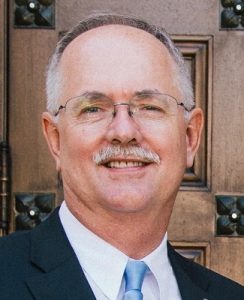 Michael Brinda founded New Horizons Computer Learning Centers (www.newhorizons.com) in 1982, started franchising around the world in 1992, and sold New Horizons to a public company in 1994.
Prior to founding New Horizons, Michael serviced and taught mainframe and mini-computer technology worldwide for Sperry Univac. He was an Ernst & Young 1994 Entrepreneur of the Year award winner.
Michael is currently active in Kairos Prison Ministry, has taught RCIA and has conducted Communion Services in prison. He previously worked for four years as a parish business manager in a large, multi-cultural parish. He is a speaker at Cursillo, Kairos, and Legatus.
Michael’s specialties include building worldwide enterprise, entrepreneurship, leadership, management, franchising, sales systems, marketing, technology, and strategy.
Michael holds a Bachelor of Arts in History in the Social Sciences and a Master of Arts in Pastoral Studies, Summa Cum Laude, and is a Doctor of Humane Letters, Honoris Causa – from Holy Apostles College & Seminary, located in Cromwell, CT. http://www.holyapostles.edu
Michael has been married 44 years to his wife, Kathy, and has three children and five grandchildren.
The page you requested could not be found. Try refining your search, or use the navigation above to locate the post.
Interested in how this happened?
“Catholic Ministry Formation Enrollment: Statistical Overview for 2017-2018,” Center for Applied Research in the Apostolate, p.1)
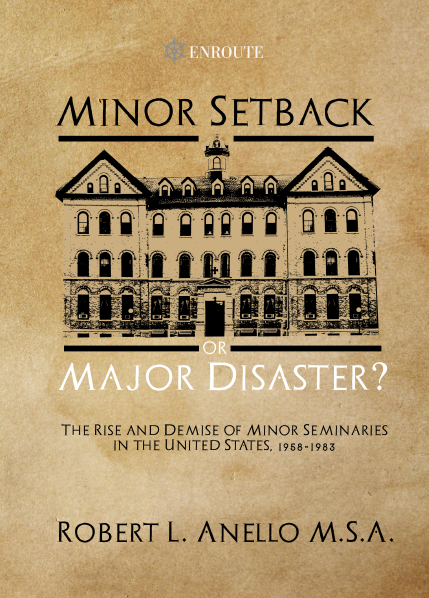
Minor Setback or Major Disaster presents the history of minor seminaries from the concept’s inception following the sixteenth-century Council of Trent’s mandate for a new training method for the Catholic priesthood up to the present. It describes the function and purpose of the “minor seminary,” which initially corresponded to the four high school and two junior college years a young man preparing for the Catholic priesthood would participate prior to his six years at a “major seminary.” It focuses on the unprecedented growth in youthful vocations to the priesthood beginning in the mid-1950s, when teenage boys in the U.S. filled minor seminaries to overflowing, and the concomitant building boom in both minor and major seminary facilities. It describes in detail the seemingly inexplicable decline that began less than a decade later. The historical part of the study concludes in the late 1980s, by which time most minor seminaries – now high school and college seminaries – had closed. This study analyzes the external context of minor seminaries: Catholic boys’ and their parents’ values, and how those values influenced priesthood vocations. The internal context of minor seminaries examines the growth and development of minor seminary pedagogical practices. Supporting the analytical narrative are nineteen figures presenting demographic and enrollment data. Through eight case studies, it postulates causes for the near-total extinction of minor seminaries.
What differentiates this study from other studies on the subject of priestly and religious vocations is that there are no “others.” No critical history on this topic exists, which has given commentators over the past half century free license to speculate on causes for the decline in priesthood and religions vocations. As CARA Senior Research Associate Mary L. Gautier, Ph.D., describes it in the book’s Foreword, “Robert Anello systematically presents here an alternative scenario to the common assertion that Vatican II killed off vocations to the priesthood and religious life. Through careful examination of the existing available research of that time period, combined with the CARA statistics that document the trend, this book makes a compelling case that the seeds of the demise of minor seminaries were sown a generation before Vatican II and were already having an impact on vocations by the time Vatican II was set in motion.” Noted Church historian and Professor of History at Marquette University, Fr. Steven Avella, Ph.D., concurred with Dr. Gautier, observing, “This exhaustively researched book tells the fascinating story of a once-thriving system of priestly formation that had already began to fade just prior to Vatican II.”
Paperback: $34.95 | Kindle: $9.99
“I hope that the completed work can bear fruit for seminary formation.” – Daniel Cardinal DiNardo, Archbishop of Galveston-Houston, President of the United States Conference of Catholic Bishops
“Fr. Anello offers a helpful overview of the cultural, sociological, demographic and ecclesial trends which characterize the post-World War II landscape in the Church in the United States. He makes use of the data supplied by the good work of the Center for Applied Research in the Apostolate (CARA) and other archival collections. Fr. Anello cites the impact of the G.I. Bill and the possibility of obtaining low interest loans for college. He identifies the isolation of the seminary environment at the minor seminary level, the decline in perseverance rates from entry into the minor seminary until admission to the major seminary which pre-dated Vatican II, the break-up of the “Catholic ghetto” mentality, changing attitudes toward priestly vocations in light of other purposeful secular options, and discussion among seminary educators following Vatican II on the nature of seminary formation at the minor seminary level, as factors which contributed to the decline of minor seminaries. The book deserves our attention!” — Timothy Michael Cardinal Dolan, Archbishop of New York, NY
Being a seminarian during the peak years and on the faculty of a minor seminary during the declining years, the in-depth the analysis of how the dynamics within the church and in our culture affected enrollment was revealing. With forty plus years of perspective, Fr. Anello does a scholarly job analyzing how the failure to read the signs of the times within the church and in society affected minor seminaries. The book puts to rest some myths and gives important insights.Minor Setback or Major Disaster?gives new perspectives on minor seminaries during their peak years and declining years. This book can serve as a challenge for encouraging and fostering vocations today. — Most Reverend Martin J. Amos, Bishop of Davenport, IA
Rev. Robert Anello shows that though the Second Vatican Council was supportive of minor seminaries, changing demographics and changing attitudes among US Catholics, along with a host of other internal and external factors led to the demise of a system that once been vital for the nurturing of vocations among the Catholic youth. He asks what can be done to promote youthful vocations today and whether a revitalized approach that includes minor seminaries might make a valuable contribution even today. — Most Reverend Anthony B. Taylor, Bishop of Little Rock, AK
Robert Anello systematically presents here an alternative scenario to the common assertion that Vatican II killed off vocations to the priesthood and religious life. Through careful examination of the existing available research of that time period, combined with the CARA statistics that document the trend, this book makes a compelling case that the seeds of the demise of minor seminaries were sown a generation before Vatican II and were already having an impact on vocations by the time Vatican II was set in motion. — Mary L. Gautier, Ph.D., CARA Senior Research Associate, Georgetown University from the Foreword to the book
This thorough and fascinating study offers valuable insights for anyone in the vocation’s ministry or who is a student of the history of Catholicism in America. The second half of the twentieth century offers us valuable insights for our current situation and strategies for the future. I do not foresee a resurgence of high school seminaries, but one thing is for sure, vocation promotion among our youth is of vital importance for the future of the ordained ministry. In my experience, young men are considering priesthood at an earlier age than they were even a decade ago – may we not fail to find viable ways to reach out to them and foster their vocations. — Most Reverend David L. Toups, S.T.D., Bishop of Beaumont, TX
This exhaustively researched book tells the fascinating story of a once-thriving system of priestly formation that had already begun to fade just prior to Vatican II. — Fr. Steven M. Avella, Ph.D., Professor of History at Marquette University
In Minor Setback or Major Disaster: The Rise and Demise of Minor Seminaries in the United States, 1958-1983, Fr. Robert L. Anello systematically examines various historical factors that ended in the near extinction of minor seminaries. I recommend a careful read of this important contribution on seminary education.
In humility, Fr. Anello admits that his first assumption that the initial fall of minor seminaries was a post-Vatican II phenomenon was proven inaccurate by his research. That research demonstrates that the peak years for minor seminary enrollment took place while Vatican II was in session in 1963 and 1964. In addition, data indicates that in the 1950s, prior to Vatican Council II, there was a noticeable decline in the rate of perseverance of those studying for the priesthood.
Historical factors of the decline of minor seminaries prior to Vatican Council II include the following internal factors: naïve acceptance or overzealous rejection of accreditation through regional higher education associations and state agencies, the introduction of psychological evaluations of seminary applicants, the growing awareness that minor seminaries may impede states of human development, incidents of abuse at minor seminaries, the struggle to maintain high academic standards in the face of decreasing enrollments, the rise of late vocations, pursuing development plans with insufficient finances, loss of vision, mission and purpose.
External factors that Anello identifies include decrease of support from parents – notably fathers – of their sons becoming priests, the decline of the family size, identity crisis among priests, dissent to Humanae vitae, and a later lack of vocational promotion among the youth. — Very Rev. Peter Samuel Kucer, MSA, President-Rector at Holy Apostles College & Seminary, Cromwell, CT
Having informed my parents on the first day of kindergarten that I wanted to be a priest, I did not surprise them when in eighth grade I told them I wanted to enter the high school seminary. They, who had always been completely supportive of their only child becoming a priest, did surprise me by their adamant refusal, bolstered by the parish priest, who counseled attendance at a co-ed Catholic high school, followed by college seminary. And that was the path that was followed.
The reasons for the negative assessment were largely those reported on by Father Anello in his scholarly but intensely practical study of the rise and fall of minor seminaries: alienation from family; problematic psycho-sexual development; poor perseverance rate. Having taught at every level of Catholic education and having been involved with priestly formation for decades — as well as observing the social and cultural milieu of the moment — I think it is necessary to re-assess the need for some kind of “tertium quid” to foster youthful priestly vocations. All the surveys show that most seminarians experience “the call” in their tender years; that call needs to be nurtured and protected, especially in terms of preserving adolescents from harmful experimentation (or worse) with drugs, sex and alcohol, which are very hard to shake off in later years.
It seems to me that a worthwhile program would be to have a kind of “vocation track” in a regular Catholic high school, allowing young men the benefit of being exposed to the culture of their generation and living at home, all the while being supported in their vocational discernment and likewise serving as a leaven within the school community. This could be supplemented by more intensive weekend retreats and summer apostolic work.
Father Anello is to be congratulated for raising this topic and for providing the solid information from which to launch on a pastoral solution. Anecdotal and statistical data indicate that not a few priestly vocations are lost in those critical years of high school. Blessed John Henry Cardinal Newman refers to young men embarking upon the priesthood as “giving the flower of their youth.” The Church’s garden cannot do without many such flowers. — Rev. Peter M. J. Stravinskas, Ph.D., S.T.D., Editor, The Catholic Response June 2018 issue of TCR (See the , page 60, for a follow up endorsement)
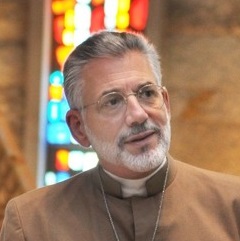 Fr. Robert L. Anello, M.S.A., a member of the Society of the Missionaries of the Holy Apostles, participated in priesthood formation at Holy Apostles College and Seminary prior to his ordination as a Catholic priest in 2007.
In 2011, Anello completed his doctoral studies in the history of the Catholic Church in United States at The Catholic University of America, Washington, D.C.
Fr. Anello is a retired human formation adviser and lives in Milwaukee, Wisconsin.

Fr. Robert Anello, MSA, has written a history of Holy Apostles College & Seminary entitled The “Hand of God” at Work in Adult Catholic Priestly Formation: Holy Apostles College & Seminary, 1956-1995, which is available in the following formats (En Route does not handle this title):
Fr. Eusèbe M. Ménard, O.F.M., was gifted with a visionary perspective regarding God’s call to adults for ministry in the Catholic Church, specifically, priestly vocations. In the mid-1940s, Ménard, then a recently-ordained priest, proposed an innovative idea for training men called to serve God through the priesthood: seminaries for “belated vocations.” As he defined it, a man with a belated vocation had not heard the call of God in his early years or, having heard it, did not or could not follow God’s call at that time. The events leading to the formation of the present college and seminary proved challenging and, at times, personally painful for those people who joined Ménard in this enterprise. Still, it appeared from the start that the “Hand of God” was truly at work in the concept, acquisition, and development of Holy Apostles. This study documents the founding and initial development of Holy Apostles and highlights several significant events from the first forty years of its service to the Catholic Church.
The page you requested could not be found. Try refining your search, or use the navigation above to locate the post.
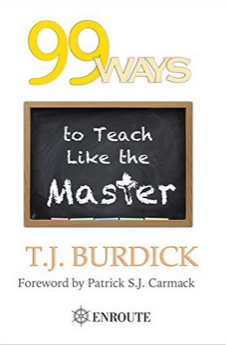
99 Ways to Teach Like the Master is a journey into the instructive techniques of Jesus. By learning from the Master, we can learn better how to communicate and impart knowledge to others. Whether it is for the teacher of a small classroom or a large symposium, or a home school parent, T.J.’s insight into the teaching style of Christ is one of a kind and proves to be a useful resource to any teacher.
Paperback $11.99 | eBook $9.99
“This little book is the kind of grounded reminder every educator needs about why, how, and what we teach our children, parents especially. The most fundamental answers all go back to Scripture, and T.J. Burdick has laid the model out in a concise and accessible format, a mini-reference book when you need to grab the truth.”
– Stacy Trasancos, chief editor for Catholic Stand and senior editor at Catholic Lane
“T.J. Burdick’s 99 Ways to Teach Like the Master is, literally, a godsend. This book offers prayerful wisdom, insight, inspiration and advice that I think will be a blessing for anyone struggling to find the right way to teach with gospel values in today’s world. Accessible, yet insightful, T.J.’s engaging style will captivate teachers across a wide spectrum — from public schools to home schools, in CCD or adult education. Using concrete examples from scripture, and sound principles of education, 99 Ways to Teach Like the Master can teach all of us how better to communicate with fervor and faith.”
– Deacon Greg Kandra, veteran broadcast journalist and blogger at Aleteia.com
“With 99 Ways to Teach Like the Master, T.J. Burdick has created a terrific tool for educators. Blending sacred scripture with novel techniques and strategies, T.J.’s book belongs in every classroom as part of a teacher’s arsenal of professional development resources. And since every parent is indeed the primary educator of their children, I’d like to see 99 Ways to Teach Like the Master in every kitchen too! Pick this up for yourself or your favorite educator and enhance the world of the students you serve.”
– Lisa M. Hendey, Founder of CatholicMom.com and author of A Book of Saints for Catholic Moms
“Teacher and writer, T.J. Burdick has crafted a book that equips teachers to proclaim the gospel without speaking a word. A few minutes every morning reading 99 Ways to Teach Like the Master will prime teachers to set an example that will bring the living Word of God to their students. And so the gospel that works in our hearts by the Holy Spirit will touch their lives.”
– Bert Ghezzi, co-author of Discover Christ, Developing a Personal Relationship with Jesus
 T.J. Burdick is the author of several books and article on the Catholic faith. He is the founder of the Dominican Institute and blogger at tjburdick.com. A missionary to Latin America, T.J. writes on how to grow in holiness amongst the distractions and difficulties of the current age. He resides in Grand Rapids, MI, with his wife and four children when he is not on mission all over Latin America and throughout the United States.
The page you requested could not be found. Try refining your search, or use the navigation above to locate the post.
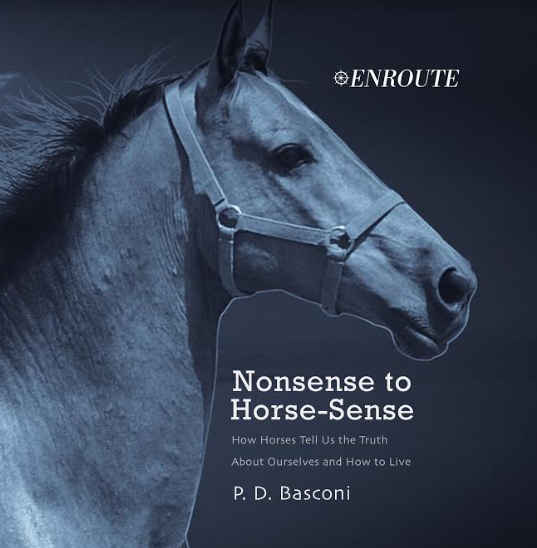

This book was in the works for a decade; Dave just didn’t know it. Events happened that, when looked back upon, were minor and drew no special attention, but each had a major impact on its creation. We live life that way – at least most of us – never knowing how the simple leads to the significant. This book is just that: simple observations reflected upon and a serious look at how we live versus how we should live. This book drew its truth from horses, which allowed our nonsense no place to hide. Dave hopes his horses help you as they have helped him in seeing a better way.
Grayscale Paperback: $14.95 | Color Paperback: $24.99 | Kindle: $9.99
“Here is an excellent book to give to family members and friends who are not Catholic or even religious as a bridge in its way of presenting the truth of natural law ethics.” – Dr. Ronda Chervin, author of The Way of Love: The Path of Inner Transformation
“This book is about horses, but it is also about people. The author is telling the reader how horses live, his horses, and other ones. He is telling the reader that horses live in harmony, that their basic need is to survive, and that the only way to do so is without nonsense. Horses are all business. The author’s message is that there is quite a lot of nonsense in our human society. There are self-centered people, and for humans to function in harmony, self-centeredness cannot exist. Everyone needs to work together to survive, and nonsense and self-centeredness are not beneficial to survival. Teenagers who read this book will find themselves questioning how they are acting after they read it. They will understand that nonsense does not bring much good to society, and they will most likely try their best to improve themselves, and society.” – Cecilia Anderson, teenage student at the Montessori Adolescent Program of St. Louis, MO
 P. D. “Dave” Basconi grew up in rural, coal-mining West Virginia with his two brothers; all worked in their parents’ hardware store. He discovered his passion for horses at an early age when making deliveries with his father to local farms.
Upon graduation with an engineering degree, he headed off to Connecticut, was soon married and raised two sons. The dream to bring horses into his life came to life when he and his wife moved to a new location.
That decision brought a host of new adventures; along with all of its challenges and rewards. A good decision with lots of work and no regrets. The chance to write about it came from the fortunate encounter with some very interesting and accomplished people in the world of books and media.
Dave still lives in Connecticut with his wife, three cats and four horses.
The page you requested could not be found. Try refining your search, or use the navigation above to locate the post.