Altar Against Altar: An Analysis of Catholic Traditionalism by Andrew Mioni

Altar Against Altar: An Analysis of Catholic Traditionalism by Andrew Mioni

Altar Against Altar: An Analysis of Catholic Traditionalism

By Andrew Mioni

When does the crisis in the Church end? May priests universally minister without any canonical mission? Can one Eucharist be offered against another in legitimate Catholic worship? Using the Scriptures, patristic sources, and magisterial declarations, Altar Against Altar answers these and many other questions, and demonstrates how the independent traditionalist ministry does not provide a remedy for the current crisis, but only perpetuates it.
 

Hardback: $29.95 | Paperback: $19.95 | Kindle: $9.99

Episode 607 - Interview with Andrew Mioni (Co-Founder - Trad Recovery, Author - Altar Against Altar) by Chuong Nguyen

In which we discuss Catholic Traditionalism

Read on Substack


REVIEWS

Daniel. (August 9, 2025). “Altar Against Altar” by Andrew Mioni: a review. On imustfollowifican. To read, click here.

William the Rambling Catholic. (July 24, 2025). “Traditionalism Isn’t Traditional”: A Review of Altar Against Altar: An Analysis of Catholic Traditionalism by Andrew Mioni. To read, click here.

Likoudis, Andrew. (July 3, 2024). “Altar Against Altar: Wrestling with rifts in the Catholic Church.” On wherepeteris.com. To read, click here.


TESTIMONIALS

“Catholic traditionalism is not Catholicism but an ideological cult, the reactionary mirror-image of Catholic progressivism, also anti-Catholic. If you tend to agree with this but would like rigorous and principled arguments that prove its truth, Mioni’s book is for you.” – Thaddeus Kozinski, author of Words, Concepts, Reality: Aristotelian Logic for Teenagers

“Andrew Mioni’s book Altar Against Altar is a breath of fresh air amidst a sea of confusion. It exhibits a Chestertonian ‘radical orthodoxy’ or ‘radical center’ point of view, which is essentially the same as the “mind of the Church.” Mioni dispassionately, eloquently, and charitably refutes the underlying false and dangerous presuppositions entailed in the excessive and extreme factions of the traditionalist movement. Not all traditionalism is bad, by a long shot (we must always note). The crucial and necessary distinctions are made in this volume. Particularly helpful are Mioni’s insights regarding Vatican II and the Pauline (‘New’) Mass. He shows that they are not — like money — the roots of all kinds of evil, and that historical causation is far more complex than the logical fallacy of post hoc ergo propter hoc (‘after this, therefore because of this’). It would seem to be a simple enough thing to understand, yet hundreds of thousands have been led astray in this regard. Mioni backs up his analysis with copious documentation from Church documents, as well as writings from the SSPX and others of like mind. He makes a solid case that will stand up to scrutiny. Altar Against Altar is an exceptional, Spirit-led treasure trove of edifying and educational orthodox Catholic wisdom. I believe that it will lead many out of these serious and soul-harming errors. I’m happy to give it my highest and most enthusiastic recommendation.” – Dave Armstrong, Catholic apologist and author
“Mioni’s book fills a critical void in Catholic theology today, by providing a scholarly and balanced repudiation of a movement that is dividing the Catholic Church and stealing souls from the one fold of Christ: namely, a pseudo-Catholic theology that masquerades as fidelity to tradition while actually substituting private judgment, division, and insularity for authentic Catholicity. This important work will prove to be a valuable resource for both pastors and laity alike, as they grapple with the challenges wrought by traditionalism within their parishes, families, and the broader Church.” – Fr. Eric Gilbaugh, Priest of the Diocese of Helena
“Intelligent, insightful, and refreshingly charitable, Altar Against Altar is the book I needed but which sadly did not exist when I became a pastor in 2020. Frequently, many of the beloved sheep in my flock would express confusion about the numerous “Catholic denominations” that seem to abound. Which variety of Catholic should I be? This was a common point of anxiety and confusion. Andrew Mioni asks all the right questions in a way that cuts through the fog, avoids the red herrings, and brings new hope for anyone who wants to be a faithful and joyful Catholic in our fallen world. His book resoundingly answers several critical questions: When ‘traditional Catholics’ tell me that I must boycott the Novus Ordo Mass to be a good and faithful Catholic, is it true? What does authentic communion with our Holy Father and my local bishop look like? What is at the heart of the Church’s authority and what does it mean to live obediently under that authority? If you desire to fearlessly live out Christ’s call to be “salt and light” without rejecting the beauty of the Second Vatican Council and without breaking off communion with the Church, this book is for you. I will most certainly be recommending this book to all my brother priests as well as to anyone that wants to understand how to approach ‘Catholic Traditionalism’ in a healthy and informed way.” – Fr Justin Hamilton, Priest of the Archdiocese of Kansas City, Kansas
“Andrew Mioni has provided the faithful with an impressive response to dissenters who undermine Christ’s church under the guise of tradition. He tackles a wide range of topics, from disputes over authority to liturgical controversies, with a masterful command of the magisterium. I highly recommend all who wish to acquire the mind of the church on controversies raging in the church today to read Altar Against Altar.” – Michael Lofton, Host & Founder, Reason & Theology; Professor, Catholic Polytechnic University

“Andrew Mioni addresses the principles of Traditionalism with erudition and eloquence, and without becoming mired in the talking points of the traditionalists which obscure the fundamental issues. The phenomenon of Traditionalism has assumed an influence within wider Catholicism that I could not have foreseen as a priest of the Society of St Pius X 30 years ago. Altar Against Altar: An Analysis of Catholic Traditionalism is a timely and welcome answer to the pernicious movement against the Second Vatican Council. I wish it a wide audience, and trust it will assist those who struggle to accept the Council and the pontificate of Francis.” — Gary Campbell, former SSPX priest

“Mioni’s work is an indispensable guide for anyone seeking to understand the complexities of the crisis in the Catholic Church, especially as it pertains to the rise of traditionalism and the challenges posed by the Society of Saint Pius X (SSPX). The author navigates through the tumultuous waters of the Church’s recent history with a keen analytical eye—as well as a remarkable breadth and depth of vision—addressing the contentious issues that arose after the Second Vatican Council. Issues caused by misinterpretation, uneven implementation, and subsequent resistance to the Council in some quarters. This is due to a faulty and ahistorical theological paradigm. Mioni’s analysis of these issues is both thorough and empathetic, acknowledging the pain and confusion experienced by many in the Church, while also critiquing the self-enclosed circle mentality that often characterizes traditionalist enclaves—and he does this from a place of experience within these circles himself. In an ecclesial atmosphere where many conservatives hesitate to critique traditionalism due to a “no enemies to the right” policy, Andrew Mioni’s book Altar Against Altar emerges as a bold and constructive contribution. It is essential reading for scholars, clergy, and laypeople who are wrestling with these issues, and offers a way forward that respects the Church’s heritage while also welcoming its future.” — Andrew Likoudis, Editor, Faith in Crisis: Critical Dialogues in Catholic Traditionalism, Church Authority, and Reform; Associate Member, The Society for Catholic Liturgy

Altar Against Altar is an important new book on the topic of ‘Catholic traditionalism.’ It is new in the sense that it is recent, but it is also new in the sense that it offers a perspective not yet considered, although sorely needed. This perspective entails the bracketing of all canonical specificities (debated ad nauseam and often to no avail), followed by the turning to a historical perspective, common sense, and basic principles of the Catholic faith. Instead of arguing whether this or that conciliar, liturgical, or magisterial text is the root of our woes, it asks us to consider the progressively dire trends of modernity alongside the progressively alarmed warnings of 19th and 20th century popes and theologians. Instead of arguing whether the Church canonically provides supplied jurisdiction to vagus clergy and/or priestly communities, it asks what it would mean if the Church did. Instead of arguing that there cannot be a state of necessity in the Church, it asks what it would mean if there was. Altar Against Altar is an important book because it brings—for the first time—a dose of common sense and a palpably Catholic spirit to an overly fraught question. It is a must-read in the midst of the polemics fueled by Denzinger-thumping armchair theologians taking place in Catholic circles on the internet.” — Dom Dalmasso, Host, The Logos Project; Editor-in-Chief, The Ecclesia Blog; M.A. Student in Dogmatic Theology, Holy Apostles College and Seminary.

“With truth and wisdom and charity, Andrew Mioni ventures into the heart of one of the great problems facing the Church today. His personal experience and detailed analysis of the various points of the traditionalist movement are simply and clearly synthesized in Altar Against Altar. This book is a powerful apologetic tool for those who are in traditionalist spheres, have exited from them and are trying to reorient themselves, or who have friends and relatives still under their sway; at the same time, Altar Against Altar provides a beautiful defense of the Catholic Church and of our need to maintain our trust in Her and remain fully united to Her and Her lawful shepherds. Andrew’s work is also a humble and implicit reminder to all of us of how it is the Church’s mission to save us; it’s not our mission to save the Church. God promises that His Church will not fail (cfr. Mt 16:18) and He will not go back on His promise.” — Fr. Terrance J.M. Chartier, S.T.B., FI (Franciscans of the Immaculate), host at Mother of the Redeemer Retreat Center, Bloomington, IN

“Andrew Mioni’s Altar Against Altar is a clear, concise, and confident response to the Traditionalist challenge to the Church. A devastating critique, it reveals that the sources of this ideological movement’s internal rot are, in a strange plot twist, the same sources underlying the errors of liberalism and modernism! Andrew and I both grew up in the movement (although we never met), and from our separate personal studies of the Tradition we both came to understand a stunningly ironic fact: Traditionalism is not Traditional! His copious quotes from the Magisterium of the Church demonstrating this reality are unanswerable and irrefutable. I believe Altar Against Altar is a landmark contribution to this debate, and its value stems not only from the errors it refutes, but even more from the beauty of the Church’s life and truth it reveals by clearing them away.” — Mr. Andrew Bartel, OP; Author, “Why I Left the Society of St. Pius X: An Open Letter to Fr. Gołaski”

“An honest and compelling examination of Traditionalist claims, Altar Against Altar actually is what other books only claim to be: scholarly, easily-digestible, thought-provoking and 100% Catholic. Andrew knows his subject matter from the inside out. He charitably challenges the multiplicity of excuses that dissenting traditionalists use, and simultaneously reminds us of the beauty and wisdom inherent in the Church’s structure as Christ established it. This book will long be an excellent aid for those seeking clarity for their own sake, as well as for productive dialogue with radical traditionalism. I can’t recommend it too highly!” — Laura Vander Vos, Host, Misshappycatholic; creator and co-founder, TradRecovery.com

“Radical Traditionalists are rebelling against Holy Mother Church while confusing many in the process. This book does a superb job of pulling apart their claims and objections, one by one, and answering them. It is timely, well-researched, logically presented, and backed up by a plethora of sources and citations. It is an important resource that offers powerful counter arguments against Traditionalists and is very much needed in the Church today.” – Bryan Mercier, Catholic apologist, speaker, author, and President of Catholic Truth

Altar against Altar provides an insightful investigation into the internal contradictions of the Traditionalist worldview written in a spirit of pastoral charity with an intention to heal the rift that separates our Catholic brethren.” – Dr. Sebastian Mahfood, OP, co-author with Ronda Chervin of Catholic Realism 

ABOUT THE AUTHOR

Andrew Mioni grew up in Kansas and earned his B.A. in English at Kansas State University. He currently lives in upstate New York, where he continues to pursue his writing aspirations. His website is andrewmioni.com.
 

OTHER CATHOLIC ACADEMIC BOOKS

No Results Found

The page you requested could not be found. Try refining your search, or use the navigation above to locate the post.

Rigidity: Faithfulness or Heterodoxy by Pedro Gabriel

Rigidity: Faithfulness or Heterodoxy by Pedro Gabriel

Rigidity: Faithfulness or Heterodoxy?

by Pedro Gabriel

“Why is Pope Francis always criticizing faithful Catholics?” is an oft-repeated question whenever the Holy Father makes one of his usual invectives against religious rigidity. Francis has indeed made such denunciations a hallmark of his pontificate. But what does he mean by “rigidity”? Is he truly attacking faithful Catholics? Is he promoting moral and religious laxity?

In this book, Pedro Gabriel aims at clarifying Pope Francis’ teachings on rigidity, by relating them with certain keywords emerging repeatedly in his interventions. He also seeks to falsify the idea that a Catholic is faithful by being rigid, by comprehensively exploring precedents in Church history where the rigid course of action did not always prevent the faithful from falling into heterodoxy. Finally, Gabriel explains how eschewing rigidity does not necessarily entail the opposite extreme of laxism.

Paperback: $24.95 | Kindle: $9.99

TESTIMONIALS

“Pedro Gabriel gives us a wonderful book on an ‘outgoing Church,’ a plea for the education of a Christian personality that is flexible but with a strong backbone. He discovers in the faith not an obstacle to the fullness of human life but a path—not only to eternal life but also to a life one hundred times more human here on earth.” – From the “Foreword,” by Rocco Buttiglione, Member of the Pontifical Academy of Social Sciences and of the Pontifical Academy of St. Thomas

“Pedro Gabriel has written a truly brilliant book, not only for its readable style but above all for its pertinent content. Rigidity: Faithfulness or Heterodoxy? is not a mere exercise in Catholic apologetics, but a true educational path for those of us who need to rediscover the reasons for living to the full ‘the glorious freedom of the Children of God’ (Rom 8:21). Pedro Gabriel’s new book undoubtedly helps us to detoxify the Christian life from the frequent laxist and rigorist temptations that are so popular and so misleading in today’s world. Nothing could be more opportune to live the faith with maturity and balance following the teachings of the Gospel in communion with the Successor of Peter.” – Rodrigo Guerra, Secretary of the Pontifical Commission for Latin America and Professor at the Pontifical Lateran University.

“Dr. Pedro Gabriel, acclaimed for his award-winning books The Orthodoxy of Amoris Laetitia and Heresy Disguised as Tradition, is a foremost expert on the style and teaching of Pope Francis. In his latest work, Rigidity: Faithfulness or Heterodoxy, he builds on his previous research by expanding upon what the Pope views as a fundamental and ironic misconception of the meaning of Tradition among self-proclaimed traditionalists. He does this by providing an analysis of the attitudes that flow from it, best understood as rigidity and indietrism (backwardness). Dr. Gabriel, in his winsome way, challenges readers to reassess whether they have truly grasped the meaning of St. Paul’s exhortation to ‘stand firm and hold to the traditions which you were taught’ (2 Thess. 2:15 RSVCE), and he urges them to fairly reflect on Pope Francis’ concerns without resorting to defensiveness or kneejerk reactions. Drawing on the Church’s self-understanding of fidelity to Tradition, perhaps best expressed in Catechism of the Catholic Church paragraph 100 and Dei Verbum paragraph 8, Dr. Gabriel offers a more secure, comprehensive, and practical approach to navigating the apparent tensions between the Magisterium and Divine Revelation than undoubtedly most traditionalists are familiar with. Through a meticulous examination of historical heresies, the virtue ethics tradition of Aristotle and Aquinas, and the teachings of popes, both pre- and post-conciliar, Dr. Gabriel skillfully navigates the complexities of rigidity, rigorism, and the scrupulosity that results, to lead readers to a greater freedom in Christ, for ‘the Lord is the Spirit, and where the Spirit of the Lord is, there is freedom.’ (2 Cor. 3:17).” — Andrew Likoudis, Editor, The Divine Primacy of the Bishop of Rome and Modern Eastern Orthodoxy, Associate Member, Fellowship of Catholic Scholars

“Many conservative and traditional Catholics take offense at Pope Francis’s warnings about rigidity.  They believe he is associating faithfulness with rigidity. Pedro Gabriel shows that this is a complete misunderstanding of the Holy Father’s concerns. Pope Francis is actually upholding the authentic Catholic tradition, which seeks the golden mean between laxism and rigidity. In this much-needed work, Gabriel provides an historical survey of various groups in Catholic history that have criticized the immoral and lax Church while claiming to be the true, pure, and authentic followers of the Gospel.  Throughout her history, the Catholic Church has resisted various rigorist groups such as the Judaizers, the Novatianists, the Donatists, the Spiritualists, and the Jansenists.  Gabriel does not claim that the rigid Catholics of today can be identified precisely with any of these heretical movements. He does, however, note certain similarities, especially in the common tendency to believe that the institutional Church is corrupt or misguided and one’s own movement represents the true faith. Gabriel not only explores the history of rigorist movements; he also provides an authentic understanding of what Pope Francis means by present forms of Pelagianism and Gnosticism.  In my opinion, Pedro Gabriel understands Pope Francis far better than the papal critics.  He shows the Holy Father to be a faithful son of the Church, steeped in the Catholic tradition of Augustine, Aquinas, and Liguori—a tradition marked by balance, mercy, and discernment.” – Robert Fastiggi, Ph.D. Professor of Dogmatic Theology, Sacred Heart Major Seminary, Detroit, Michigan

ABOUT THE AUTHOR

Pedro Gabriel is the author of The Orthodoxy of Amoris Laetitia and one of the co-founders of the apologetics website “Where Peter Is.” Currently, he is taking classes of moral theology at the Pontifical University of the Holy Cross. He is also a medical oncologist, an Internet journalist, and a published writer of Catholic novels. 

OTHER CATHOLIC ACADEMIC BOOKS

No Results Found

The page you requested could not be found. Try refining your search, or use the navigation above to locate the post.

Curing and Healing: Vital Elements of Catholic Health Care by Eric Manuel Torres

Curing and Healing: Vital Elements of Catholic Health Care by Eric Manuel Torres

Curing and Healing: Vital Elements of Catholic Health Care

by Eric Manuel Torres

In this research, the significance of curing and healing will be explored with an emphasis on how both are vital to Catholic health care. This essay aims to show that only by embracing both components can health care professionals truly care for the whole person. Moreover, Christian health care professionals ought to follow Christ’s example in order to serve in His mission of caring holistically for those that are ill. As Luke’s account of the Haemorrhoissa (Lk 8:42-48) not only provides a vignette distinguishing between curing and healing, but also an excellent example of how Christ attended to both elements, this essay will interpret this story in order to gain insight into the indispensability of both to whole person Catholic health care. Further, examples extracted from palliative care, an area of health care where curing and healing can be clearly distinguished, will be used to illustrate these elements in practical terms.

Paperback: $12.95 | Kindle: $9.99

TESTIMONIALS

“Crafted with scholarly exegetic style, yet pithy and approachable, this timely publication should be read by any health professional who gazes seriously upon their career and sees a vocation.” – Vanco Hristov BSc (Hons), GradDipPsych, PhD candidate, The University of Melbourne
“In Eric Manuel Torres’ book, Curing and Healing, there is a good discussion of this difference which, on the whole, turns on the difference between curing an ailment and healing the whole person, a difference very ably illustrated at the end of the book. Thus, implicitly, there is a growing possibility that genuine Catholic Healthcare offers a uniquely, ethically sound approach to many of life’s difficult health crises. Furthermore, the encompassing vision of the person which inspires and informs the vocation of Catholic Healthcare, draws as it does on ancient and modern wisdom, whether of Christ or His Church, philosophy and medicine, and so is ever ready to explore and to answer the question of meaning and, if necessary, the need for reconciliation before death. As Torres himself says so well: ‘finding meaning in illness is as core to healing as the skeletal system is to our bodies’ (p. 20).” – Francis Etheredge, Catholic married layman, father of 11, 3 of whom are in heaven and an author of 17 books on Amazon: https://enroutebooksandmedia.com/francisetheredge/.
“This book demonstrates a highly developed understanding of the identity and mission of Catholic Healthcare.” – Dr. Frances Baker, RSM, STD, Senior Lecturer in Moral Theology and Systematic Theology at Catholic Theological College/University of Divinity (Australia)
“Torres has written a readable and cogently argued research essay. His conclusion that “healing…is multidimensional, and may include the physical yet not always” is sound. So is his general understanding of Catholic theology, especially of implications of the Incarnation, as applied to health care delivery.” – Rev. Dr. Bernard Teo, C.Ss.R., STD., Lecturer in Moral Theology at Yarra Theological Union/University of Divinity (Australia) and Te Kupenga – Catholic Theological College (New Zealand)

ABOUT THE AUTHOR

Eric Manuel Torres is a Catholic moral theologian and bioethicist with a background in health care. Based in Melbourne, Australia, he has recently completed a doctorate (PhD) from Catholic Theological College/University of Divinity. He holds a Bachelor of Health Sciences and a Master of Orthoptics from La Trobe University, a Master of Nursing Science from the University of Melbourne, a Graduate Diploma of Theology and a Master of Theological Studies from Catholic Theological College/University of Divinity, and a Graduate Certificate of Specialist Inclusive Education from Deakin University. He also holds a Certificate III in Business Administration. Moreover, Dr. Torres has published a number of articles appearing in several scholarly publications including Homiletic and Pastoral Review and the Journal of Religion and Health.

OTHER CATHOLIC PRACTICAL THEOLOGY BOOKS

No Results Found

The page you requested could not be found. Try refining your search, or use the navigation above to locate the post.
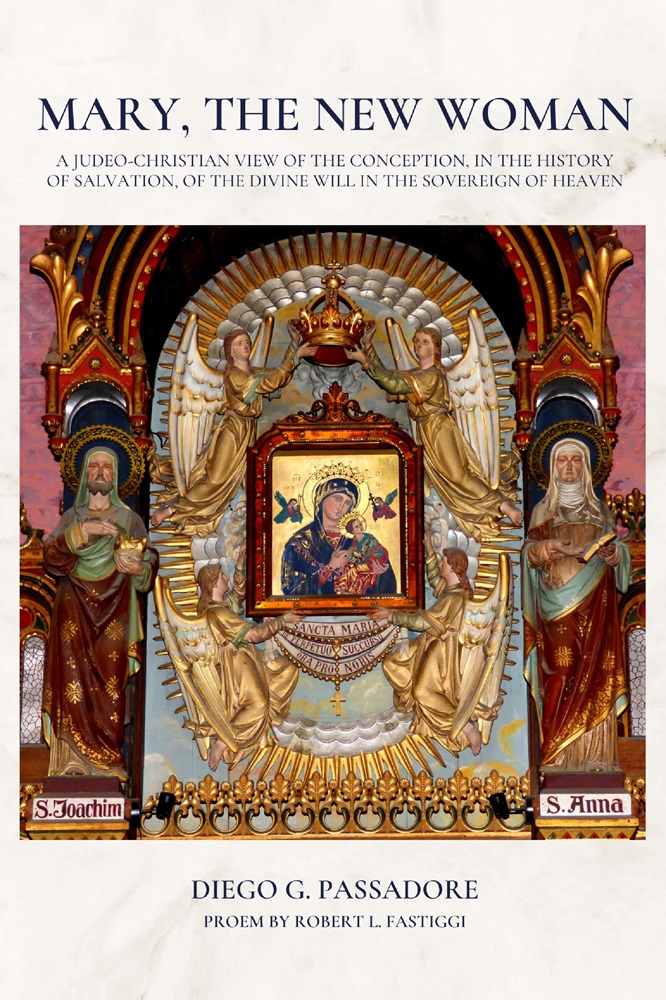
Vatican II, Defense of the Novus Ordo Missae, Five Smooth Stones (1 Sam. 17:40) – On Modern Trends and How to Deal with Them: The Selected Works of Frits Albers, Vol. 2 by Frits Albers

Vatican II, Defense of the Novus Ordo Missae, Five Smooth Stones (1 Sam. 17:40) – On Modern Trends and How to Deal with Them: The Selected Works of Frits Albers, Vol. 2 by Frits Albers

Vatican II, Defense of the Novus Ordo Missae, Five Smooth Stones (1 Sam. 17:40) – On Modern Trends and How to Deal with Them: The Selected Works of Frits Albers, Vol. 2

by Frits Albers, edited with a Foreword by Frank Calneggia

Selected for publication in this second volume of the works of Frits Albers are the following three written in the 1970s.

  • Vatican II;
  • In Defense of the Novus Ordo Missae of His Holiness Pope Paul VI;
  • Five Smooth Stones (1 Sam. 17:40) – On Modern Trends and How to Deal with Them

A principal reason for publishing anew these books written almost fifty years ago can be gathered from the author’s own words taken from his Vatican II.

“It is from our era, and from the Church of our era, still so close to us, that we must wrestle to partly unlock the mystique contained in the very essence of Vatican II. For our own immediate benefit as well as for the benefit of the Catholics to whom Catholic Tradition must be handed over in its entirety. No doubt Vatican II has a clear message for the Church of the future, but this great Council happened in our time, and future generations of Catholics depend on us – on how well we understood that time. How well our Catholic children will comprehend the past which happens to be our present, depends entirely on us.”

Many of the Catholic children of that era (and now their children also) hold positions of responsibility in society and in the Church. The younger generations of Catholics who were born after Vatican II and the promulgation of the Novus Ordo, if they take to heart the author’s words quoted above, should derive no little profit from the works presented in this volume. May the three works included in this present volume bring instruction, guidance and hope to Catholics in their quest to advance in knowledge and love of holy Mother Church and its life giving Teaching and to dispel the dark clouds of confusion, error and subterfuge they have to deal with in modern day ‘catholic’ environments, and finally to give them sound practical guidance on how to overcome and defeat the real enemy.

Paperback: $19.95 | Kindle: $9.99

REVIEW BY DR. DONALD G. BOLAND

This is the second volume of the collected works of Frits Albers. The first volume has been published only recently. The works concerned first appeared as articles dating from as early as the 1970s but with later editions appearing as late as AD 2000.

I have provided a testimonial to the first volume and what I said in it applies to the present works. There are three books that are included in this second volume. Put shortly, the first two are defences of Vatican II and the Novus Order of the Mass, and the third is a guide to how to deal with the threats to the Faith by the controversies surrounding what the changes are, let alone how they are to be interpreted.

As may be expected, Frits Albers has embarked upon quite a task, for as he himself notes in quoting St. Paul, such are the profundity and eternal consequences of the issues involved, we are up against “Principalities and Powers”. However, as I see his effort as a man of strong faith, he is well up to the task. One indication of the pointed truth of what he says may be gathered from the fact that his books have been neglected to be widely published for nigh on 50 years since they appeared at the very time when the theological errors and their related sinful practices were begun to be promoted with an enthusiasm that would be gratifying to their evil originators.

Indeed, such has been the forcefulness of this promotion, reaching even to the highest levels of the religious and hierarchical life of the Church, that their malign influence is today deeper and wider than ever.

The publication of Albers’ works could not be more urgent. His assessment and refutation of the modernist error (presented most insidiously in Teilhard de Chardin’s writings) that underlies the whole push to change the doctrinal basis of Catholic life and practice is so thorough and telling, that it is hard to see how any person of honest disposition, prepared to give him a fair hearing, would not be won over by his clear exposition of the positions of the parties to the controversy and even clearer determination of the issues. There is much in this volume to be digested and we have space to make only one point, hopefully to give the reader some idea of the value of his work.

With regard particularly to the first two books included we need to note a problem of language which is to do with the inability of the modern mind to make distinctions, so that even in ecclesiastical Latin phrases there is a hidden prejudice to taking the word in a sense that favours the modernist position. As is clear from what we observe about his work, Frits Albers is one who has been able to make the distinctions needed to avoid the modernist mind-set that sadly even afflicts “not a few” modern Catholic theologians. (cf. Fides et ratio n. 61)

The problem of language use, or rather misuse, can apply even to words used by popes, such as Pope John XXIII’s use of the Italian aggornimento. Words such as “renew” and “reform” are used constantly in the modern era to close down opposition to the hidden intent or real meaning of “deform” or “destroy”. Even the word “deconstruction” is used openly to imply some sort of constructive change instead of simple destruction.

So too the Latin Novus Ordo is subtly taken to mean the rejection of the old rite. Then, the Magisterium has to go to great lengths to explain the distinction between what in the liturgy is capable of change and what is not. So, as regards the latter, there is no new rite replacing the old. The Novus Ordo has to be the same in essence, or in substance, as the old, or it is not Catholic. Of course, those who are opposed to the “new rite” are keen to find differences of substance.

The Novus Ordo is the same in essence as the one it has replaced and the Mass is the same as it was from the beginning. This problem of preference for taking any change as an essential (or substantial) change is applied throughout. It is applied to the fabricated distinction between Vatican II and “Pre-Vatican II”. Confusion reigns all round, including among “well educated” Catholics at University level.

The Magisterium is occupied constantly in explaining that there is no discontinuity between the teachings of Vatican II and previous doctrinal positions in the long history of Catholic Tradition. One wonders however, with the barrage of loud voices to the contrary, how much effect these magisterial “interventions” have.

A poor education in the use of language and logic (which are intimately connected) hampers the one side of the argument and favours the other (no prizes for guessing which is which).

Without making any criticism of Frits Albers himself, for his intent is clear where he does so, he uses the word “community” in a way that could be problematic. There is nothing wrong with the ordinary meaning of the word itself. Indeed, transferred to the order of grace and the divine it can be used of the Trinity. But, precisely because of its soundness and sacred application, it is used or rather misused in the most profound way in modern political and religious life.

As to the former, it is as if we confused it with Communism, whereby the very notion of civil community is destroyed and citizens brutalized. This misuse has become insinuated even into Catholic thinking (and practice) in most recent times. (The word “synod” can be misused in the same way)

A more appropriate word in the place concerned would in my view be “collective”, for Albers is referring to a grouping where there is no true unity but a kind of herd-like gathering that tries to bully individual Catholics who are deprived of the leadership they deserve. (This is not a condition peculiar to Catholic congregations but is a general condition of modern political life)

It is quite remarkable that Albers picked up this abusive application of the word so early. The malign connotation exploited by them, some clergy were referring to the “parish community” when a good portion of the congregation were losing their faith in central doctrines, especially with regard to sexual morality, and so did not really have unity with those that had kept them. It became almost impossible to use the word in its right sense.

We put this comment then only to show how difficult it is in modernist (which equates with “fashionable” – those people Chesterton called “Thursdayites”) controlled conversations to have any intelligent/ intelligible dialogue at all.

In connection with this we might note that the very word “Thomist” was coming to be given a fabricated connotation that suited the modernist climate of thought, and used as opposed in some way to a less “rigid” Catholic Franciscan sentiment. This is very subtle in that it is designed to undermine the unity of mind and spirit that existed (and still exists in Heaven) in relation to the two great saints, when it might apply to some of their not so holy or learned followers. Read the two wonderful books of Chesterton on the saints to get the balanced view of their holy relationship.

Despite the linguistic difficulty, which all the faithful have to contend with, this collection of books of Frits Albers is powerful in all respects and one can only pray that it reaches the audience that needs it, which is all of us today.

— Dr. Donald G. Boland, author of Rev. Fr. Austin M. Woodbury, SM, PhD, STD and the Aquinas Academy (1945 – 1975); also see his Compendium

ABOUT THE AUTHOR


Frits Albers Ph. B (1921-2000) was born in Holland and studied under the Jesuits at Nijmegen during the 1940s.  He emigrated to Australia in 1951, and travelled extensively within the south-east region of the ‘lucky country’.  He joined the Department of Education in Victoria and worked as a high school teacher who specialised in mathematics, French and English.

In the early post Vatican II period he realised that the strange interpretations of the recently concluded Council that were being forced upon Catholics were under pinned by the same philosophy he had been taught in the 1940’s by the Jesuits at Nijmegen in the name of St Thomas Aquinas, but which in reality was the systematic Modernism of Pierre Teilhard De Chardin, S.J. Thus, in the early 1970’s he began writing articles and books to expose the philosophical root of these errors and aberrations of Teilhard De Chardin, and to defend Catholic Faith, clear thinking, and right philosophy.

ABOUT THE EDITOR


The editor is a retired electrical engineer who worked for most of his professional career in the specialist area of power generation. In a sabbatical year, he completed post graduate research in the History and Philosophy of Science at the University of Melbourne. He has long loved the philosophy of St Thomas Aquinas.

OTHER CATHOLIC FAITH AND MORALS BOOKS

No Results Found

The page you requested could not be found. Try refining your search, or use the navigation above to locate the post.
I bambini della cappella e il Primo Natale da E. G. Enga

I bambini della cappella e il Primo Natale da E. G. Enga

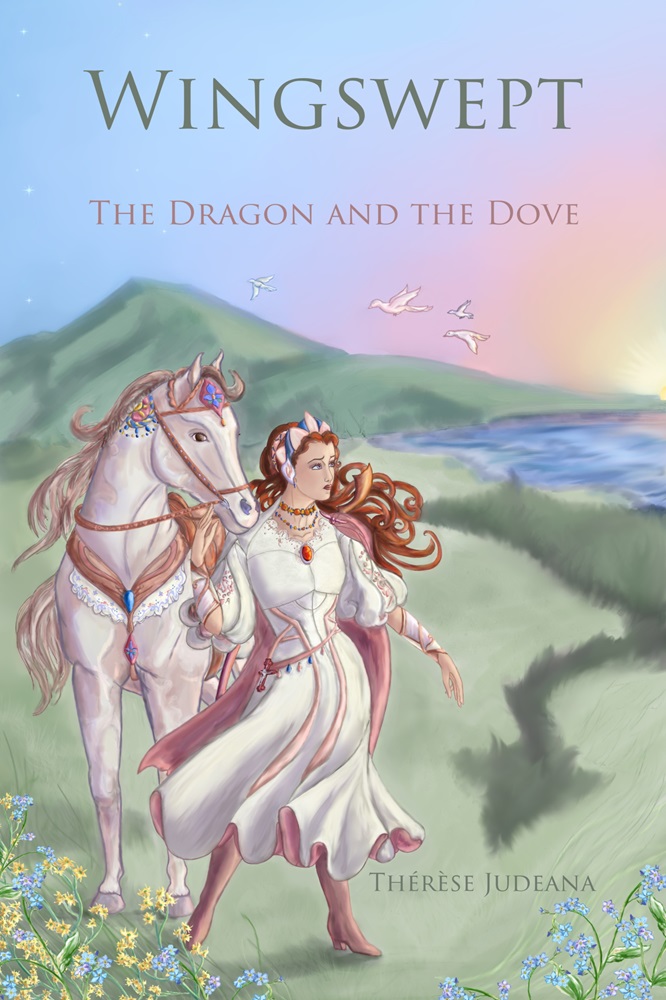
I bambini della cappella e il Primo Natale

scritto da E. G. Enga e illustrato da Lora Schaunaman

Quando Miriam, Joseph, John Paul e Zelia Langford trovano una porta segreta nella loro chiesa parrocchiale, vanno subito ad esplorarla. Aprendo la porta magica, si rendono conto che non conduce a una stanza qualsiasi, ma a una misteriosa cappella piena di antiche reliquie. Quando la cappella li conduce in un viaggio mistico in Terra Santa che separa i fratelli, riusciranno a ritrovarsi? E riusciranno a tornare a casa?

In brossura $12.95 | Kindle $9.99

TESTIMONIANZE

“I bambini della cappella e il primo Natale” è un racconto affascinante e una lettura adatta a tutte le età, che sicuramente porterà immagini sane e devozioni nelle giornate dei bambini.Emily Enga avvicina la Sacra Famiglia alla realtà, ricordando al lettore che anche questa è la nostra famiglia santa e adottiva, che si prende cura di ciascuno di noi e gode con noi anche delle più piccole benedizioni.”– Thérèse Judeana, autrice della trilogia Ransom:Shadow of an Empire (libro 1: Cross of Secrets, libro 2: Trial By Time e libro 3: Shards of Crystal).

“Emily Enga condivide una deliziosa storia natalizia di viaggi nel tempo e miracoli che sarà amata da grandi e piccini!I bambini della cappella e il primo Natale fa rivivere tutti i personaggi della tradizione natalizia, incoraggiandoci a stare vicino alla Sacra Famiglia come Miriam, Giuseppe, Giovanni Paolo e Zelia.” – Grace Bourget, autrice di Vale of Hope, Ad Maré: Song of the Pleiades, Light of Faith: Poems and Plays

“I bambini della cappella e il primo Natale” di E. G. Enga è un racconto vivace di quattro fratelli che, in stile Narnia, entrano in un mondo magico, viaggiando indietro nel tempo fino alla nascita di Gesù e al nostro essere cristiani. La signorina Enga crea fratelli credibili che si prendono cura l’uno dell’altro. Ha il dono dei dettagli descrittivi: il mercato, i vestiti colorati, i nuovi amici, Simeone nel tempio, i cammelli e la sfilata dei Magi. Questa storia ha un’aura giovane e fresca che non dimenticherò presto. Il mondo non sarà più lo stesso e i fratelli lo sanno. L’incontro con il bambino che cambierà il nostro mondo è trattato con la delicatezza e la delicatezza che Lui intendeva: un Re, ma nato da genitori poveri; le scene dell’incontro con la Sacra Famiglia sono toccanti nella loro freschezza e adorazione”. – Cynthia Linkas, autrice del romanzo VOWS e di Tumbled Time, A book of poems (Aldrich Press, 2020).


SULL’AUTORE

Da bambina, niente rendeva E. G. Enga più felice che farsi leggere dai genitori. Prima di compiere due anni, ha imparato a leggere da sola e da allora ama tutto ciò che ha a che fare con la letteratura.All’asilo e in prima elementare si è innamorata della scrittura di storie e poesie.All’età di 12 anni ha scritto il suo primo libro pubblicato, The Children of the Chapel and the First Christmas, combinando l’amore per la fede e la letteratura nella sua scrittura.Vive nel Midwest con i genitori, i fratelli e il cane Daisy, Paddington (il vero Teddy). Da grande vuole riempire la sua casa di libri, trapunte e tende di pizzo e spera di continuare a scrivere libri per bambini.

OTHER CATHOLIC CHILDREN’S BOOKS

No Results Found

The page you requested could not be found. Try refining your search, or use the navigation above to locate the post.