No Results Found
The page you requested could not be found. Try refining your search, or use the navigation above to locate the post.

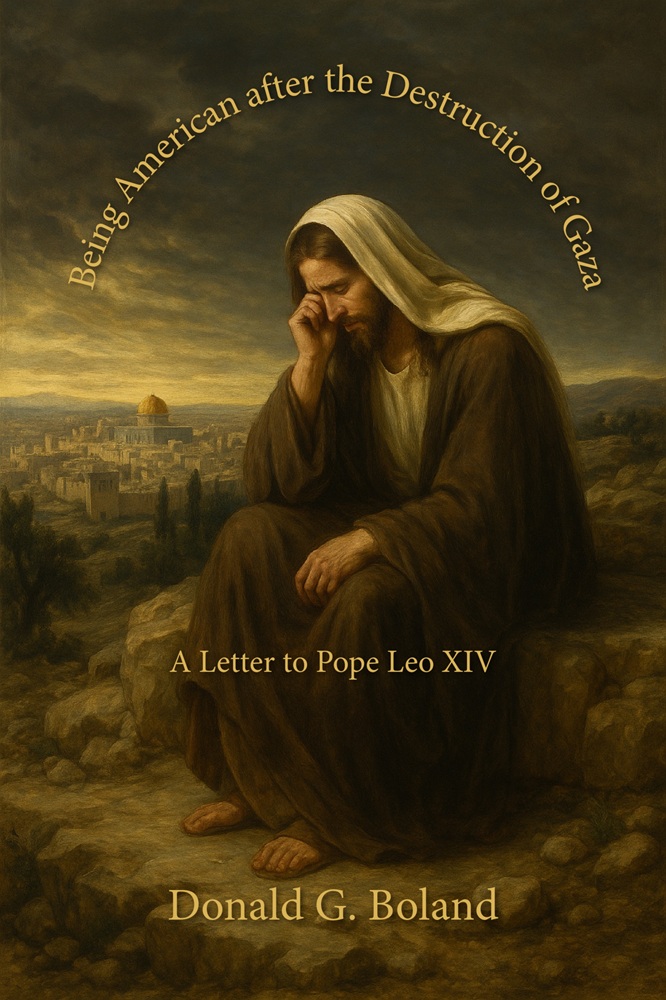
A passionate Catholic critique of Western complicity in Gaza’s devastation, Boland’s letter to Pope Leo XIV challenges moral silence, drawing on history, theology, and conscience to confront violence, injustice, and the urgent need for prophetic witness in the face of modern atrocities.
Paperback: $12.95 | Kindle: $9.99
“‘An irrational patience sows vice, nurtures neglect, and not only invites bad people to evil, but also the good ones.’ (ST: IIa, IIae, Q 158, Art 8). Dr. Boland’s forthright letter opposes this moral evil with clarity and much instruction.” – Frank Calneggia, editor of the selected works of Frits Albers
“Donald Boland’s letter is a courageous, unflinching call to conscience, demanding that Catholics confront complicity in injustice. A prophetic, necessary witness for those committed to authentic moral clarity.” – Dr. Sebastian Mahfood, OP, co-author with Ronda Chervin of Catholic Realism: A Framework for the Refutation of Atheism and the Evangelization of Atheists
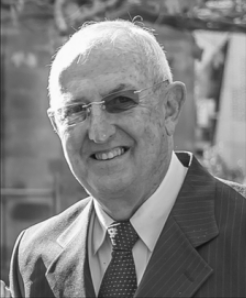
Donald G Boland Ll. B. (Sydney), Ph. D. (Angelicum) is a founding member of the Centre for Catholic Studies Inc. in Sydney Australia and is one of its former Presidents. He practiced for a number of years as a lawyer having a degree in law from the University of Sydney. Over much the same time, having obtained a doctorate in philosophy from the University of St. Thomas in Rome, he has taught philosophy and law in both Catholic and secular educational institutions, such as the University of Technology, Sydney, the University of Newcastle, the Aquinas Academy, the Centre for Thomistic Studies Inc., now operating under the name of the Centre for Catholic Studies Inc., and various Catholic seminaries, such as those of the Marists and the Vincentians. His doctoral thesis was on the concepts of utility and value in economics as found in the works of Aristotle and St. Thomas Aquinas.
The page you requested could not be found. Try refining your search, or use the navigation above to locate the post.
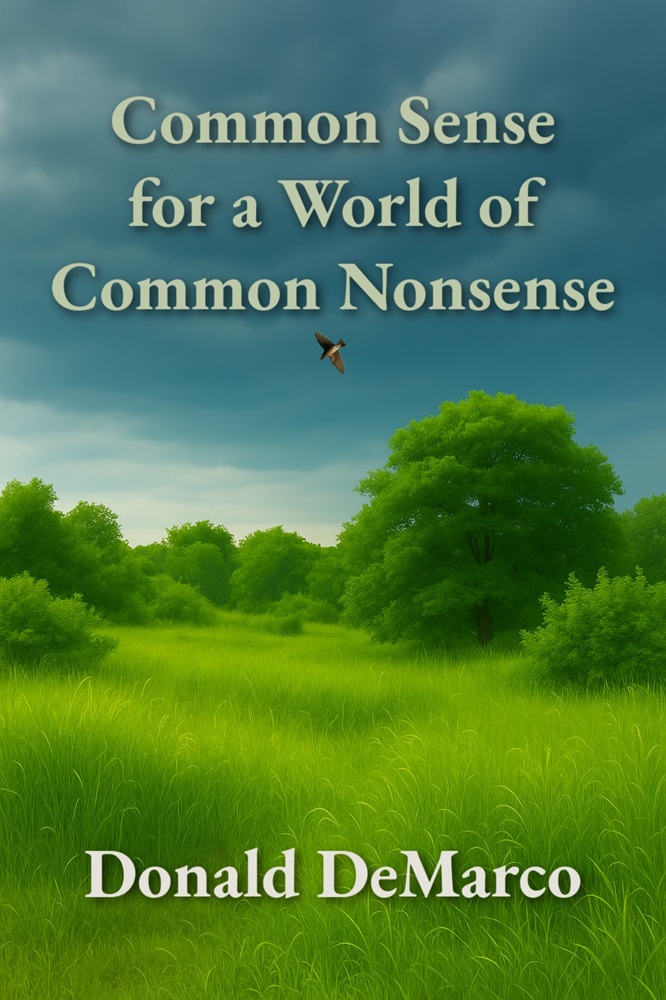
“Common Sense for a World of Common Nonsense is a clarion call to reclaim moral clarity through reason, faith, and virtue—essential reading for anyone navigating today’s cultural confusion.” – Dr. Sebastian Mahfood, OP, author of The Narrative Spirituality of Dante’s Divine Comedy
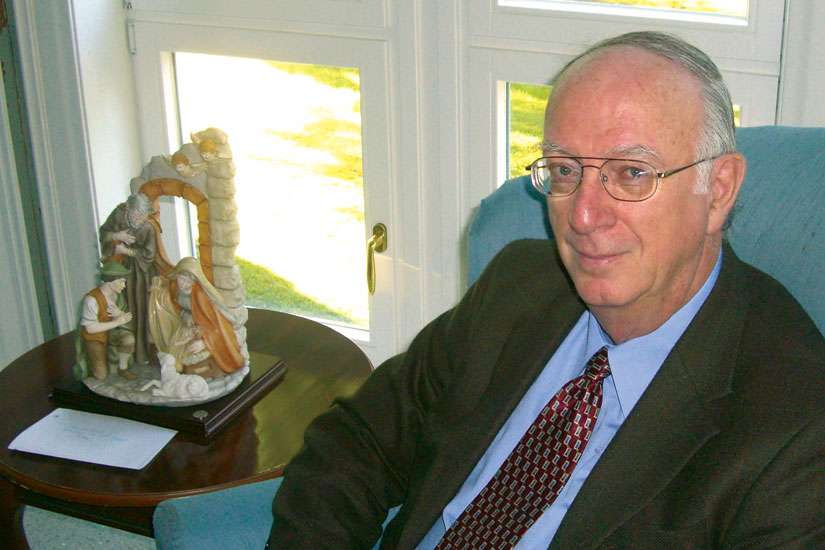 Donald DeMarco, author of 45 books, including most recently How to Flourish in a Fallen World and In Praise of Life, is a Senior Fellow of Human Life International. He is professor emeritus at St. Jerome’s University in Waterloo, Ontario, and a retired professor of Holy Apostles College and Seminary in Cromwell, Connecticut. He is a regular columnist for St. Austin Review and has written over a hundred articles for the website Truth and Charity. He is on the editorial board of Social Justice Review, a board member of Our Lady Seat of Wisdom College in Ontario, Canada, and a Corresponding Member of the Pontifical Academy for Life. In June 2015, he was awarded the prestigious Bishop Exner Award for “Catholic Excellence in Public Life.” He and his wife, Mary, have 5 children and 14 grandchildren.
The page you requested could not be found. Try refining your search, or use the navigation above to locate the post.
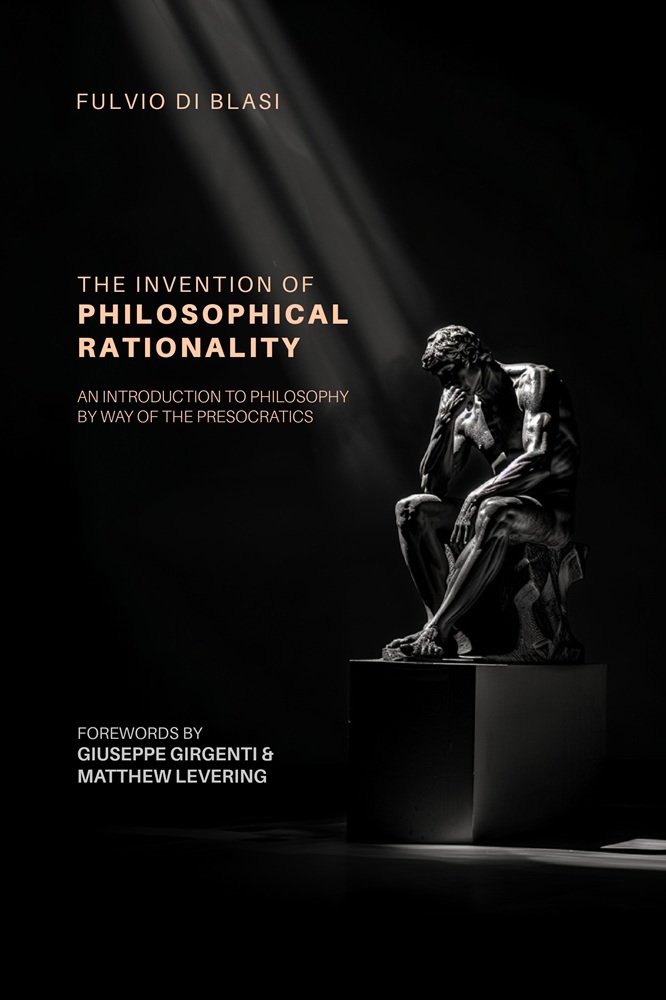
Fulvio Di Blasi’s The Invention of Philosophical Rationality explores the foundational role of Presocratic philosophy in shaping Western thought. Through an interdisciplinary approach that integrates philosophy, science, and theology, Di Blasi argues that early Greek thinkers were not merely precursors to modern science but authentic philosophers who pioneered rational inquiry. He emphasizes the transition from mythology to rationality, as seen in the works of Thales, Heraclitus, and Pythagoras, where logos (reason) and physis (nature) became key concepts in understanding reality. The book critiques contemporary positivism, advocating for a holistic vision that acknowledges the interwoven nature of philosophy and theology. Di Blasi highlights Aristotle and St. Thomas Aquinas as key figures in advancing Presocratic insights, linking early metaphysical inquiries to modern philosophical debates. Written in an accessible style, the book serves as both an introduction to philosophy and a call to rethink the historical significance of early rational thought.
Paperback $29.95 | Kindle $9.99
“There is no better way to introduce someone to philosophy than through the ideas of the very first philosophers, the Presocratics. Fulvio di Blasi’s fine book does the job in a way that is agreeably relaxed and humorous in style without sacrificing philosophical depth.” – Edward Feser, Professor of Philosophy, Pasadena City College
“Filled with engaging, probing, and student-friendly chapter-by-chapter narratives, glossaries, study questions, and further insights and reading recommendations, Fulvio Di Blasi’s The Invention Of Philosophical Rationality is an excellent introduction to philosophy that is suitable for a wide range of audiences—including those beginning in the sciences of physics, chemistry, and engineering. The book’s centerpiece consists in Di Blasi’s (i) ‘scientific’ approach whereby he shows that the Presocratics philosophize in a continuum concerning ‘the logic of becoming’ and (ii) serious consideration, as his final chapter encapsulates, of the intensive Presocratic concern with the cosmic place and role of divinity. While working through Presocratic philosophy in a manner pleasing to Aristotle in Metaphysics 1, Di Blasi straightforwardly and perceptively introduces his reader to the discipline of philosophy and to widely held philosophical presuppositions. Di Blasi’s book is a much-needed introduction To Philosophy By Way Of The Presocratics.” – Dr. Barry David, Department of Philosophy, Ave Maria University
“This is a remarkable text. When I received the manuscript, I asked why anyone would teach the Presocratics to undergraduates. But now I see that the idea is brilliant. The biggest challenge in teaching philosophy to undergraduates is to show why we do philosophy in the first place. Di Blasi takes us back to the original philosophers who asked those fundamental questions that lie at the heart not only of philosophy but of science and every other branch of learning. To contemporary minds These Presocratics may seem wrong-headed, but the questions they asked were astute and reveal the questions that we too often unconsciously pass over. Here is an excellent book to get undergraduates—and perhaps the rest of us—thinking aright.” – Dr. Adrian J Reimers, Professor of Philosophy, Holy Cross College, South Bend, Indiana
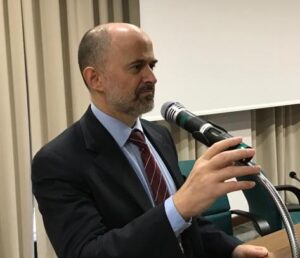
FULVIO DI BLASI is an attorney (Italy), a legal mediator, and a Thomistic philosopher, having earned a Ph.D. in Philosophy from the University of Palermo. He directs the Thomas International Center for Philosophical Studies (United States) and has taught at the University of Notre Dame (United States), the LUMSA Law School (Italy), the Pontifical University of the Holy Cross (Rome) and the John Paul II Catholic University of Lublin (Poland). He is also a member of the Italian Society of Medicine (SIM) National Scientific Committee and represents SIM in the COVID inquiry commission of the Italian Senate.
The page you requested could not be found. Try refining your search, or use the navigation above to locate the post.
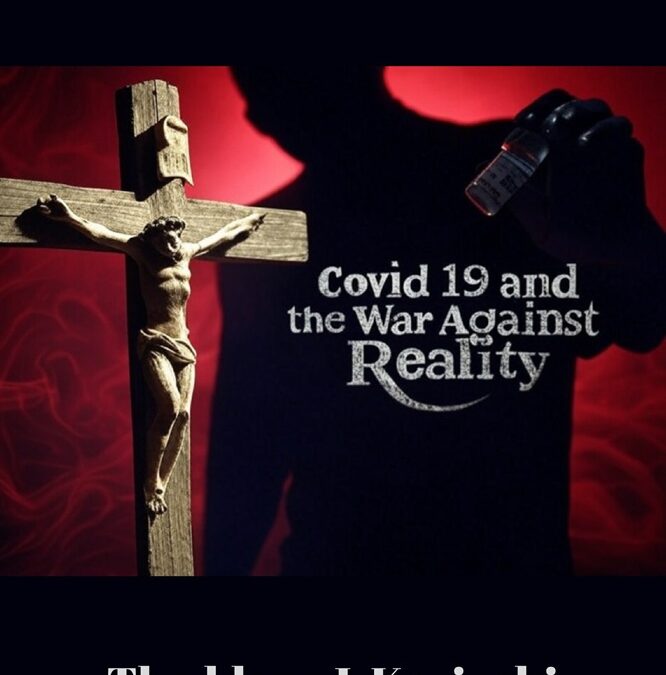
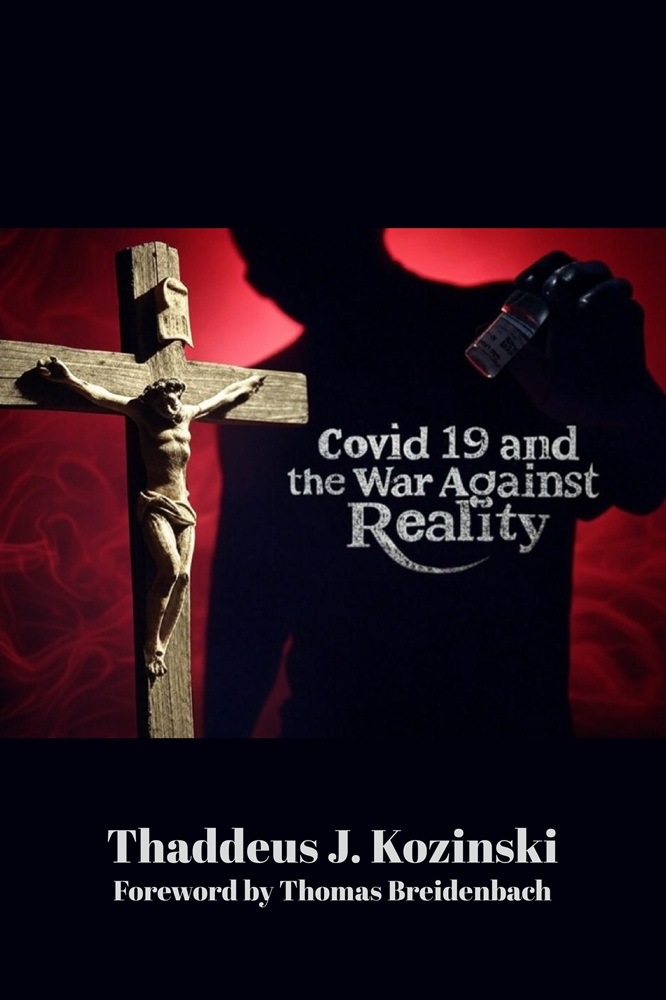
This book puts into spiritual, theological, philosophical, psychological, moral, historical, cultural, and political perspective the incredible evil we have witnessed and suffered over the past four years, amounting to the greatest crime against humanity ever committed. The plandemic was not only an all-out assault on every human being on the planet, but also an assault on reality itself. Though its most obvious effects were economic and political, at its core it was a spiritual and psychological-terror operation knowingly and deliberately orchestrated by a small global elite of unspeakably evil and psychopathic people. It was executed by a larger group of lower-tier cooperators ignorant of the master plan but vicious enough to use their power and influence to inflict untold harm on those in their charge. And it was enabled by the masses of idolatrous, fearful, alienated, rootless, selfish, and cowardly men, the rotten fruit of godless and decadent liberalism. How did this happen, where are we now, and how should we prepare spiritually for what is coming? Why did God allow such evil? How can we best dispose our souls to be in union with and conduits of God, Who alone can defeat this diabolical evil? This book tries to answer these questions.
Paperback $19.95 | Kindle $9.99
John Waters, “Liberalism: The ‘god’ that failed” (March 23, 2025), John Waters Unchained. Click here to read the review.
“The book discusses the perceived rise of a global totalitarianism under the cover of the COVID-19 pandemic, framing it as a spiritual and moral crisis that challenges the concept of objective reality and sacred truth. The thesis is persuasive; the argument forceful; the writing colorful; and the diagnosis and cure provocative. Still, all this is not entirely new; indeed, the cure recalls the traditional idea of Catholic and liberal education which revolutionized European culture and progressively the world. For instance, Kozinski particularly stresses the reading of Plato and Shakespeare alongside the Bible. He proposes the founding on such a basis of a new university: RCU or Real Christian University. Such liberal arts education is crucial, he says, but it is not enough. There must also be an existential encounter with God; not with mere doctrine (secular or religious): the whole man, body and soul, must be formed.” – Peter Simpson, Professor Emeritus of Philosophy and Classics, City University of New York
“Everything, literally everything, they told us in 2020 and after was a lie, and these lies were aimed at the total subjugation of society and human souls.” So writes Thaddeus Kozinski in an uncompromising critique of the spiritual rot engendered by the Western Enlightenment and political liberalism, culminating in an unprecedented attack on human dignity by the governments of liberal democracies during the “Covid-19” debacle. The reason why populations allowed this to happen was their “obedience to the Sacred State and the demonic voice speaking through it.” Too many people have turned away from the Good, the True, and the Beautiful — from God — and are instead willing to live in a manufactured unreality. Only a reorientation of the social and political order around the truths revealed in the Catholic tradition and aspiration towards holiness of soul offer any hope of a remedy. Yet, with so many people choosing unreality, not least those hiding beneath a pious facade, and with the professions universally corrupted, Kozinski argues that we must prepare ourselves spiritually for the Great Tribulation and the arrival of Antichrist. This is a bold book that is unafraid to call out the evil in our world for what it is, and to consider what kind of education is required in the Age of Unreality.” — Dr. David A. Hughes, author of “Covid-19,” Psychological Operations, and the War for Technocracy, Volume 1 and Wall Street, the Nazis, and the Crimes of the Deep State
“Thaddeus Kozinski is a teacher who turns your thinking upside down, destroys the order of your thoughts and insists that there is a better way of putting them together. What he deals with here is the question of evil, which he tells us is not a problem but a mystery. His laboratory sample is the plandemic of 2020. He takes apart this mystery, which so many us have pondered for five years, and shows us that our understandings have been tentative, partial. We need to go deeper into things, he plausibly insists, to go to the centre of all meanings, for that is where the truth about this, and everything, resides. He diagnoses the roots of what has happened in that perversion of freedom, liberalism, an ideology of counterfeit liberty. But he cuts deeper than sociological or ideological analysis, to expose why even Christ’s own Church became implicated in the evil-doing. These events, he outlines, are the culmination of Biblical prophecies and warnings, and are therefore to be seen as the inevitable outcome of man’s rejection of God. What is happening to the world now is, accordingly, being permitted by God as a means of restoring His authority over his creation. When, in the past five years, we have heard people speak of what has been happening as a ‘spiritual war’, it has not always been clear what this means. In this book we find the answer: it is ultimately a war declared by men against God, and which is therefore, ultimately, a war declared by man upon himself. This is a book for both the faithful and the faithless, for it speaks to the part of each of us that is eternal, even if in spite of ourselves. When Thaddeus Kozinski proposes as the beginnings of a solution what he calls “existential Christianity,” he is acknowledging the linguistic trap into which man has painted himself: he is not God but has abolished God, and so must replace him, even in his total inadequacy. Only in seeing this, can we perceive the error of the totalitarians, and grasp the formula by which to pursue their banishment.” — John Waters, Thinker, Talker, and Writer
“The world has nowhere come to full consciousness of what happened to us from 2020-2023 under the pretense of mastering the microbial kingdom. They targeted all human life in what amounts to a coup against civilization and its foundational moral and spiritual principles. This is where Thaddeus Kozinski comes in to offer an even deeper analysis that speaks to theological concerns, the replacement of an organic liturgy of life with a manufactured one straight out of the worst dystopian novel. It’s no wonder people are in denial. This book reveals the fullness of what happened as a path toward spiritual healing.” — Jeffrey Tucker, Founder and President, Brownstone Institute
“With clarity, urgency, and profound charity, Thaddeus Kozinski argues that liberalism is the ideological medium of totalitarianism, and correspondingly, that modernity is the historical vessel of the worldly west’s collective “perfect possession,” that starkest spiritual condition, marked by a hermetic severance (psychic as well as intellectual) from the Divine. From this unfolds the inevitability of an eschatological moment—our moment—looming with the horrors of anomos, the man of lawlessness: Antichrist, against whom there is no secular or political hope whatsoever. To the scapegoating bloodlust which anomos recently unleashed in the modern liberal leviathan, Kozinski responds with a vision of that mercy inhabiting (as he ventures to call it) “the Divine Revelation of evil.” In light of which anyone still capable of listening is summoned to observe the only Perfect Sacrifice, and this in humble submission to His cosmic authority and faultless love for us. Which alone reveal the profane blood rites of our satanic elite for what they are, and what they portend: the dread yawning of hell’s gates, amid which salvation beckons this last time.” —Thomas Breidenbach, poet, parapolitical researcher, and author of IX XI and the Mysteries of State (in manuscript)
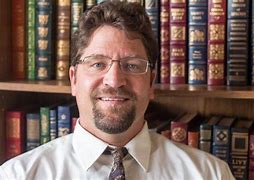
Dr. Thaddeus Kozinski is an advocate of Catholic liberal education and the Socratic method of teaching, and has authored a number of articles and books, including The Political Problem of Religious Pluralism: And Why Philosophers Cannot Solve It and Modernity as Apocalypse: Sacred Nihilism and the Counterfeits of Logos. At present, he teaches philosophy for Memoria College and John Adams Academy. He is the author of Modernity as Apocalypse: Sacred Nihilism and the Counterfeits of Logos (Angelico Press) and Words, Concepts, Reality: Aristotelian Logic for Teenagers (En Route).
The page you requested could not be found. Try refining your search, or use the navigation above to locate the post.
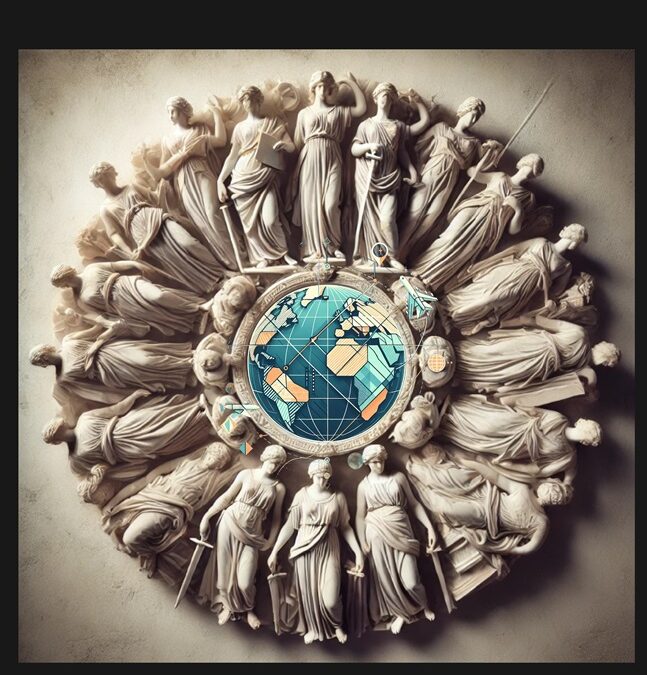
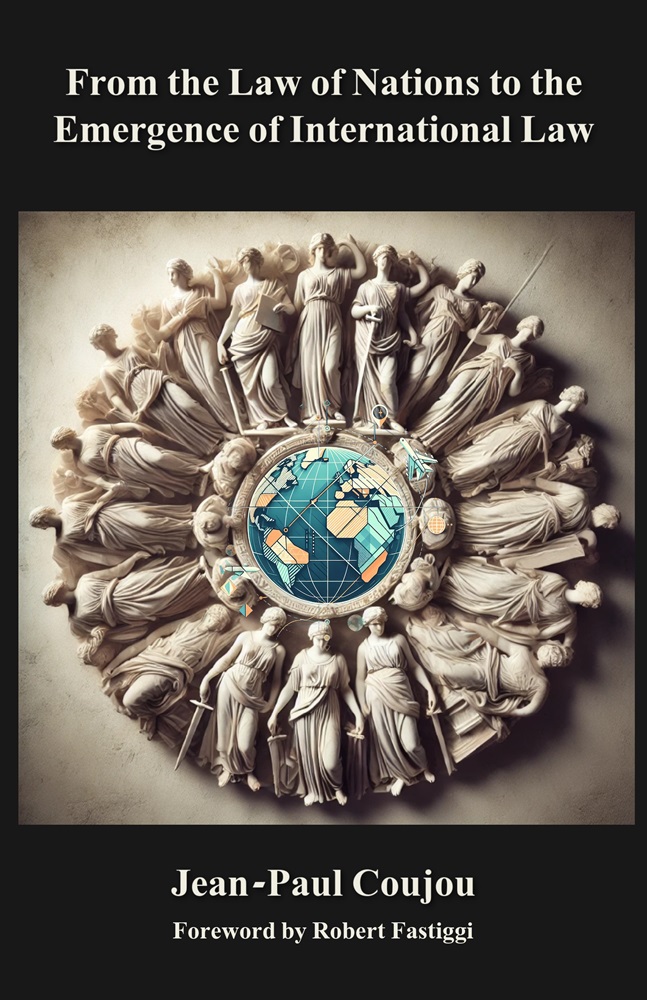
In this book, Jean-Paul Coujou explores the historical evolution of international law from antiquity through modernity. He traces the development of the law of nations (ius gentium), beginning with Greek and Roman contributions, and examines its synthesis with natural law in Christian and Scholastic traditions. Coujou highlights the role of thinkers like Francisco de Vitoria, who transitioned the concept from individual relationships to the framework of international relations among states.
This work underscores the historical necessity of reconciling natural law’s universality with the practicalities of positive law, shaped by human consent and custom. The narrative also incorporates the emergence of foundational principles such as human rights, justice, and mutual assistance among nations, demonstrating how international law has been influenced by theological, legal, and philosophical ideas, particularly during the Second Scholastic period, with contributions from figures like Suárez and Aquinas.
In this manner, Coujou provides a broader understanding of humanity as a universal community governed by shared legal and moral principles. He ultimately argues that international law serves as a mechanism for civilization, fostering unity, justice, and the moral improvement of humanity through cooperative legal development.
“From the law of nations to international law provides a lucid historical analysis of the philosophical development of international law. Jean-Paul Coujou traces the origins of the law of nations (ius gentium) from its Greco-Roman roots, its subsequent Patristic and medieval developments, and finally into its more complete elaboration during the second scholastic period with thinkers such as Francisco de Vitoria, O.P (c.1483-1546) and Francisco Suárez, S.J. (1548-1617). After a long process, the natural law and the law of nations came together to provide a foundation for international law, a law expressed so powerfully by the 1948 Universal Declaration of Human Rights of the United Nations. This book shows why Jean-Paul Coujou is considered one of the world’s leading experts on the history and philosophy of law.” – Robert Fastiggi, Ph.D. Professor of Dogmatic Theology, sacred Heart Major Seminary, Detroit, Michigan
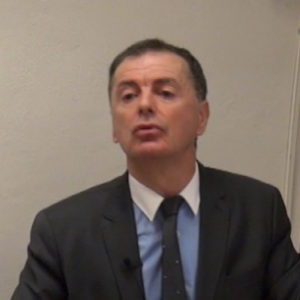 Jean-Paul Coujou, member of the Institut Michel Villey, Agrégé de philosophie chaire supérieure, doctor (Paris I) HDR (Paris IV), honorary professor at the Faculty of Philosophy of the Institut catholique de Toulouse, where he was director of the Ethics, Philosophy, Science and Society laboratory as well as director of the doctoral cycle, is the author of some thirty books, around a hundred articles and winner of the Prix Charles Lévêque from the Académie des Sciences morales et politiques in 2012. He has also been a visiting professor at a number of foreign universities.
The page you requested could not be found. Try refining your search, or use the navigation above to locate the post.
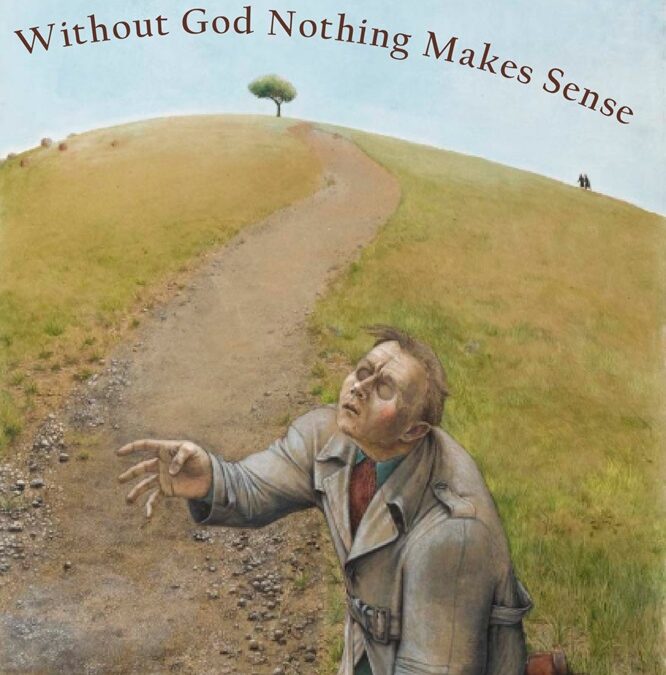
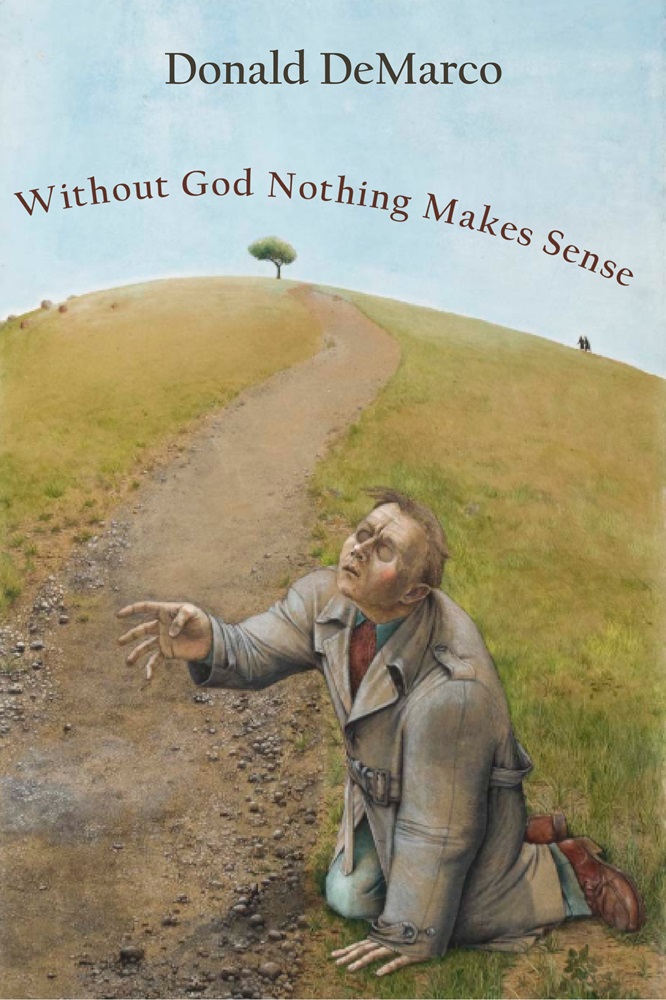
Cover image copyright: “Lord, that I may see,” the Estate of William Kurelek, courtesy of the Wynick/Tuck Gallery, Toronto.
Donald DeMarco’s Without God Nothing Makes Sense argues that removing God from public discourse leads to societal confusion and moral decay. DeMarco critiques ideologies like radical feminism, atheism, and the pro-abortion lobby, identifying their rejection of divine truths as sources of division and intellectual blindness. He emphasizes the importance of virtues such as lightheartedness, kindheartedness, and warmheartedness, which align with faith in God and serve as antidotes to societal fragmentation.
DeMarco explores themes across language, morality, education, philosophy, politics, and religion, linking them to the broader implications of a society detached from its spiritual roots. By grounding his discussion in figures like Aquinas, Chesterton, and Augustine, he defends the integration of faith and reason. He critiques secularism’s reduction of language, the exaltation of choice, and the rejection of human dignity, arguing these trends undermine the inherent value of life and truth.
The book advocates for a return to spiritual and moral clarity by aligning human laws with divine wisdom, highlighting the irreplaceable role of religion in sustaining justice and charity. DeMarco asserts that ignoring God’s voice in creation, scripture, and Christ leads to personal and societal disarray. Ultimately, he calls for humility, faith, and the embrace of divine truths to restore meaning and harmony in life.
“Without God Nothing Makes Sense masterfully explores the essential connection between faith, reason, and morality. With profound insights and timeless wisdom, DeMarco challenges secular ideologies, inspiring readers to rediscover the transformative power of divine truth. A must-read for anyone seeking clarity, purpose, and hope in today’s chaotic world.” – Dr. Sebastian Mahfood, OP, author of The Narrative Spirituality of Dante’s Divine Comedy
Donald DeMarco, author of 45 books, including most recently How to Flourish in a Fallen World and In Praise of Life, is a Senior Fellow of Human Life International. He is professor emeritus at St. Jerome’s University in Waterloo, Ontario, and a retired professor of Holy Apostles College and Seminary in Cromwell, Connecticut. He is a regular columnist for St. Austin Review and has written over a hundred articles for the website Truth and Charity. He is on the editorial board of Social Justice Review, a board member of Our Lady Seat of Wisdom College in Ontario, Canada, and a Corresponding Member of the Pontifical Academy for Life. In June 2015, he was awarded the prestigious Bishop Exner Award for “Catholic Excellence in Public Life.” He and his wife, Mary, have 5 children and 14 grandchildren.
The page you requested could not be found. Try refining your search, or use the navigation above to locate the post.