No Results Found
The page you requested could not be found. Try refining your search, or use the navigation above to locate the post.

“Husbands, love your wives, as Christ loved the church and gave himself up for her” (Eph 5:25).
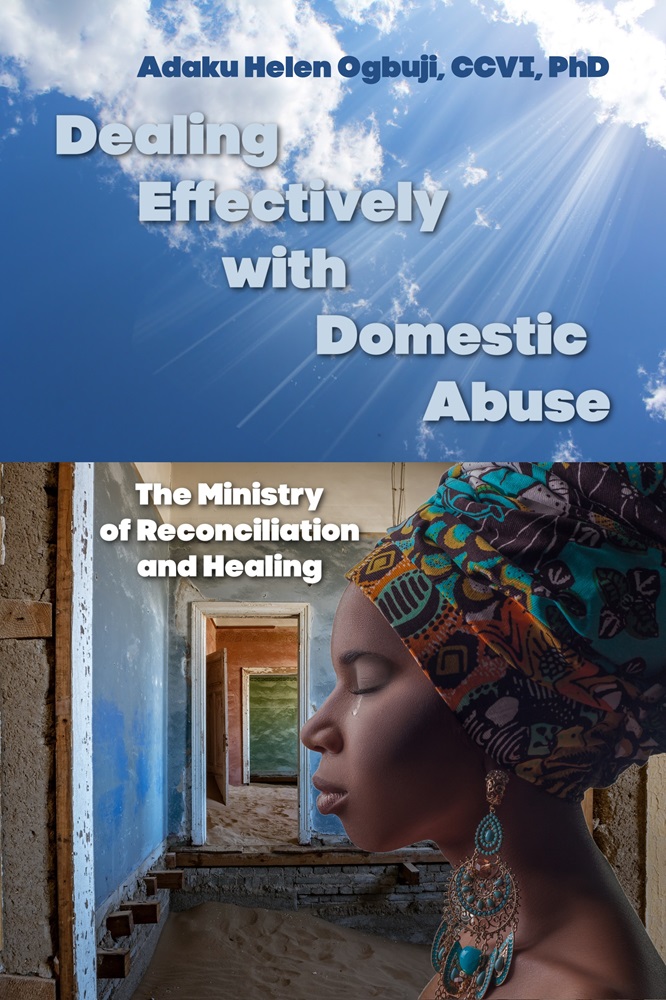
This work examines the different faces of violence in our society and how a woman’s body is sometimes treated as an object to be used. When one gender dominates and oppresses another, then the system needs to change. Following this line of argument, the African patriarchal society needs transformation.
Many women have suffered abuse at home and in society. Often removed from decisions that affect them, these women live with false stories of violence at home, suffering psychological, sexual, physical, cultural, and economic abuse. Through the grace of God, the reconciliation process starts with the victim of violence. However, the Church must create certain local conditions before reconciliation can take place, including interpreting and using specific gospel passages that refute domestic abuse, emphasizing the recent documents of the Church that promote the dignity of women and family life values, and forming parish support groups to allow victims of abuse to experience healing through rituals, prayers, the sharing of stories, seminars, and workshops.
The recommendations and methods enumerated in this work can be effective and fruitful in giving voice to the voiceless, liberation to the oppressed, and healing to the wounded women seeking redemption from their tragic stories.
Paperback: $14.95 | Kindle: $9.99
“Lost in the political and economic challenges/upheavals and violence that threaten society at the national and global scenes, most people seldom look down and around them to perceive a worse crime that scourge humanity – Domestic Violence. Sr. Helen Ogbuji in her beautifully and lucidly articulated book draws our attention to the ravages of this monster that dwells among us. Dealing Effectively with Domestic Abuse very importantly is largely a fruit of the author’s ministerial experience that does not end at exposing the cruelty of Domestic Abuse in Africa but proffers universally praxis-based solutions. The application of the theological concept of reconciliation is uniquely ad rem. The thrust that genuine reconciliation precedes true healing is empowering to abused persons and transforming to the social structures that bolster violence. Dealing Effectively with Domestic Abuse is a handy tool for all in ministry, both ordained and non-ordained. It is a ‘must read‘ for all men and women in relationships especially those facing abuse in their relationships. As an advocate of empowerment and emancipation of abused persons, I found the book enriching.” – Rev. Fr. Dr. Henry Ogbuji, author of From Where Shall Come Our Help? The Lament of Abused Persons
“Violence in our society is the antithesis of what it means to be human, and to live like one. Sr. Adaku, in this well-researched and finely articulated book, adds to the moral voice of awareness, caution, and solution. I do recommend this book to those who seek enlightenment and desire to stop domestic violence.” — Rev. Udo Ogbuji, author of The Peace I Know
“Sr. Adaku’s work in this text is a testimony of hope and compassion. Grounded in faith, she believes in the power of the Risen Christ to undo all the wrongs of violence inflicted on the innocent. The book seeks to be a concrete expression of God’s love directed towards those most in need of healing from domestic violence.” – Sr. Collen Mary Mallon, OP, PhD
“This book is appropriate for families who are finding it difficult to come out from their debased life of hatred, violence, and unforgiving heart… It is valid for formators, educators, and those who journey with the vulnerable people as it offers relevant perspectives for an approach to interpreting the domestic life situation in general and the steps to move towards healing and reconciliation. I recommend this book to everyone because we all come from families.” – Sr. Dr. Elizabeth Ngozi Okpalaenwe, MSHR
“A refreshing and reshaping text. Sister Helen invites carefully but energetically to compassionate relations among Christians–the core of our faith: forgive as you breathe. Must read for all concerned leaders.” – Rev. Dr. Emmanuel Foro, SJ
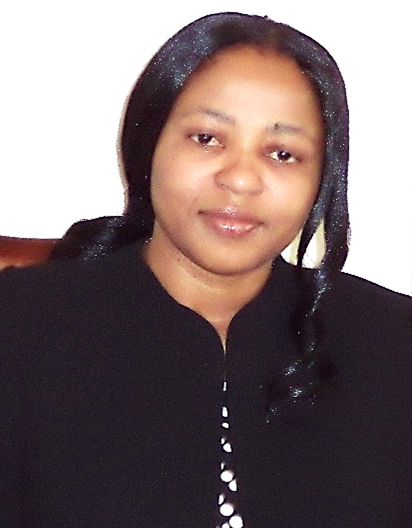 Sister Adaku Helen (Helena) Ogbuji, CCVI, PhD, belongs to the Congregation of the Sisters of Charity of the Incarnate Word, Houston, Texas. She is an author of several books: Dealing Effectively with Domestic Abuse: The Ministry of Reconciliation and Healing; Influence of Childhood Experiences on Faith Development: A Journey Towards Wholeness; Out of the Lips of Infants, Wisdom Comes: Retelling the Bible Stories. Recently, she edited and co-authored Incarnational Spirituality: Embodying the Love of the Incarnate Word. She holds a master’s in Theology, Divinity and Psychology and a PhD in Counseling Psychology. Presently, she is the Formation Director and the Novice Director in their formation house in St. Louis, Missouri, USA.
The page you requested could not be found. Try refining your search, or use the navigation above to locate the post.
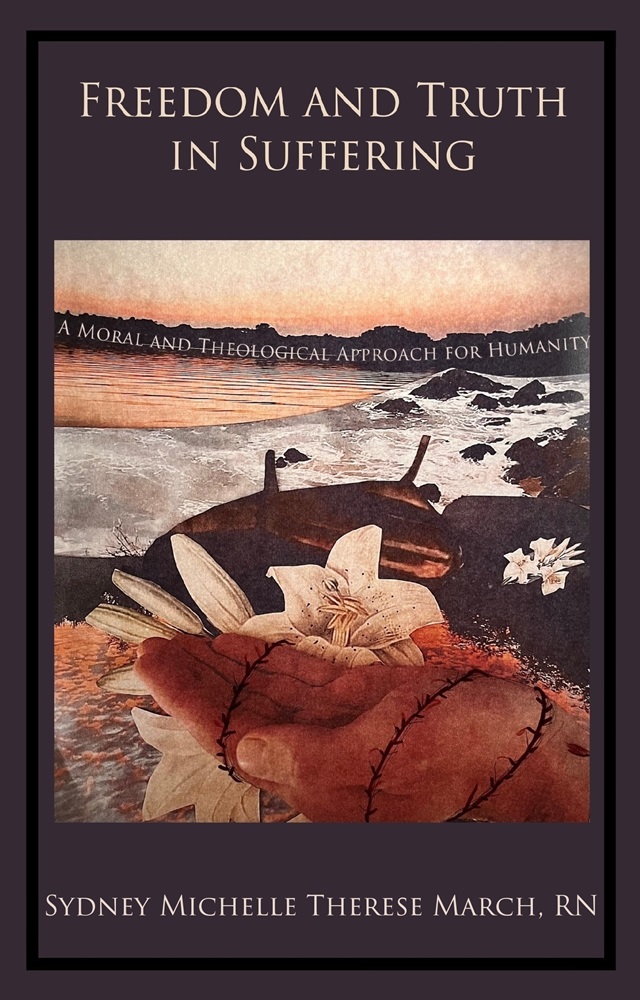
“Sydney March brings to her argument the same passionate commitment she brings to patient care, with the added conviction of her Catholic faith. This book is an argument for the possibility that suffering can be endured and perhaps redemptive; her argument will have the most meaning for the committed Catholic believer. Though I do not share the religious belief, as a physician I recognize and appreciate the commonality we share in seeing the patient and the human as a spiritual whole. For the Catholic believer this thesis will be reassuring and instructive; for all others it will provide a clear insight into the strength that the Catholic provider can draw from a detailed analysis of the faith in attending to the sick, which in the end is our common human goal.” – Warren Kearney, M.D. C.M. HEC-C, ASBH Certified Health Care Ethics Consultant
“This significant work provides guidance for both the health care professional, and those they serve, to enable the sufferer to persevere and flourish. ‘Suffering well’ involves truth concerning the transcendent needs of the human person, so that moral and effective choices can be made, while trusting in God’s providential care.” – Dr. Marie T. Hilliard, MS (Maternal Child Health Nursing), MA (Religious Studies), JCL (Canon Lawyer), PhD, RN, Senior Fellow, The National Catholic Bioethics Center
“Sydney March explores the nature of suffering and its role in the Christian moral life with insight and sensitivity in this lovely book. Her enlightening reflections will be of value to all who recognize the need to ‘suffer well’ as we sojourn in this valley of tears.” – Dr. Christopher Tollefsen, Professor of Philosophy, University of South Carolina
“Understanding suffering is vitally important in today’s world that so often seeks to escape suffering and finds it meaningless. This short treatise on suffering beautifully expounds on the redemptive and salvific meaning that suffering can beget. This book balances an understanding of the philosophical meaning of suffering with its existential reality, addressing the sufferer with compassion. It also reveals how each of us, in our own suffering, can be encouraged by the example of Jesus Christ, who willfully accepted suffering for the sake of others. For healthcare professionals in particular, we are not only called to alleviate what suffering we can, but also to genuinely accompany the sufferer, and, in some sense, to enter into their suffering. I trust this work will allow each reader to become a beacon of hope to a suffering world.” – Lisa Gilbert, MD, MA (Ethics), FAAFP, Family Physician
The page you requested could not be found. Try refining your search, or use the navigation above to locate the post.
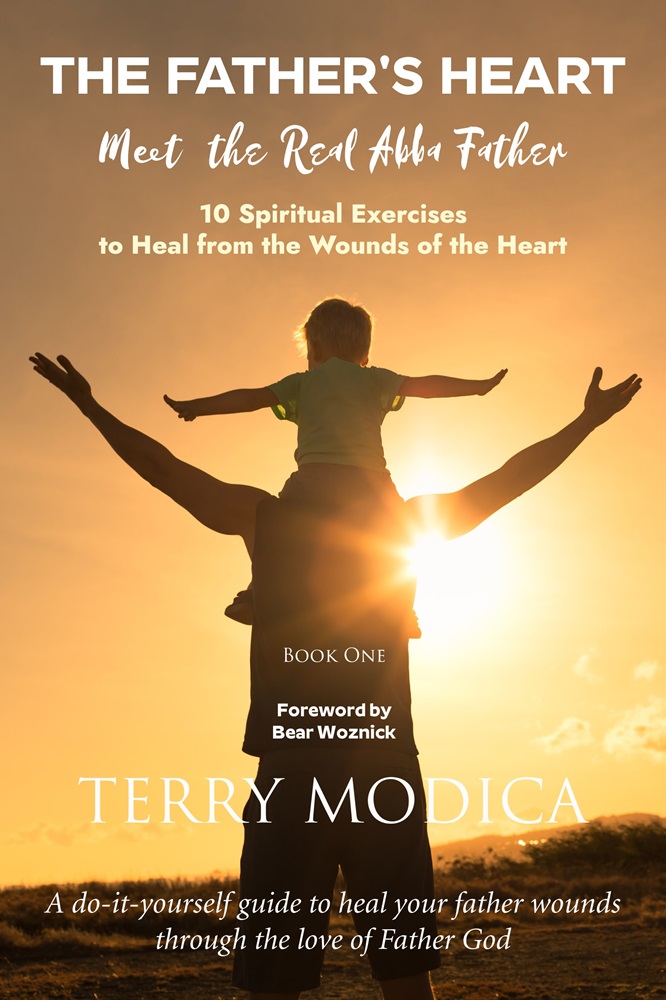
This is the first in a set of three workbooks on The Father’s Heart, all to help you experience the wonderfulness of the True Father so that your faith can be set free to reach its full potential. Each one of these, Meet the Real Abba Father, Discover What You Mean to Father God, and The Victory of God’s Fatherhood, used in this order, are inspirational guides to healing that will enable you to experience God the Father as he truly is. The books use scriptures, true life stories, and theological reflection. We’ll identify and overcome the most common misconceptions that interfere with faith in God.
Paperback: $14.95 | Audible: $14.99 | Kindle $9.99
“Terry Modica shares with you, in her ‘Father’s Heart’ series, springs of joy that will open and heal your heart as you meet and grow to know the ‘Real Abba Father.’” – from the “Foreword” by Bear Woznick, EWTN TV & Radio Host
“Terry, what a GREAT book — not only about your relationship with The Father but helping me to understand woundedness and how it can not only affect your life but those around you as well and your spiritual life, too. Each chapter is so amazing, so full of wisdom, especially in opening our eyes to our brokenness and how God loves us so much. I have especially dealt with fear my whole life, but now I can see my woundedness through the eyes of God the Father loving me through it all. I now can see through the eyes of my heart. I have not known joy for 14 years since my husband died. I have felt so lonely. Now I just feel loved and so filled with joy and peace. Thank you, Terry!” – Carol Jones, a reader
“Recently, I realised that I needed to do something about my relationship with Father God. I remembered your book and I’ve now started it. It’s amazing and so helpful. I now call God my Daddy God. I’m only in the first part of the book but I’m so grateful that you listened to the inspiration of the Holy Spirit to write this book. God bless you.” – Gráinne Burke (Ireland), a reader
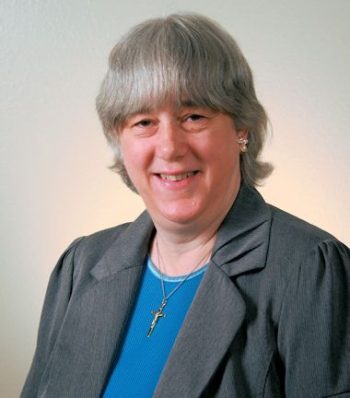
Terry Modica converted to Catholicism in 1977, drawn by the Eucharist. At that time, she began to study official Church teachings in order to understand and dig deep into her new faith. Always involved in her parishes, she gained a reputation for inspirational teaching and spiritual leadership in Adult Religious Education, prayer groups, Parish Council, Small Christian Community development, and a variety of other parish ministries. She has been a published author since 1982 and has served as a diocesan staff writer. She has a degree in Theology, and has been certified by the Diocese of Trenton, NJ, for Pastoral Administration, and is a certified graduate of the Lay Pastoral Ministry Institute of the Diocese of St. Petersburg, Florida. She is founder and Director Emeritus of Good News Ministries of GNM.org, the author of the popular daily Good News Reflections, and a professional speaker whose transformational messages bring the power of God to today’s challenges.
The page you requested could not be found. Try refining your search, or use the navigation above to locate the post.
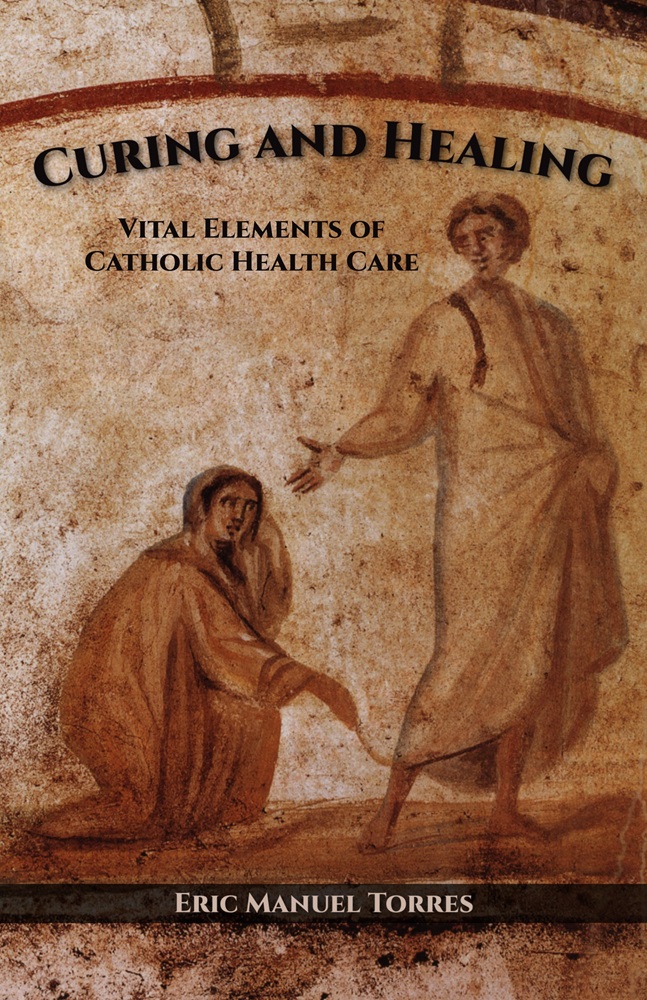

In this research, the significance of curing and healing will be explored with an emphasis on how both are vital to Catholic health care. This essay aims to show that only by embracing both components can health care professionals truly care for the whole person. Moreover, Christian health care professionals ought to follow Christ’s example in order to serve in His mission of caring holistically for those that are ill. As Luke’s account of the Haemorrhoissa (Lk 8:42-48) not only provides a vignette distinguishing between curing and healing, but also an excellent example of how Christ attended to both elements, this essay will interpret this story in order to gain insight into the indispensability of both to whole person Catholic health care. Further, examples extracted from palliative care, an area of health care where curing and healing can be clearly distinguished, will be used to illustrate these elements in practical terms.
Paperback: $12.95 | Kindle: $9.99
“Crafted with scholarly exegetic style, yet pithy and approachable, this timely publication should be read by any health professional who gazes seriously upon their career and sees a vocation.” – Vanco Hristov BSc (Hons), GradDipPsych, PhD candidate, The University of Melbourne
“In Eric Manuel Torres’ book, Curing and Healing, there is a good discussion of this difference which, on the whole, turns on the difference between curing an ailment and healing the whole person, a difference very ably illustrated at the end of the book. Thus, implicitly, there is a growing possibility that genuine Catholic Healthcare offers a uniquely, ethically sound approach to many of life’s difficult health crises. Furthermore, the encompassing vision of the person which inspires and informs the vocation of Catholic Healthcare, draws as it does on ancient and modern wisdom, whether of Christ or His Church, philosophy and medicine, and so is ever ready to explore and to answer the question of meaning and, if necessary, the need for reconciliation before death. As Torres himself says so well: ‘finding meaning in illness is as core to healing as the skeletal system is to our bodies’ (p. 20).” – Francis Etheredge, Catholic married layman, father of 11, 3 of whom are in heaven and an author of 17 books on Amazon: https://enroutebooksandmedia.com/francisetheredge/.
“This book demonstrates a highly developed understanding of the identity and mission of Catholic Healthcare.” – Dr. Frances Baker, RSM, STD, Senior Lecturer in Moral Theology and Systematic Theology at Catholic Theological College/University of Divinity (Australia)
“Torres has written a readable and cogently argued research essay. His conclusion that “healing…is multidimensional, and may include the physical yet not always” is sound. So is his general understanding of Catholic theology, especially of implications of the Incarnation, as applied to health care delivery.” – Rev. Dr. Bernard Teo, C.Ss.R., STD., Lecturer in Moral Theology at Yarra Theological Union/University of Divinity (Australia) and Te Kupenga – Catholic Theological College (New Zealand)
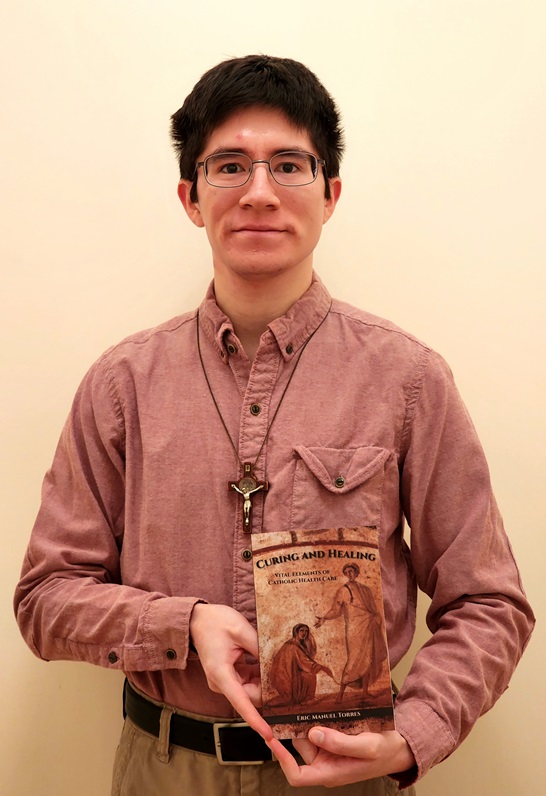 Eric Manuel Torres is a Catholic moral theologian and bioethicist with a background in health care. Based in Melbourne, Australia, he has recently completed a doctorate (PhD) from Catholic Theological College/University of Divinity. He holds a Bachelor of Health Sciences and a Master of Orthoptics from La Trobe University, a Master of Nursing Science from the University of Melbourne, a Graduate Diploma of Theology and a Master of Theological Studies from Catholic Theological College/University of Divinity, and a Graduate Certificate of Specialist Inclusive Education from Deakin University. He also holds a Certificate III in Business Administration. Moreover, Dr. Torres has published a number of articles appearing in several scholarly publications including Homiletic and Pastoral Review and the Journal of Religion and Health.
The page you requested could not be found. Try refining your search, or use the navigation above to locate the post.
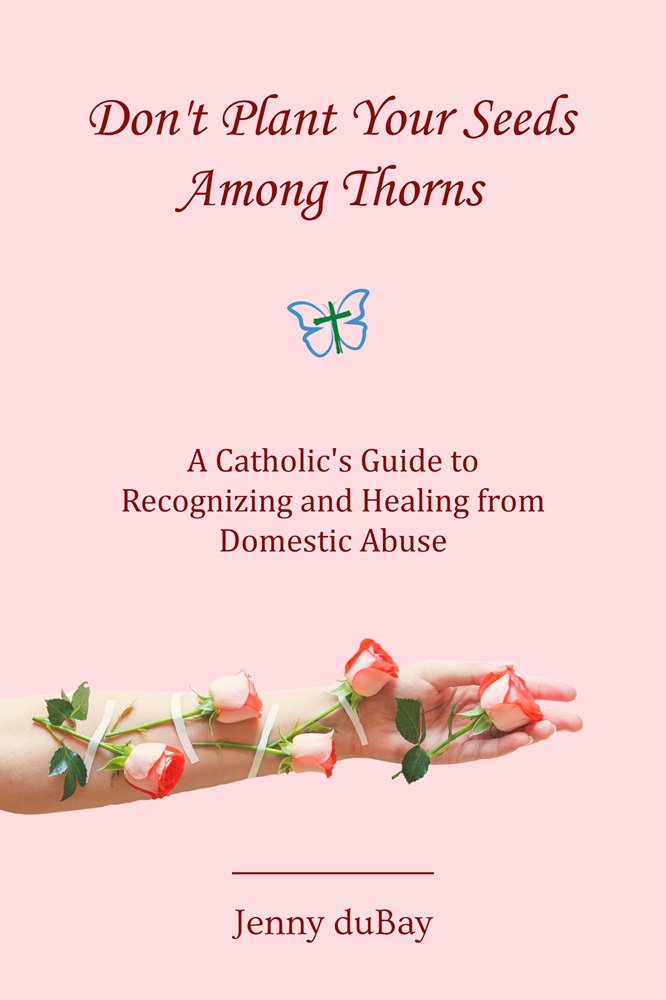
In this book, Jenny duBay helps survivors of intimate partner violence identify their situation and begin to heal. With empathy and compassion, she covers such topics as what domestic abuse is, the trauma of sexual assault and coercion, verbal attacks and isolation, and the evils of manipulative control within intimate relationships. She also discusses details on what the Catholic Church teaches about personal dignity, sacramental marriages, and the nature of domestic abuse. Jenny reveals the impact intimate abuse has on targets, providing practical and Christ-centered ways to heal—no matter where a survivor may be on her journey.
For those who have had to leave their relationships, Jenny discusses the annulment process and what it truly means—including the immense healing it can provide. For individuals who hope reconciliation can happen, she thoroughly and compassionately discusses the possibility of abusers changing their ways, helping readers determine what authentic repentance looks like—and when so-called repentance is just another abuse tactic. Whether you’re still married or have had to separate yourself from a toxic relationship, Don’t Plant Your Seeds Among Thorns helps you navigate trauma while providing resources and gentle guidance toward Christ-centered healing and empowerment of our true self, as God created you to be.
Paperback: $19.95 | Audible: $14.99 | Kindle: $9.99
“The Catechism observes that God’s original plan for marriage has been ‘seriously disturbed’ by sin (1608). As a result, man and woman’s ‘mutual attraction, the Creator’s own gift, changed into a relationship of domination and lust’ (1607). In Don’t Plant Your Seeds Among Thorns: A Catholic’s Guide to Recognizing and Healing from Domestic Abuse, Jenny duBay compassionately discusses the true nature of marriage while providing resources and hope for those who aren’t experiencing authentic companionship in their relationships. Drawing from the Catechism, the Theology of the Body, and various other trusted Catholic resources, Jenny opens the way to genuine healing for those seeking freedom from abusive relationships.” – Christopher West, Th.D., best-selling author, popular podcaster, and President, Theology of the Body Institute
“Jenny duBay has written a marvelous book, Don’t Plant Your Seeds Among the Thorns, that covers the topic of intimate partner abuse thoroughly and sensitively. As a survivor herself, she understands its deceitful trap, its traumatic impact as well as the courageous steps necessary to escape it. Significantly, her book addresses the problem from the point of view of the Christian faith. Jenny duBay plumbs the meaning of scripture and helps victims and survivors connect their faith with the evil they have experienced. She emphasizes the need for spiritual healing and guides the wounded along pathways to a new and regenerated life. Her book should be required reading for all parish ministers.” – Fr. Charles W. Dahm, O.P., Director of Archdiocese of Chicago Domestic Violence Outreach, from the “Foreword”
“Jenny duBay has created a tender wake-up call for wounded wives in abusive marriages. She brilliantly blends Holy scripture and church teachings with the truth around abuse in marriage. Her candid psychoeducation is balanced with gentle, directed encouragement toward spiritual truths that wives need to understand because so often misinformed church leaders and culture are teaching the opposite. She doesn’t skirt around the toughest of issues – sexual violence in marriage. Jenny’s heart for women to find their assertive spirit through Jesus and find empowerment to make choices based on safety is very clear. I highly recommend this book to any Catholic woman who is struggling to make sense of a confusing marriage.” – Bonny Logsdon Burns, Certified Partner Coach through the Association of Partners of Sex Addicts Trauma Specialists and co-host of Hope for Wives podcast.
“With candor and conciseness, Jenny duBay has written a book that brings clarity and practical wisdom for men and women who may find themselves stuck in the suffocating cycle of domestic abuse. I am certain that this compendium of insight into abuse, the Church’s teachings on marriage, and steps to escape such physical and mental violence will assist many in pursuing the respite they desperately need and in a manner that corresponds with the Church’s longstanding wisdom.” -Angela Erickson, host of the Integrated with Angela podcast
“In a caring and heartfelt manner, Jenny duBay has gifted us with a comprehensive book about intimate partner violence, from a Catholic perspective. She provides practical information and describes ways to recognize an unhealthy relationship and journey to a space of hope and healing for all harmed or who cause harm in this way. Also, it is a must-read for all those accompanying people on their path to live a safe and sacred life free of violence.” – Sharon O’Brien, Ph.D., Co-Founder and Executive Director of Catholics for Family Peace, Initiative of National Institute for the Family
“In ministry, we encounter women daily who are living in marriages characterized by manipulation, blame, coercion, denial and other forms of violence – emotional and spiritual as well as physical or sexual violence. These abusive experiences are a profound violation of our human dignity! Intimate partner violence leaves women feeling confused, alone, filled with despair and even suicidal. We are grateful to Jenny duBay for writing this book. With a solidly Catholic voice, Jenny addresses the oft-underemphasized reality of domestic violence and spousal abuse within Catholic marriages. The truth, clarity and practical advice contained in this book make it an invaluable resource for those enduring such trauma, and for those of us walking alongside of God’s wounded daughters.” – De Yarrison, CPCC, foundress of You Are Made New Ministry and Laura Ercolino, foundress of Hope’s Garden
“Jenny duBay’s Don’t Plant Your Seeds Among Thorns: A Catholic’s Guide to Recognizing and Healing from Domestic Abuse is not simply a book, but a lifeline for those seeking healing, understanding, and hope in the context of the Catholic Faith. Throughout this work the author’s wisdom and empathy shine through each page, which results in the illumination of a definitive path towards the reclaiming of one’s dignity and becoming a survivor of abuse, especially abuse within the institution of marriage.” – Christina M. Sorrentino, author of Belonging to Christ: Catholic Poetry and contributor to Missio Dei’s book, The Eucharistic Revival Project
“Should Catholics stay in an abusive relationship? Jenny duBay answers this question with such clarity and heart in her book Don’t Plant Your Seeds Among Thorns. Comprehensive, practical and healing, this book is a must-read for anyone suffering from an abusive relationship. Coming from an expert and survivor of domestic abuse, the author will guide you as you seek to understand, forgive, move on and heal from the trauma of abuse. There is hope and healing even when all else seems lost.” – Jocelyn Soriano, author of various self-help and Catholic books including Mend My Broken Heart and 366 Days of Compassion, book reviewer, and writer of the Patheos column “Beloved”
“Jenny duBay is an author who writes with a deep understanding of God’s mercy, through which she hopes to communicate God’s love to others. She has a particular calling to provide healing to those who have suffered from domestic violence, and a desire to provide hope to those who feel forsaken. For any who are seeking inspiration or direction from the brokenness of life, I whole-heartedly endorse her writings. In her word’s, God’s love is waiting for you.” – Michael Snellen, founder of I AM Catholic and Catholic Creators
“Jenny duBay’s book Don’t Plant Your Seeds Among Thorns: A Catholic’s Guide to Recognizing and Healing from Domestic Abuse was the focus of a summer 2024 women’s book study in my parish. The group was initially 4 women but grew to 11 after advertising the study in the parish bulletin. The women attended for various reasons and all found the reading to be very informative, consoling, and hopeful. While the topic can be difficult to think and read about, Jenny presents it in a clear, compassionate way while incorporating the truths of Catholic teaching. Meaningful conversations came about during our group meetings that helped those on the path of healing. As a result, our group is considering doing this book study again soon to revisit and go deeper with the topic as well as to invite others who may not have been able to attend initially. I recommend any women’s or men’s groups to consider taking the time to read and discuss this book as a way to educate themselves and to shed light on a grave issue happening right in their own parishes.” – Kim Ferguson, Women’s Book Study Leader, Diocese of Lansing
 Jenny duBay is a trauma-informed Catholic life coach, certified Deconstructing Gaslighting Specialist (C-DGS), a certified narcissistic abuse specialist, and earned her B.A. in Catholic Theology from Holy Apostles College & Seminary and Catholic Distance University. In addition to her coaching ministry, Jenny is the foundress of Create Soul Space, a website designed to help cultivate awareness of domestic violence within a Catholic setting. Jenny is the domestic violence support group facilitator at Hope’s Garden, is associated with Catholics for Family Peace and works with various organizations within the Church to support survivors of domestic violence. Author of the Create Soul Space and Prodigal Parishioner blogs, Jenny also writes for Missio Dei along with various other Catholic publications including Dan Burke’s SpiritualDirection.com
(Photo credit: Brian Strickland)
The page you requested could not be found. Try refining your search, or use the navigation above to locate the post.
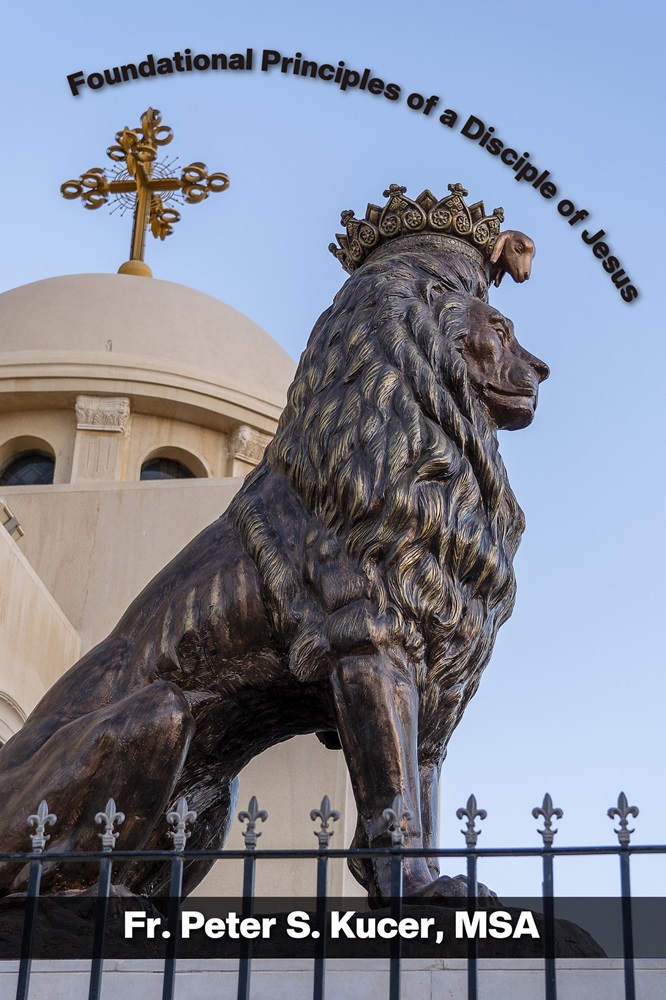
These foundational principles were written with the intention of delineating how to be a faithful, healthy, charitable, and truthful disciple of Jesus. Each one is intended to be understood in relationship with the other principles from the perspective of our life of faith as each bead in a decade of the rosary is to be prayed in relationship to the other beads from the perspective of a mystery of faith. Practicing them is like putting “on the whole armor of God, that you may be able to stand against the wiles of the devil.” (Ephesians 6:10-11)
Paperback: $14.95 | Audible: $14.99 | Kindle: $9.99
“Fr. Peter Samuel Kucer, MSA, has produced quite a grand opus in his collection of works on Marian Devotion, Catholic Church History, East and South East Asian History, Catholic Apologetics, Protology and the Priesthood, Western Civilization, Political Science, and now foundational principles on discipleship. Each of his books provides wisdom for the beginner and clarity for the educated.” – Dr. Sebastian Mahfood, OP, author of The Narrative Spirituality of Dante’s Divine Comedy
The page you requested could not be found. Try refining your search, or use the navigation above to locate the post.