TESTIMONIALS
“A MUST READ for any person striving for happiness and peace. The Saint Nicholas Society is thought provoking, riveting and a true story of redemption which weaves a crossover of modern and ancient stories of inspiration enjoining tough adversity – something we all need today. As a cradle Catholic, I found this book reawakened my appreciation for all Christians in the faith as I journeyed with the characters. I am inspired to live my faith, not simply follow the rules. If you are looking for a moral compass, a way to understand trust in a way we are all meant to live, this is the book for you. The author has a masterful easy to read writing style. Note: this book is rated ‘R’ for reality, for language and lifelike torture scenes (i.e., in Roman prisons). Again, a MUST READ ~ you will not be disappointed.” – Shawn Sylvie
“Inspiring, Informative, Heartwarming! Whether a person is looking for a good read, a spiritual text, or something to lift their spirits this book covers all those bases. Firstly, Ben has a great flow and style to his writing. He allows the characters to tell the story as he gently guides the reader forward. From a spiritual perspective, this book should be required reading for anyone trying to understand the Holy Trinity. Unfortunately, I don’t want to give it away, but suffice it to say, it was the clearest explanation I have ever run across. Finally, the book is infused with love. The characters and motivation for this book come straight from Ben’s heart. Ultimately, it is hard to put this book down without walking away with a sense of goodness in the world and faith in humankind.” —Erik Christianson, EdD
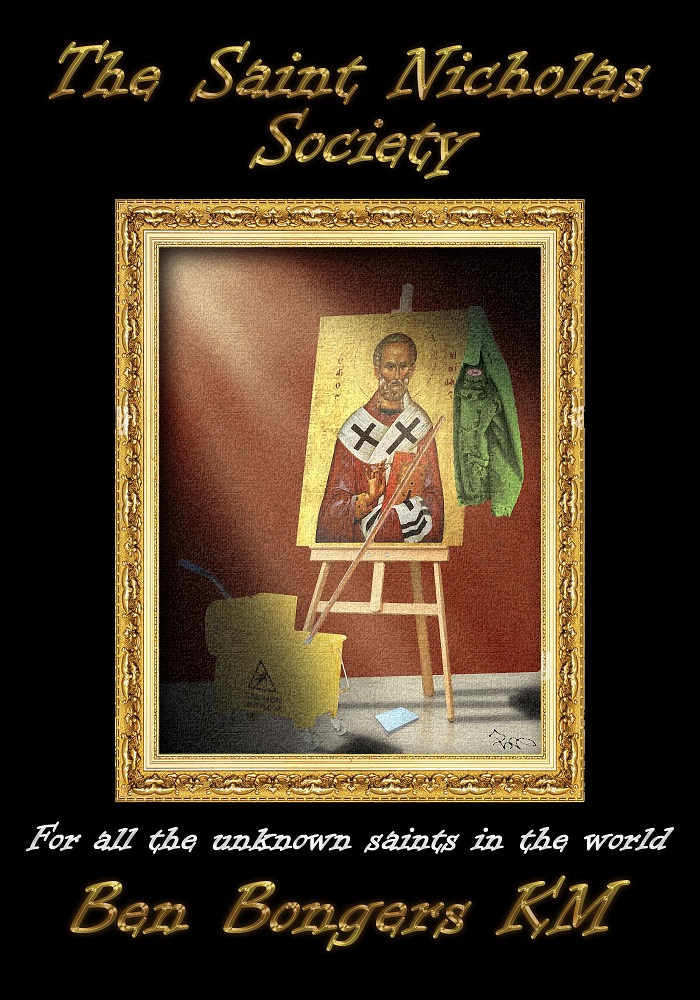
“With The Saint Nicholas Society, author Benjamin Bongers weaves two engaging narratives into one enlightening yarn. Finding inspiration in Saint Nicholas of Myra, Bongers’ empathetic yet alienated people find the spirit of giving as they rise above the struggles of everyday existence as well as accepting the inevitability of mortality. This narrative delightfully explores the origins of St. Nicholas; starting as a humble son of a fisherman, young Nikki grows from rambunctious youth into a pillar of selfless giving and an icon for Faith; he becomes—first resisting the responsibility—Nicholas, Epískopos to a growing flock, in a landscape where such faith could be perilous. Likewise, he is the symbol for Bongers’ modern day ‘players’ striving to make their lives and world a far better place. So, curl up in a comfortable chair, with a cup of coffee by your side; bond over, say, a nice Chinese Custard bun and enjoy an epic ride into ‘offering and acceptance,’ a pleasant glide into spirituality. In homage to the Marx Brothers, Saint Nicholas might be a ‘sanity clause’ after all.” —Les Epstein, Author, Sleep Cinematic: A Golem’s Quartet, Kip Divided
“The Saint Nicholas Society is a brilliant and beautiful testimony to true Christianity as told through two very moving storylines. It shows that every person is a loving light to his brothers and sisters in Jesus Christ. Amen, it is never too late to strike that spark of holiness, and through humility, be a living witness to our Lord. I can’t think of a better way to show who and what a real Christian is.” —Timothy Jeffries, KM, Chancellor, Order of Malta Western Association USA
“A story about the enduring power of one’s belief in God to change lives for the better, The Saint Nicholas Society has a heart as big as its author’s; it is a book that will restore your faith in humanity’s basic goodness.” —Heidi L. Waterman, author
“The Saint Nicholas Society is a touching and charming novel. In its pages, I was reminded once again that The Divine is revealed throughout history in ways that are deeply personal and fresh. May the eyes of our hearts be enlightened to see Divine Presence everywhere we turn.” —Rev. Brian David Morse, MDiv, BCC, MS. Director of Chaplain Services for University Health Lakewood Medical Center
“I loved reading The St. Nicholas Society! This book is exceptional! It weaves a historically accurate story with the storyline of a current day common person. The characters are incredibly engaging. The story draws you in and makes you turn the page! As a catechist I have been able to use the thoroughly researched text in my classes. The book is a wonderful way to teach faith, hope, and community.” — Mary Orth, Educator and Catechist, All Saints Academy, St. Cloud MN
“Imagine Jan Karon’s Mitford series characters have slightly grittier neighbors from the city. Despair turning to hope, a sense of community, action and adventure – it’s all there. Alternate that story with a thrilling historical tale worthy of a spin-off from The Chosen. Ben Bongers has done his research! Balancing history with accessible characterization, I’ll never think of “Santa” in the same way again. Taken together, the two stories inspire us to find the spirit of St. Nick in ourselves. This is a perfect addition for any book club looking for something of substance to discuss. And with its vivid imagery, I’d love to see it become a movie, or, better yet, a mini-series!” —Linda Ade Brand, Stage Director
“Mr Bongers has crafted a remarkable combination of snapshots of contemporary San Francisco with historical fiction of the early Christian church that has much to say to readers everywhere. He creates a bevy of memorable characters that will live on in your imagination. He describes a witty, likable Nicholas of Myra that embraces his legend without over-sentimentalizing his life, and in so doing confects a remarkable evocation of the early church caught between coexistence with pagans and persecution by imperial Rome. Bongers cleverly juxtaposes Nicholas’s adventures with the very relatable problems encountered by Fred and his companion Catholics. Inspired by the architecture and atmosphere of the very real San Francisco parish of St Dominic’s, Mr Bongers brings us into conversation with the ways we might take the saints out of the icons and put them into the center of our lives and actions.” —Timothy Pursell, holds a PhD in Modern History from Indiana University. He has taught courses on Jewish civilization and early Christianity.
“I am proud of my friend, Ben Bongers, for writing such an engaging novel. It’s a pleasure to read.” – Brian Morse, friend of author
From Amazon’s website!
Reviewed in the United States on April 30, 2022
A very good read. It was long but I still wanted even more. I was sad when it ended. Very well-written and good stories that really hit you in your gut and in your heart. I am going to be looking for more from this author.
Reviewed in the United States on August 29, 2022
The Saint Nicholas Society is thought provoking, riveting and a true story of redemption which weaves a crossover of modern and ancient stories of inspiration enjoining tough adversity – something we all need today. As a cradle Catholic this book reawakened my appreciation for all Christians in the faith as I journeyed with the characters. I am inspired to live my faith, not simply follow the rules. If you are looking for a moral compass, a way to understand trust in a way we are all meant to live, this is the book for you. The author has a masterful easy to read writing style. Note: this book is rated “R’ for reality, for language and lifelike torture scenes (ie. in Roman prisons). Again, a MUST READ ~ you will not be disappointed.
Reviewed in the United States on August 5, 2022
I couldn’t put this book down. There were uncomfortable moments, to be sure, but they served the overall meaning. What I loved most was that the story telling was nudging me toward a point of view of true Christianity, true faith, while not being “preachy.” It just takes one in, and delivers.
Reviewed in the United States on August 5, 2022
I couldn’t put this book down. There were uncomfortable moments, to be sure, but they served the overall meaning. What I loved most was that the story telling was nudging me toward a point of view of true Christianity, true faith, while not being “preachy.” It just takes one in, and delivers.
Reviewed in the United States on September 6, 2022
The Saint Nicholas Society delivers not one, but two compelling, parallel yarns. Both filled with relatable characters and compelling examples of how Faith impacts lives in real, but often overlooked ways. Small acts of kindness, when done in humility, matter. Something that we all need to be reminded of and this book does so in an entertaining and poignant manner.

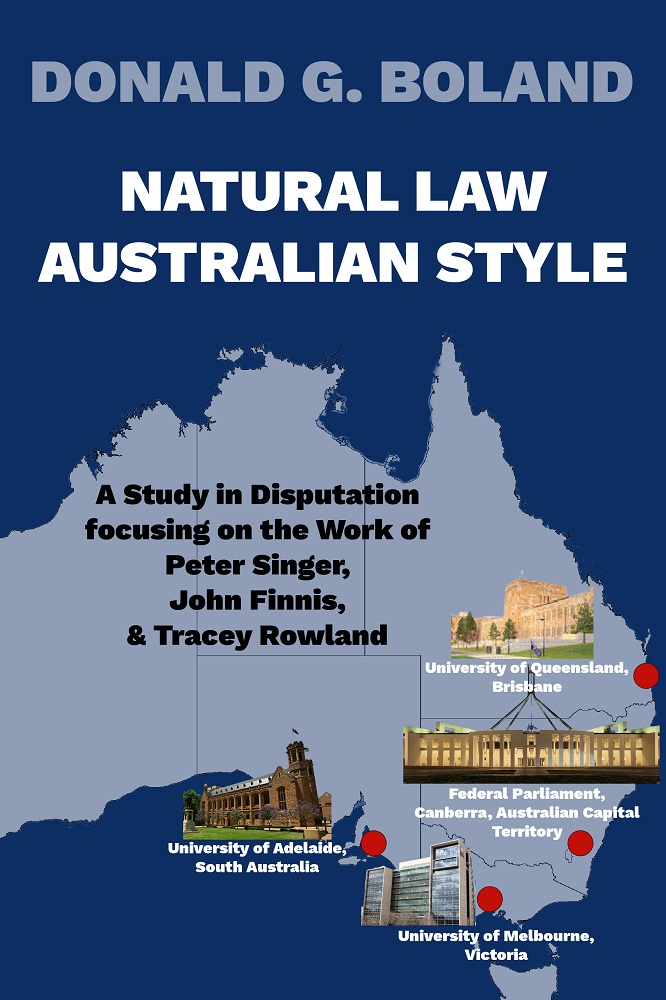
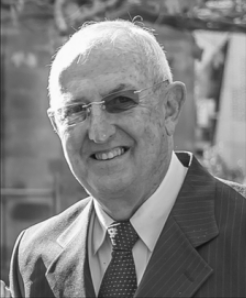 Donald G Boland, Ll. B., Ph. D., is a founding member of the Centre for Catholic Studies Inc. in Sydney, Australia, and served as its president. He practiced for a number of years as a lawyer having a degree in law from the University of Sydney. Over much the same time, having obtained a doctorate in philosophy from the University of St. Thomas in Rome, he has taught philosophy and law in both Catholic and secular educational institutions, such as the University of Technology, Sydney, the University of Newcastle, the Aquinas Academy, the Centre for Thomistic Studies Inc., now operating under the name of the Centre for Catholic Studies Inc., and various Catholic seminaries, such as those of the Marists and the Vincentians.
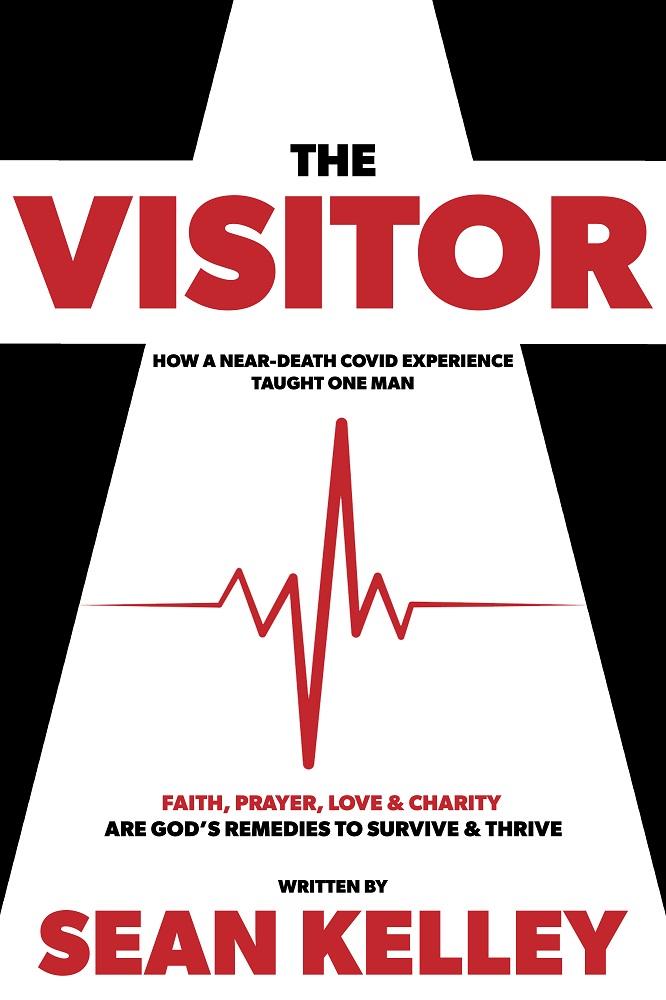
 After leaving US Army Special Operations as a Non-Commissioned Officer, Sean Kelley applied those leadership principles to automotive management, and successfully led car dealerships for over a decade. After recently surviving severe covid pneumonia, Sean’s most recently published book The Visitor is being sold in multiple countries and published in several languages. The non-profit Sean launched, Cards for COVID, cards4covid.org, supports hundreds of medical professionals and COVID patients in multiple States. Sean’s passion for people development and ability to coach led him to grow from General Sales Manager to Chief Business Development Officer of a multi-million-dollar CRM software company. Now, as CEO of Car Motivators, and founder of Market Motivators, Sean and his team works with dozens of car dealerships, technology companies, fortune 500 companies, start-ups, and hundreds of coaching clients across the country to help them achieve their biggest goals. Sean helps his clients grow with a no bull approach, ability to improve communication, follow through and a focus on continuous improvement. As such, Sean’s clients consistently set sales records, eliminate employee turnover, all while increasing gross and net profit. More importantly, Sean and his team help the managers throughout the businesses they coach enjoy their role by helping them grow as leaders. Sean was consultant of the year in 2018 by Dealership News and recently ranked #10 in Ambition.com top 100 sales coaches. Sean’s engaging presentations have been featured at conferences like: Digital Dealer, Automotive Game Changers, Rockstar Tech Conference, Canadian Game Changers, SLADA, TIADA, and DrivingSales. Sean’s vision is to positively impact the leadership landscape and culture of the businesses he works with, by teaching managers the leadership language of coaching.