Formation Activities and Catholic Seminarians by Rev. Alfredo I. Hernandez

Formation Activities and Catholic Seminarians by Rev. Alfredo I. Hernandez

Formation Activities and Catholic Seminarians: A Practical Theological Study of their Impact on Subsequent Perseverance in Ministry

by Rev. Alfredo I. Hernández

What can we seminary formators, bishops, and others involved in the formation of seminarians do to help the men who are ordained from our seminaries to be joyful and fruitful as priests and persevere in ministry? The answer to this question is grounded in practical theology and concerns the specific changes we might make in the choice of formation activities during seminary to increase the likelihood of lifelong perseverance. Father Alfredo Hernández invites his fellow formators to consider with him the theological and pastoral benefits and the impact on priestly formation of each of the programs included in the study: Clinical Pastoral Education (CPE), the Institute for Priestly Formation, pastoral year internships, spirituality or propaedeutic year experience, priestly fraternity groups, and pastoral language immersion programs.

Paperback: $14.99 | Kindle: $9.99

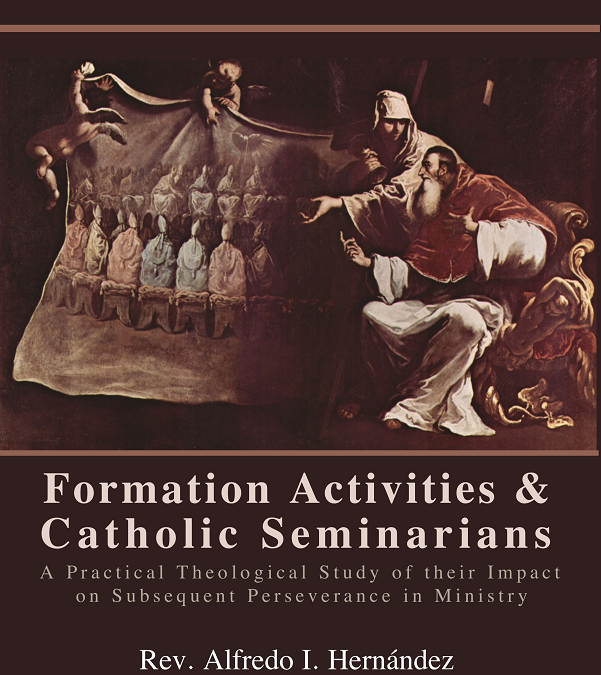
This table helps to point out the activities with the highest positive and negative effects on each aspect of formation. The blocks shaded in green show positive Net Impact Scores (the darker green, the more positive the score) while the blocks shaded in red show negative Net Impact Scores (the darker red, the more negative the score). IPF has the highest total Net Impact Score, 43, while the pastoral-year internship experience and a propaedeutic or spirituality year experience are in second and third place, with total Net Impact Score of 31 and 28, respectively. The only programs with a negative Net Impact Score are CPE and language immersion programs, with CPE having a much higher negative net impact, –37. To see how this grid was put together, get your copy of this book today!

TESTIMONIALS

“A must-read for all involved in seminary formation. Its engaging writing style, grounding in theology of priesthood and research literature, and suggestive conclusions are enough to commend this to a very wide readership. Its astute engagement of practical theology marks it as exceptional. I highly recommend this work.” – Bryan T. Froehle, Professor of Practical Theology, Director of the Ph.D. Program in Practical Theology, St. Thomas University, Miami

“We certainly all desire good and holy priests who will persevere through the joys and trials of life. This book sheds light on the various programs that seminaries use to assist in the formation of future priests in order to do all that can be done to ensure a joyful, fruitful, and lasting ministry. As a former rector of a major seminary, and now a bishop, I have found this book to be of great value. Fr. Hernández asks important questions, provides some important answers, offers recommendations for formation today, and opens doors for future research.” +David L. Toups, Bishop of the Diocese of Beaumont, Former Rector of St. Vincent de Paul Regional Seminary, Boynton Beach

“Fr. Hernández’s highly-valued systematic research is immensely important and timely as it supplies Bishops, Vocation Directors, Rectors, Seminary Formators and all of the lay faithful especially interested in seminary formation with new practical wisdom. The positive and negative impact of a wide variety of seminary programs are creatively analyzed and clear recommendations emerge regarding what programs actually produce ministerial joy and fruitfulness in the lives of future priests.” – Fr. John Horn, S.J., Faculty at St. Vincent de Paul Regional Seminary, Co-Founder of the Institute for Priestly Formation and the Seminary Formation Council

“In higher education in the last decade, a great deal of emphasis has been placed on outcomes-based education. This focus could not be more critical than in the area of priestly formation, where the purpose of formation is specifically to prepare seminarians for lifelong ministry. Yet, almost no studies have been done or data collected on the impact of seminary programs on lifelong formation and ministerial practice. Once ordained, the priest is ontologically changed and hence always a priest, yet how has formation prepared seminarians in a way that they can be joyful and effective priests and be prepared to persevere throughout their whole lives in living out this change? How is the soil for the grace of ordination best prepared? Fr. Hernández’s research makes an important initial foray into this area of research. His findings provide food for thought for seminary formators and administrators, and they will catalyze conversation about the contributions made by a wide range of seminary formation programs. And, even more importantly, this study has unflinchingly asked the questions and kicked-off a direction of inquiry that could help shape effective formation in the years to come.” – S. Mary Krysiak Bittár, Director of the Office of Research and Institutional Effectiveness and Assistant Professor, St. Vincent de Paul Regional Seminary

“A must-read for all involved in seminary formation. Its engaging writing style, grounding in theology of priesthood and research literature, and suggestive conclusions are enough to commend this to a very wide readership. Its astute engagement of practical theology marks it as exceptional. I highly recommend this work.” — Bryan T. Froehle, Professor of Practical Theology, Director of the Ph.D. Program in Practical Theology, St. Thomas University, Miami
 

ABOUT THE AUTHOR 

Rev. Alfredo I. Hernández is President-Rector of St. Vincent de Paul Regional Seminary in Boynton Beach, Florida, where he has served as Vice-Rector, Academic dean and a member of the formation faculty from 1997 to 1999 and from 2013 to the present.

Ordained a priest of the Diocese of Palm Beach in 1992, he served 14 years as Pastor of St. Juliana Parish in West Palm Beach, from 1999 to 2013, and a year as the director of permanent diaconate formation from 2015 to 2016.

He earned an STL in Dogmatic Theology from the Pontifical Gregorian University in Rome and a PhD in Pastoral Studies from North-West University in Potchefstroom, South Africa.

OTHER PRACTICAL THEOLOGY BOOKS

No Results Found

The page you requested could not be found. Try refining your search, or use the navigation above to locate the post.

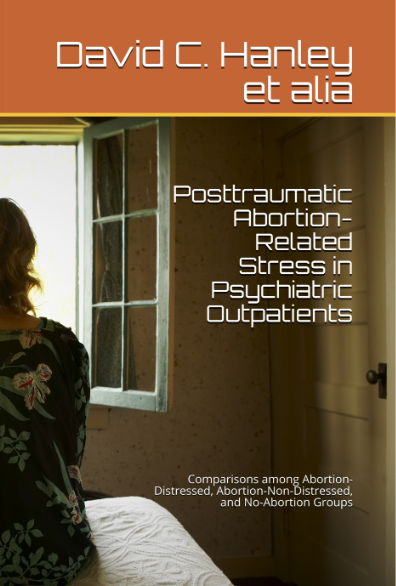
Posttraumatic Abortion-Related Stress in Psychiatric Outpatients

Posttraumatic Abortion-Related Stress in Psychiatric Outpatients

CONGRATULATIONS!

Posttraumatic Abortion-Related Stress in Psychiatric Outpatients is the  third place winner in the 2021 Catholic Media Book Awards category of “Life and Dignity of the Human Person.” Women who were helped by the Pine Rest Study showed up at the late  David C. Hanley’s wake in 2018.  He had not seen them in over 20 years.

Posttraumatic Abortion-Related Stress in Psychiatric Outpatients: Comparisons among Abortion-Distressed, Abortion-Non-Distressed, and No-Abortion Groups

by David C. Hanley, Rachel L. Anderson, David B. Larson, Harry L. Piersma, D. Stephen King, Roger C. Sider

Objective:  This study examines potential risk factors for long-term abortion-related distress in women.

Method: One hundred and two women receiving outpatient psychiatric services were assigned to one of three groups on the basis of their reported abortion history. Women with a positive history of abortion were assigned to a distressed or non-distressed group depending on whether abortion-related distress was a primary presenting problem. Women with no history of abortion who sought outpatient services served as controls.

Results: Comparisons across groups revealed that the abortion-distressed group had symptoms consistent with Posttraumatic Stress Disorder, including intrusive thoughts of the abortion experience and active avoidance of events associated with their abortions.  Two women who underwent an abortion following rape were both in the abortion-distressed group.

Conclusions: Implications for identifying women at risk for long-term distress are discussed and suggestions for clinical interventions are made.

Paperback: $9.99 | Kindle: $5.99

Figure 1 in support of the Appendix entitled “Methodological Considerations in Empirical Research on Abortion.” (Anderson, Hanley, Larson, Sider) in  Post-Abortion Syndrome: Its Wider Ramifications ed. by Peter Doherty (Four Courts Press, 1995). Included with permission.

A NOTE FROM THE AUTHOR’S WIFE, MARY HANLEY

Posttraumatic Abortion-Related Stress in Psychiatric Outpatients, †Hanley, Anderson, †Larson, †Piersma, †King, and Sider is also known as the Pine Rest Study.

The late David C. Hanley, MSW, BCD, noticed that women he was treating for trauma after an abortion had the same symptoms as a Vietnam veteran whom he was treating for PTSD on an inpatient ward at Pine Rest Christian Hospital, Grand Rapids, Michigan. Mr. Hanley treated the women for PTSD. They all got better. He initiated the clinical research which used standardized tests considered to be state of the art at the time. The study was conducted by clinicians and researchers on both sides of the abortion issue. 

The first article was presented to the American Psychological Association, New York, 1995. The article in the appendix, “Methodological Considerations of Empirical Research on Abortion, Anderson, †Hanley, †Larson, and Sider was published as a book chapter in Post-Abortion Syndrome: Its Wide Ramifications ed. by Peter Doherty, Four Courts Press, Dublin, Ireland, 1995. 

I published the Pine Rest Study and related article because Pine Rest colleagues and women helped by this study came to Mr. Hanley’s wake in 2018. He had not seen most of them in over twenty years. The women said they continue to help other women deal with their abortion. I obtained permission to publish from all authors or their living spouses and Four Courts Press.

The book took third place honors in the “Life and Dignity of a Human Person” in the 2021 Catholic Media Book Awards.

Sincerely,

Mrs. David C. Hanley

TESTIMONIALS

“In today’s world where abortion rights advocates advance their services as health care, this 25-year-old study by David C. Hanley and others prophetically exposes abortion as the exact opposite.” — Dr. Sebastian Mahfood, OP, Africa LIFE Runners Coordinator

“I almost dropped to the floor when I opened the package you sent me a few days ago! What a pleasant surprise! Let me start by thanking you from the bottom of my heart for thinking of me and sending David’s research book. I will treasure it as long as I live because it reminds me so much of the clinical work that David, Steve King, and I did together on the Pine Rest Adult Services team.  What a gift you and others have given! You have greatly honored the work that David did to research the literature and administer the protocols on what really happens with women who have undergone elective abortions! I wish we could still sit down together as we did in our team meetings and discuss what our clients were teaching us (!) as we tried to listen and serve them with the compassion of our Savior.  We as students of the mind and emotions are also learning so much in the years since we worked at Pine Rest. The issues of attachment and bonding are so much more prominent now, not only between mother and child but also between husband and wife, friend and friend, teacher and student, and, of course, therapist and client. We are also learning so much more about how the brain reacts to traumatic experiences. We are learning that trauma is just as strong when a relationship is broken or threatened as when physical pain is administered. Advances in brain scanning (fMRI) procedures have documented and confirmed this. I hope there will be more research done, perhaps spurred by David’s work on the attachment of wounds created in pregnant mothers when they are even contemplating an abortion. Well done! —To all who participated in getting this research published!” – Kenneth J. Ellis, PhD, Licensed Psychologist

ABOUT THE AUTHORS 

At the time of the writing in 1995:

David C. Hanley, MSW, was a Senior Clinical Social Worker at Pine Rest Christian Hospital in Grand Rapids, Michigan. Trained at the University of Michigan School of Social Work, he has specialized in treatment of women stressed by their abortions and has served as principal investigator of a clinical research study of post-abortion stress conducted at Pine Rest Christian Hospital. 

Rachel L. Anderson was a doctoral student in the Human Development and Social Policy Program at Northwestern University, Evanston, Illinois. Her research focus was on women’s health, including completion of a systematic review of the medical, psychological and social effects of induced abortion on women, funded by the U.S. Department of Health and Human Services. 

David B. Larson, MD, MSPH, was Adjunct Professor of Psychiatry at Duke University Medical Center, Northwestern University Medical School and the United States Uniformed Health Services. A former research psychiatrist at the National Institute of Mental Health and the U.S. Department of Health and Human Services, he then became President of the National Institute of Healthcare Research. Dr. Larson helped to develop the systematic review methodology and specialized in the public policy implication of religious commitment. He had over 160 professional publications in such policy areas as mental health diagnoses and services, the use of nursing homes, and AIDS/HIV infection. 

Harry L. Piersma worked most of his career at Pine Rest Christian Hospital in Grand Rapids, Michigan, and later retired from the W.G. Hefner VA Medical Center in Salisbury, North Carolina. 

D. Stephen King, MD, was a Staff Psychiatrist Pine Rest Christian Hospital in Grand Rapids, Michigan.

Roger C. Sider, MD, was a Medical Director of the Pine Rest Christian Hospital in Grand Rapids, Michigan, and professor of Human Medicine at Michigan State University. Trained at the University of Toronto and Johns Hopkins Hospital, he has published numerous articles and book chapters on psychiatric ethics and had a life-long interest in clinical care, clinical administration, and the interface of psychiatry and religion. 

OTHER ACADEMIC BOOKS

No Results Found

The page you requested could not be found. Try refining your search, or use the navigation above to locate the post.

Aiuta Dante, Aiuta l’Italia

Aiuta Dante, Aiuta l’Italia

Aiuta Dante, Aiuta l’Italia

Una nuova traduzione di Daniel Fitzpatrick accompagnata dalla nuove sculture di Timothy Schmalz

Fai una donazione oggi stesso!

Nella celebrazione del settimo centenario della “Divina Commedia”

Dante Alighieri cominciò a scrivere la Divina Commedia, opera che segue i passi del progresso di un pellegrino verso la nostra vera casa in cielo, nell’anno 1308 e completò il suo lavoro nell’anno 1320, con pubblicazione nel 1321 (lo stesso anno in cui morí). La Divina Commedia inizia in una selva oscura di disperazione e finisce nella visione beatifica di Dante che entra completamente nel pensiero divino.

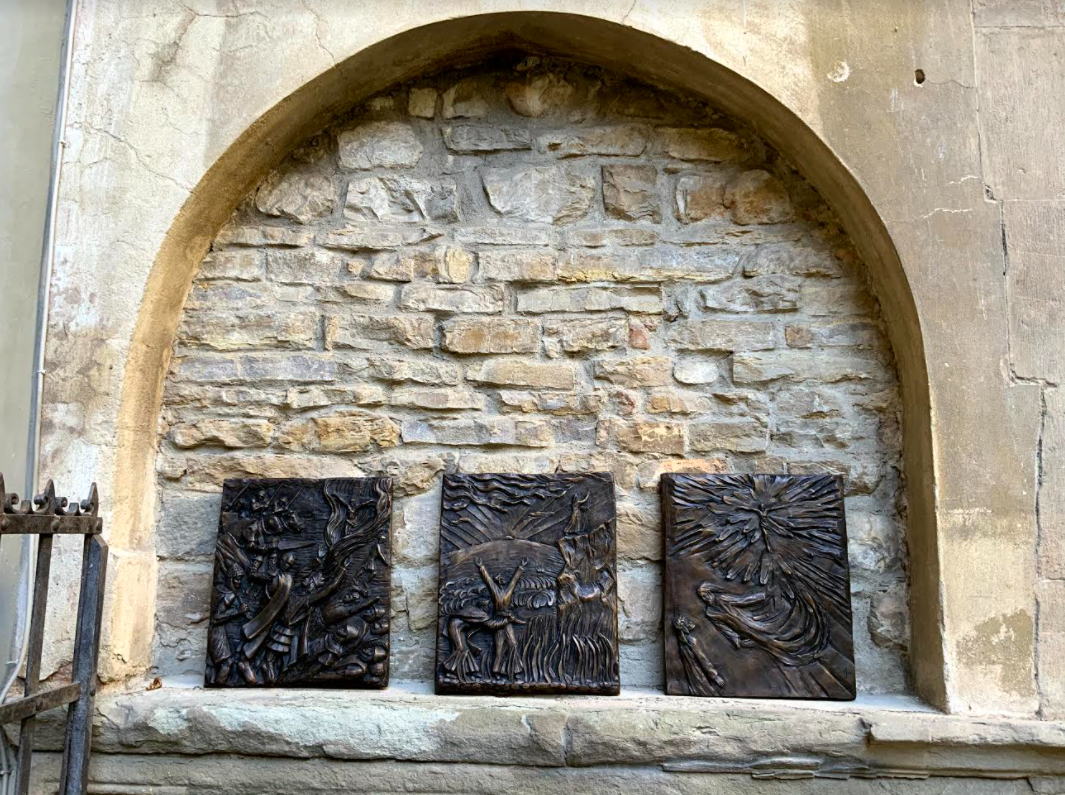
In questa nuova traduzione, scritta nel corso del periodo di settimo centenario tra il completamento e la pubblicazione, e meravigliosamente illustrata dalle sculture di Timothy Schmalz, Daniel Fitzpatrick rende il lavoro accessibile ai lettori del 21esimo secolo nella celebrazione del settimo centenario della morte di Dante.

La traduzione e le opere hanno iniziato ad essere distribuiti via email al ritmo di 2 Canti per settimana (ogni Mercoledí e ogni Domenica) a partire dal 25 Marzo 2020, il primo “Dantedì”, giorno dedicato alla celebrazione dei poeta fiorentino. La distribuzione verrà completata entro il 25 Marzo 2021, in tempo per la fine della celebrazione del settimo centenario.

Per riceverlo nella tua email, è richiesta una donazione minima di 5 USD per mezzo del nostro “GoFundMe” cliccando qui. Coloro che doneranno 50 dollari o più riceveranno in aggiunta una copia gratuita della prima edizione, Inferno, che verrà pubblicata nell’estate 2020. Coloro che doneranno 100 dollari o più riceveranno una copia gratuita della prima edizione dell’Inferno e del Purgatorio. Coloro che doneranno 150 dollari o più riceveranno una copia gratuita dell’Inferno, del Purgatorio e del Paradiso. Coloro che doneranno 250 dollari o più riceveranno copie di tute e tre i libri ed inoltre una scultura di dimensioni maggiori. Nota: le copie omaggio verranno spedite non appena verranno completate nel corso dell’anno. Inoltrate il vostro indirizzo per la consegna a Sebastian Mahfood a mahfood@wcatradio.com

Dante Alighieri

(1265-1321)

La Selva Oscura – 25 Marzo 2020 Il Pensiero di Dio – 25 Marzo 2021

Il traduttore

Daniel Fitzpatrick è cresciuto a New Orleans, Louisiana, ha studiato Filosofia presso l’Università di Dallas e presso lo Holy Apostles College & Seminary, e vive ad Hot Springs, Arkansas, con sua moglie e i suoi due figli. Le sue poesie e i suoi testi sono stati pubblicati e diffusi ampiamente. Il suo primo romanzo, “Only the Lover Sings”, è stato pubblicato da En Route Books and Media nel 2020.

L’illustratore

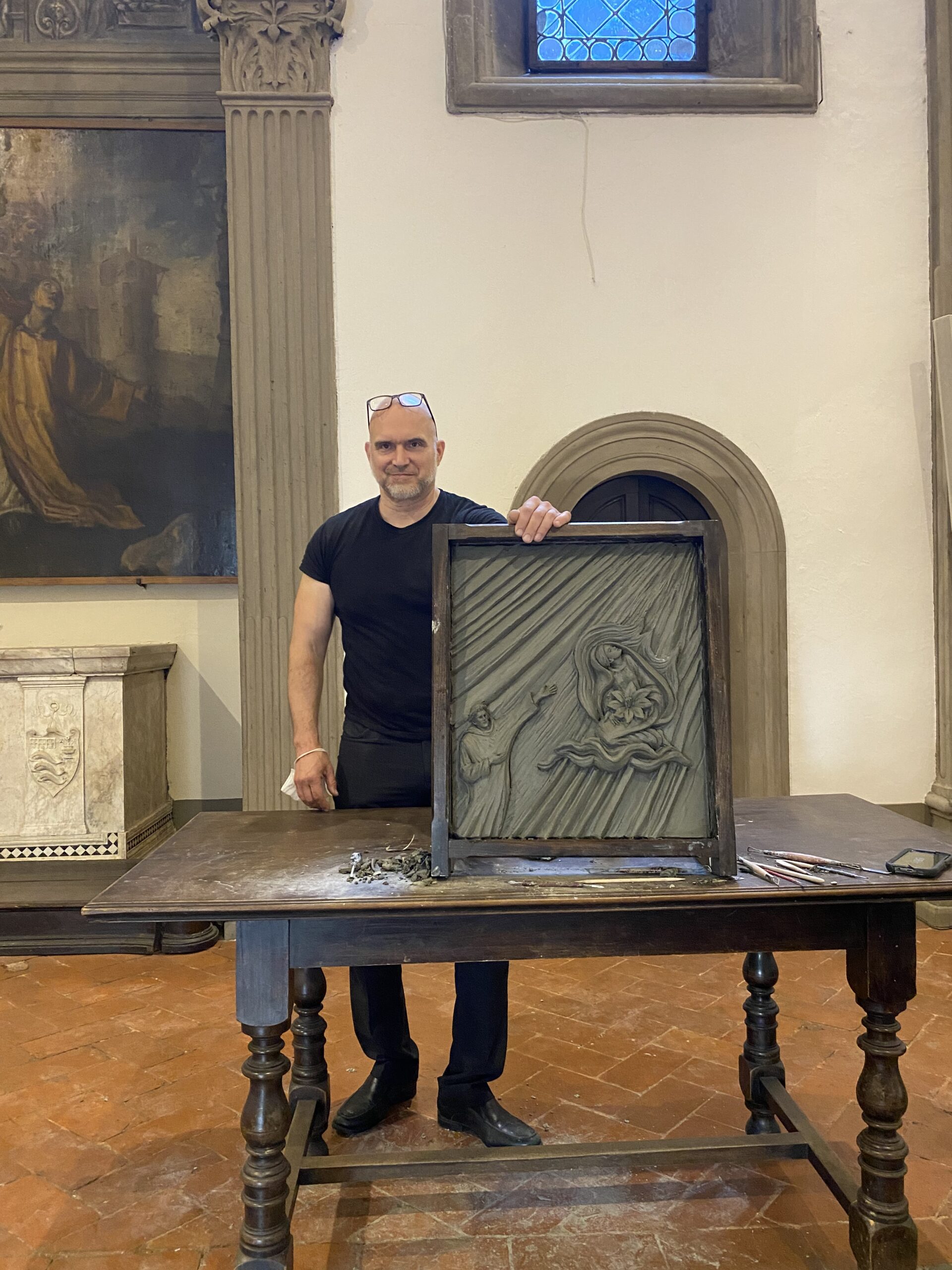
Per oltre 25 anni, l’artista Timothy Schmalz ha realizzato sculture di grandi dimensioni. Timothy fa parte della corrente di artisti figurativi e le sue opere sono state installate in tutto il mondo. Alcune delle sue opere più note sono installate in chiese storiche di Roma e in Vaticano. Timothy si descrive come un traduttore visuale delle Bibbia. In questa sua collezione di sculture, Timothy fornisce una traduzione visuale di uno dei più grandi poemi d’amore che l’Italia abbia mai prodotto.

Recensioni

Schiffer, Kathy. “Celebrare Dante e Aiuta a combattere il Coronavirus: Nuove sculture e una nuova traduzione che riporta vita alla Divina Commedia.” National Catholic Register. 30 Marzo 2020. Leggi l’articolo qui.

Editoriale. “The Dante 700 Project by Timothy Schmalz.” La Gazzetta Italiana. Aprile, 2020. Leggi l’articolo qui

Timothy Schmalz, Scultore

Inferno – Canto I (March 25, 2020 – Dantedì!)

In the midst of the journey of our life
I returned to myself through a shadowy wood,
for the right way was barred.

Ah! How very hard it is to tell
the way of that wood, so savage and harsh and strong
that to dwell in it renews the fear!

Death itself can barely be more bitter.
But to tell you all the good I found,
I will speak of the other things I saw.

How I came to that place I can’t well recount,
filled with sleep as I was at that point
where I forsook the fine way.

But then I found the foot of a hill,
there where that valley that pierced
my heart with fear had failed.

I looked to the height and saw its shoulders
clothed in the early rays of that planet
that takes us straight through every road.

And now the fear that had burned
in the lake of my heart through that night
I’d passed with such distress was quieted a bit.

And as one who, with labored breathing
escapes from the fury of the sea to the shore
and turns to gaze on the perilous water,

so my soul, still fleeing,
turned around to marvel more at the pass
no living person ever left.

Then when I’d composed my weary body a bit,
I took up the way through the desert slope again,
my firm foot always the lower.

And look! Close to the start of the steep
was a leopard, light, so swift,
and covered with a spotted pelt;

and it refused to turn from me
and so much impeded my path
that I was often turned to descend.

It was the time of the morning’s return,
and the sun was climbing with those stars
that were with him when divine love

first moved those beauties;
so that despite that beast in its gaudy pelt
there still was cause to hope

in the time and in the sweet season;
but hardly had the fear left
when the sight of a lion appeared to me.

He seemed to come against me
with his head held high and with rabid hunger;
even the air appeared to tremble.

And a wolf, full of all longing,
who seemed a carcass in her thinness
and makes many live in wretchedness,

this so yoked my soul with the weight
of the fear that rushed up at the sight of her
That I lost the hope of the summit.

And as much as the one who soars in his gains
when the time comes that he must lose them
begins to weep in all his thought,

so did the pacing beast make me,
that, coming against me, little by little
repelled me to where the sun is silent.

While I retreated to the low ground,
there, ahead, a faint figure was shown to my eyes
through the long silence.

When I saw him in that great desert
I cried out to him, “Have mercy on me,
whatever it is you are, whether shade or certain man.”

He replied: “Not a man, though man I was,
and my parents were from Lombardy,
both Mantuans by birth.

I was born beneath Caesar, though it was late,
and I lived in Rome under good Augustus
in the time of the false gods.

I was a poet, and I sang that just
son of Anchises who came from Troy
then when proud Ilium was burned.

But why are you returning to such suffering?
why do you not ascend the delightful mountain,
the source and cause of all joy?”

“Are you then Vergil, that fountain
pouring forth so rich a flow of speech?”
I answered him, my brow clouded with shame.

“O honor and light of other poets,
let the long study and the great love
that made me so search your work avail me.

You are my master and my maker,
you alone are him from whom I took
the lovely style that made my fame.

You see the beast from whom I turned;
protect me from her, famous sage,
from her who makes my blood and pulses falter.”

“For you there is another way to be taken,”
he said on seeing me weeping,
“if you wish to escape this savage place;

since this beast by whom you cry
allows no man to pass her way
but harries him so harshly as to kill him;

and her nature is so wicked and fierce
that her yearning want is never appeased
and after the feast is more famished than before.

many are the beasts by which she mates,
and still there will be more before the hound
should come to make her die hatefully.

This hound won’t eat of lands or riches
but of wisdom, love, and strength,
and his birth will be between felt and felt.

He will be the salvation of lowly Italy
for which the virgin Camilla, Euryalus
and Turnus and Nisus died by iron.

this hound will hunt her in every village,
until he’s returned her to the fire
from which the primal envy loosed her.

Thus for your sake I think you ought
to follow me, and I will be your guide,
and I will lead you from here through an endless place;

there you’ll hear the desperate shrieks,
you’ll see the ancient suffering souls,
crying out in their second death;

and you will see those content
in the flame for hope of coming among the blessed,
whenever that should be.

If then you should wish to rise to those,
you’ll find a worthier soul than I:
I’ll leave you with her in my parting;

for that emperor who reigns on high,
because I was a rebel to his law,
wills not that I should come into his city.

He reigns in every part and there he rules,
there is his city and the high seat;
oh, happy is he elected to be there!”

And I to him: “Poet, I entreat you
by that God you knew not,
that I might flee this evil and worse,

guide me to that city you’ve described,
that I might see St. Peter’s door
and those you call so sorrowful.”
And so he moved on, and I came close behind.

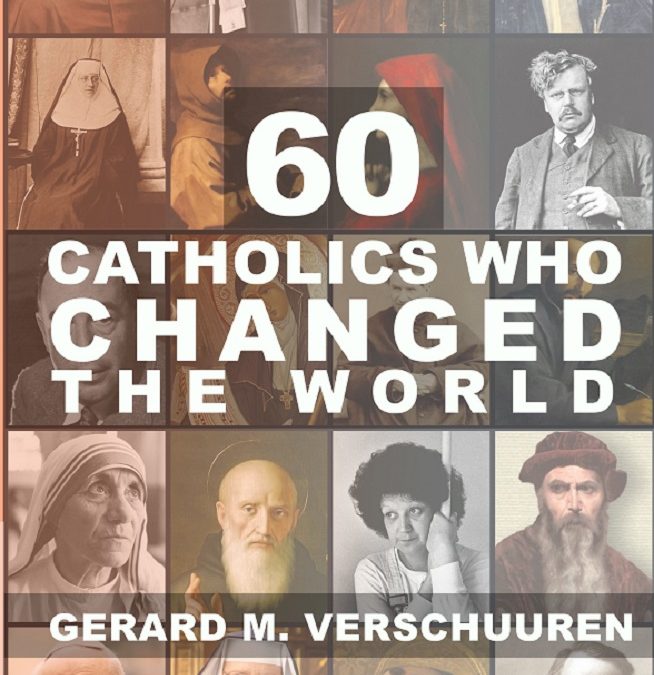
60 Catholics Who Changed the World by Gerard Verschuuren

60 Catholics Who Changed the World by Gerard Verschuuren

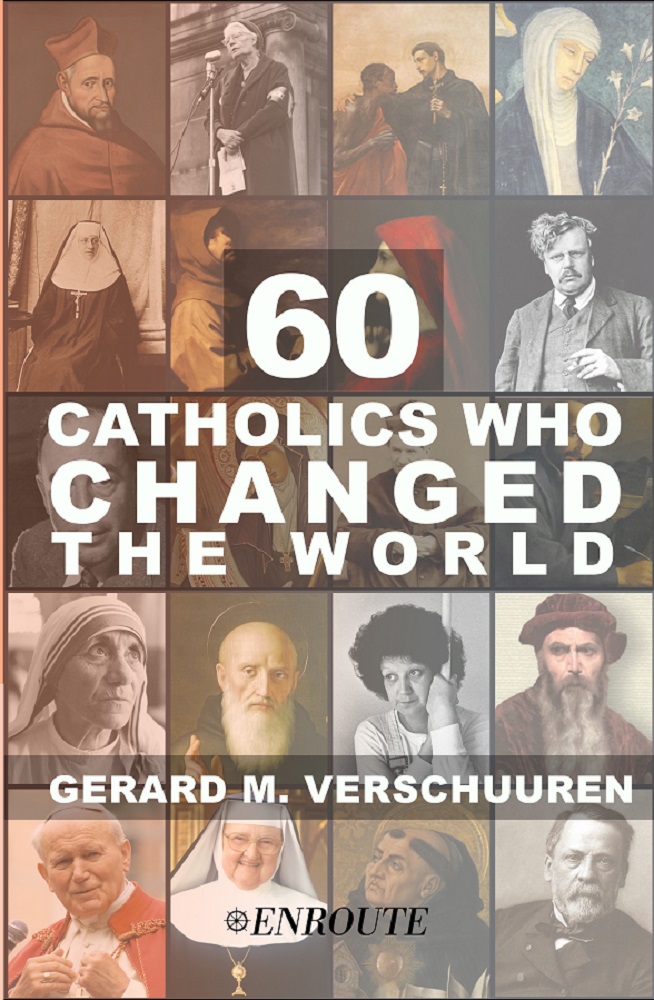
60 Catholics Who Changed the World

by Gerard M. Verschuuren

The Catholic Church has a longstanding and outstanding tradition that makes for a powerful source of innovations for the world. The sixty Catholics mentioned in this book testify to it. Each one of them made a significant contribution that we can, and do, benefit from every day.

Paperback: $18.95 | Kindle: $9.99

1. ALBERT THE GREAT: SCIENCE & RELIGION
2. ALCUIN OF YORK: SCHOOLS
3. ANGELICA, MARY: MASS COMMUNICATION
4. ANSELM OF CANTERBURY: SLAVERY
5. ATHANASIUS OF ALEXANDRIA: ONE GOD
6. BARAT, MADELEINE-SOPHIE: EDUCATION OF WOMEN
7. BEDE THE VENERABLE: HISTORY
8. BELLARMINE, ROBERT: HUMAN RIGHTS
9. BENEDICT OF NURSIA: HOSPITALS
10. BOSCO, GIOVANNI: URBANIZATION
11. BRANDSMA, TITUS: FREEDOM OF PRESS
12. CAFASSO, JOSEPH: PRISONS
13. CAMILLUS DE LELLIS: RED CROSS
14. CANISIUS, PETER: THE CATECHISM
15. CARREL, ALEXIS: MIRACLES
16. CATHERINE OF SIENA: FEMINISM
17. CHESTERTON, G. K.: COMMON SENSE
18. CLAVER, PETER: SLAVE TRADE
19. CONSTANTINE THE GREAT: A BREAKTHROUGH
20. COPERNICUS, NICOLAUS: HELIOCENTRISM
21. CYRIL AND METHODIUS: THE VERNACULAR
22. DAMIEN DE VEUSTER: LEPROSY
23. DAY, DOROTHY: SOCIAL JUSTICE
24. DOWLING, EDWARD: ADDICTIONS
25. DREXEL, KATHARINE: HUMAN DIVERSITY
26. DUHEM, PIERRE: SCIENCE ROOTS
27. FRANCIS OF ASSISI: MOTHER EARTH
28. FRANCIS XAVIER: MISSIONARIES
29. GONZALEZ, ROQUE: JESUIT REDUCTIONS
30. GREENE, GRAHAM: NOVELS

31. GREGORY THE GREAT: PAPAL AUTHORITY
32. GREGORY VII: CHURCH AND STATE
33. GREGORY XIII: GREGORIAN CALENDAR
34. GUTENBERG, JOHANNES: PRINTING PRESS
35. HIERONYMUS, EUSEBIUS: THE BIBLE
36. HILDEGARD OF BINGEN: USING TALENTS
37. IGNATIUS OF ANTIOCH: CATHOLIC OR CHRISTIAN?
38. IGNATIUS OF LOYOLA: GOD’S SOLDIERS
39. ISIDORE OF SEVILLE: SCHOOLING
40. JOHN PAUL II: COMMUNISM 164
41. JUSTIN THE MARTYR: FAITH AND REASON
42. LANDSTEINER, KARL: BLOOD TRANSFUSIONS
43. LEMAÎTRE, GEORGES: BIG BANG
44. LEO XIII: SOCIAL TEACHING
45. LEWIS, C.S.: APOLOGETICS
46. MARITAIN, JACQUES: HUMAN RIGHTS
47. MCCORVEY, NORMA: ABORTION
48. MCLUHAN, MARSHALL: SOCIAL MEDIA
49. MENDEL, GREGOR: GENETICS
50. MORE, THOMAS: RELIGIOUS LIBERTY
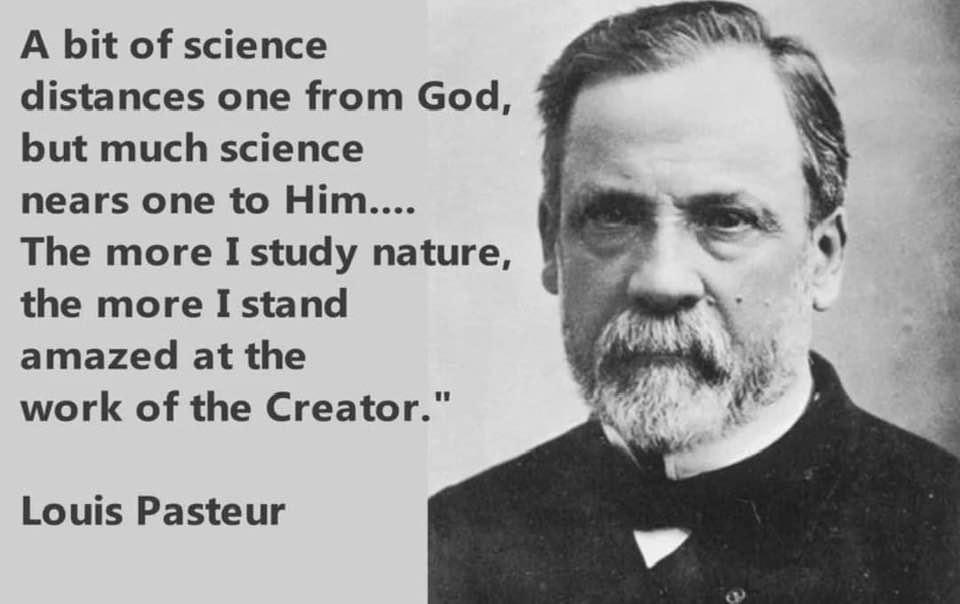
51. PASTEUR, LOUIS: MICRO-ORGANISMS
52. PAUL OF TARSUS: APOSTLE WITHOUT BORDERS
53. PAUL VI: SEXUAL REVOLUTION
54. PIUS XII: NOT HITLER’S POPE
55. RYAN, JOHN AUGUSTAN: MINIMUM WAGE
56. SCHUMACHER, E.F.: SMALL IS BEAUTIFUL
57. SEMMELWEIS, IGNAZ: WASHING HANDS
58. SERRA, JUNÍPERO: ONE HUMAN RACE
59. TERESA OF CALCUTTA: WHO ARE THE POOREST?
60. THOMAS AQUINAS: NO DOUBLE TRUTH

TESTIMONIALS

“Taken from various times and places, we have here specifically Catholics who, in their works and lives, have improved the world in one way or another. Many good things need to be invented, begun, organized, or planned. We have here a welcome reflection on who such people are and what they did because of their Catholic outlook on the world.” — Fr.  James V. Schall, S.J. (1928-2019), who was a Professor at Georgetown University.

“These 60 Catholics truly did change the world for the better, and any Catholic can at the least change his or her world for the better. May these 60 give you inspiration in your own life–I know they have in mine!” — Dr. Sebastian Mahfood, OP, co-author with Bishop Richard Henning of Missionary Priests in the Homeland

ABOUT THE AUTHOR 

Gerard M. Verschuuren is a human geneticist who also earned a doctorate in the philosophy of science. He studied and worked at universities in Europe and the United States. Currently semi-retired, he spends most of his time as a writer, speaker, and consultant on the interface of science and religion, faith and reason.

Currently, while semi-retired, he writes about issues at the interface of

  • science and religion,
  • science and creation,
  • faith and reason.

All his books can be found at: www.where-do-we-come-from.com

OTHER WHY BE CATHOLIC BOOKS

No Results Found

The page you requested could not be found. Try refining your search, or use the navigation above to locate the post.

Help Dante Help Italy

Help Dante Help Italy

Help Dante Help Italy

A new translation by Daniel Fitzpatrick accompanied by the new sculptures of Timothy Schmalz

Donate today!

Canto 100 Revealed!

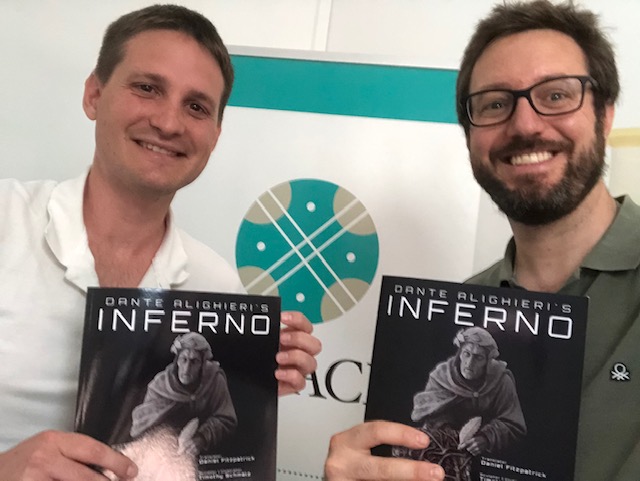
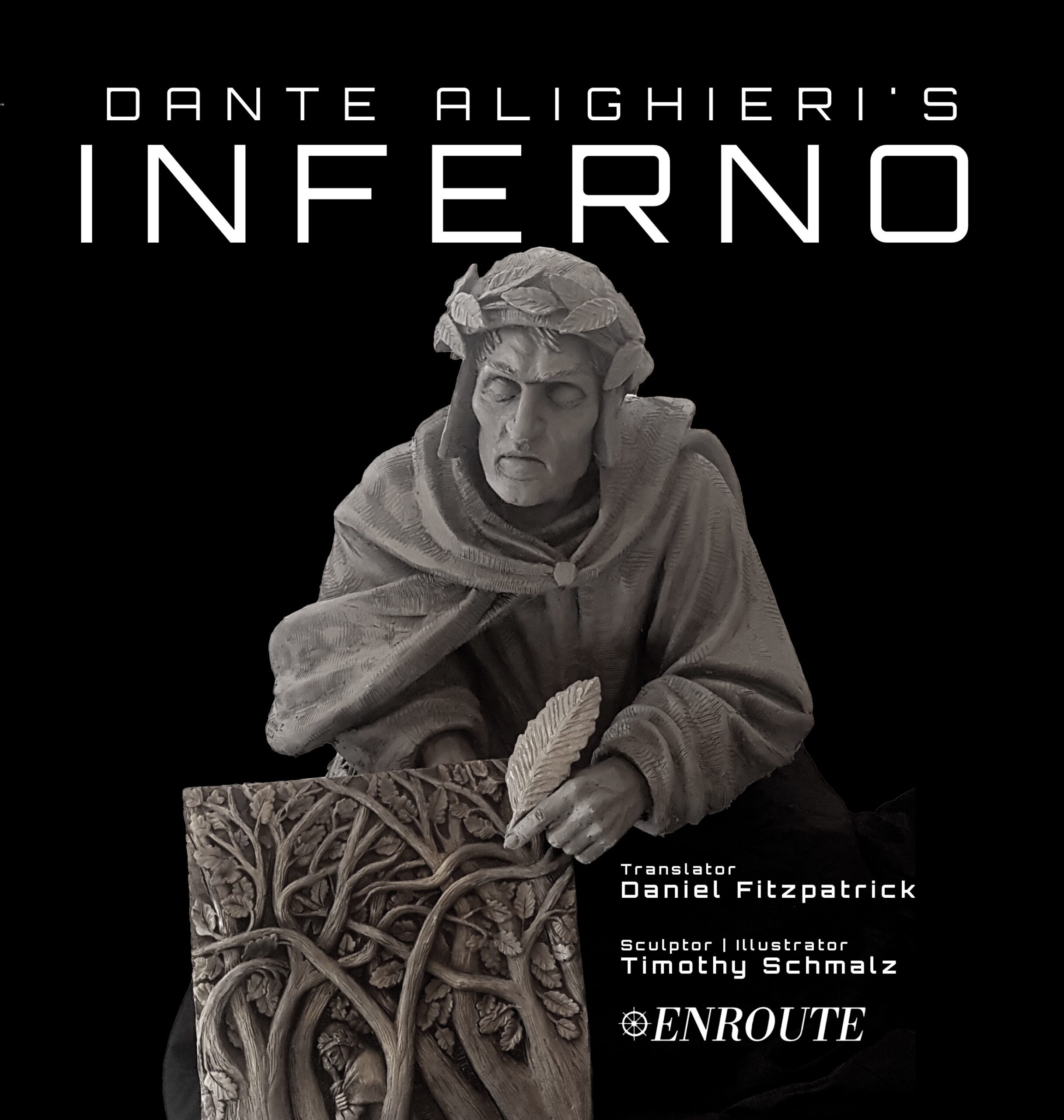
The Inferno is now available in Paperback and Kindle! Click a link below to order your copy today! And, as you’re ordering, listen to the latest interview between the translator and the sculptor. 

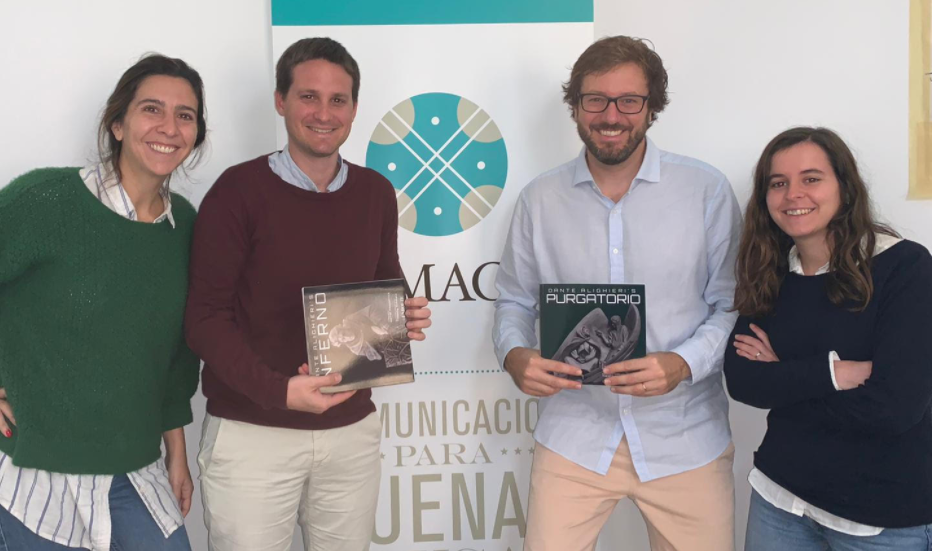
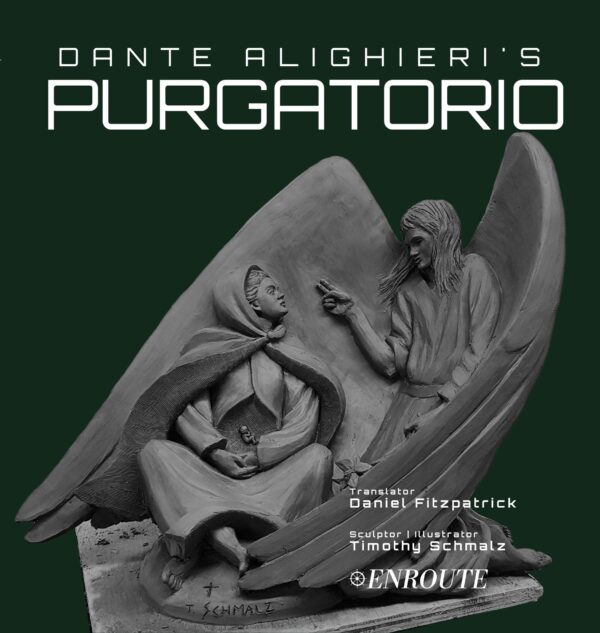
The Purgatorio is now available in Paperback and Kindle! Click a link below to order your copy today!

“Fitzpatrick’s is a translation that first and foremost honors Dante through a willingness to be literal. This is Dante’s poem, and so the translator lets the poet speak and signify through English words that match the Italian ones. But that restriction provokes Fitzpatrick to be all the more lyrically resourceful as the verse is lovely and the diction is lucid.” – Dr. Andrew Moran, Professor of English, University of Dallas

“Marvelous–clear and direct in Dante’s way without sacrificing beauty of language.” – Dr. Gregory Roper, Associate Professor of English, Department Chair, and Director of the Shakespeare in Italy program at the University of Dallas

“Brilliant! Fitzpatrick and Schmalz have provided an incredible demonstration of talent in their innovative handling of this timeless masterpiece.” — Dr. Sebastian Mahfood, OP, author of The Narrative Spirituality of Dante’s Divine Comedy

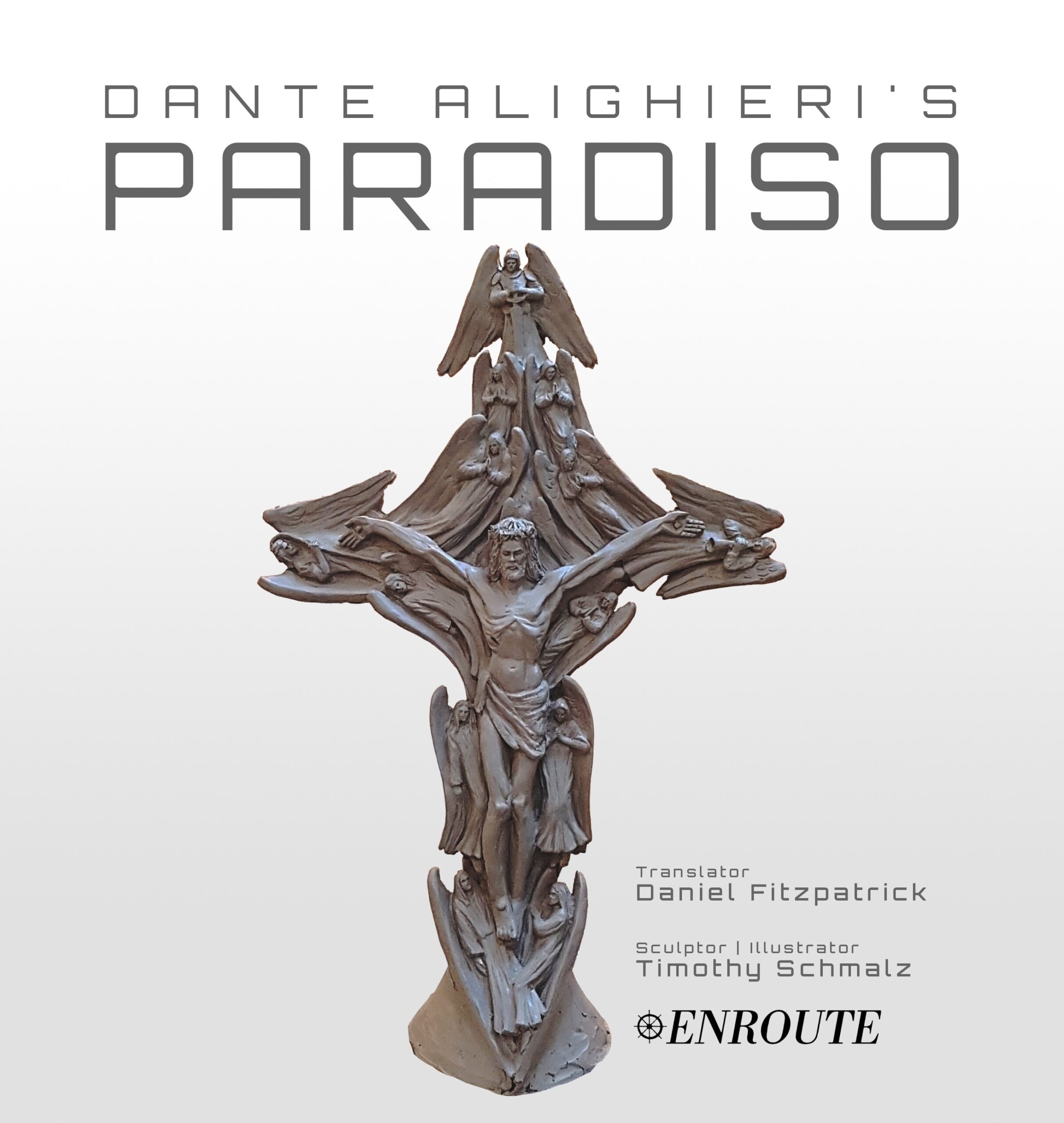
The Paradiso is now available in Paperback and Kindle! Click the link below to order your copy today!

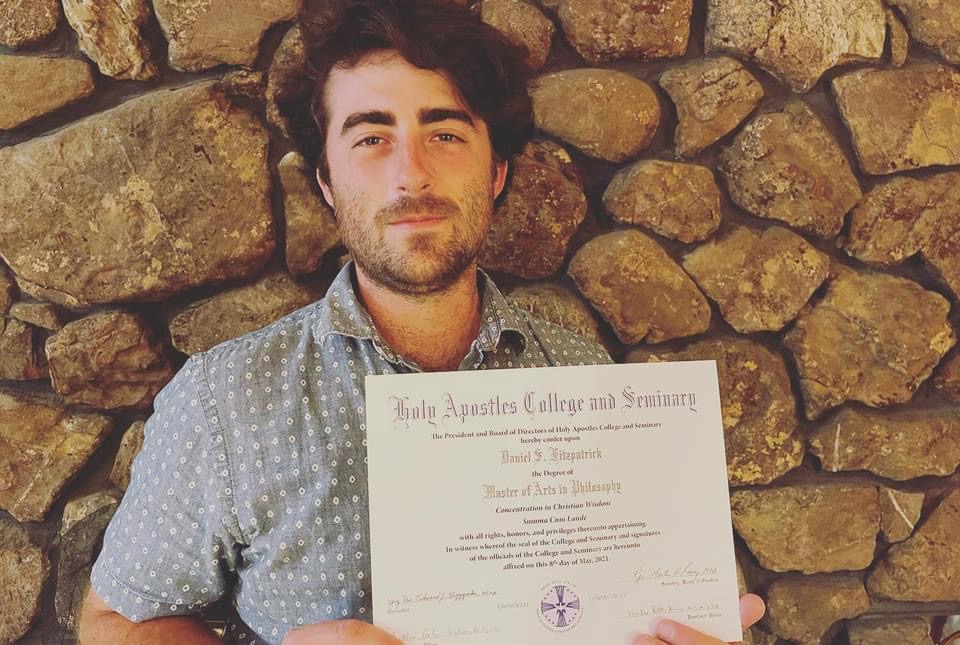
Translator Danny Fitzpatrick graduated with his MA in Philosophy from Holy Apostles College & Seminary on May 8, 2021.

About the Project
(Traduci in italiano)

Celebrating the Septuacentennial of Dante’s Divine Comedy

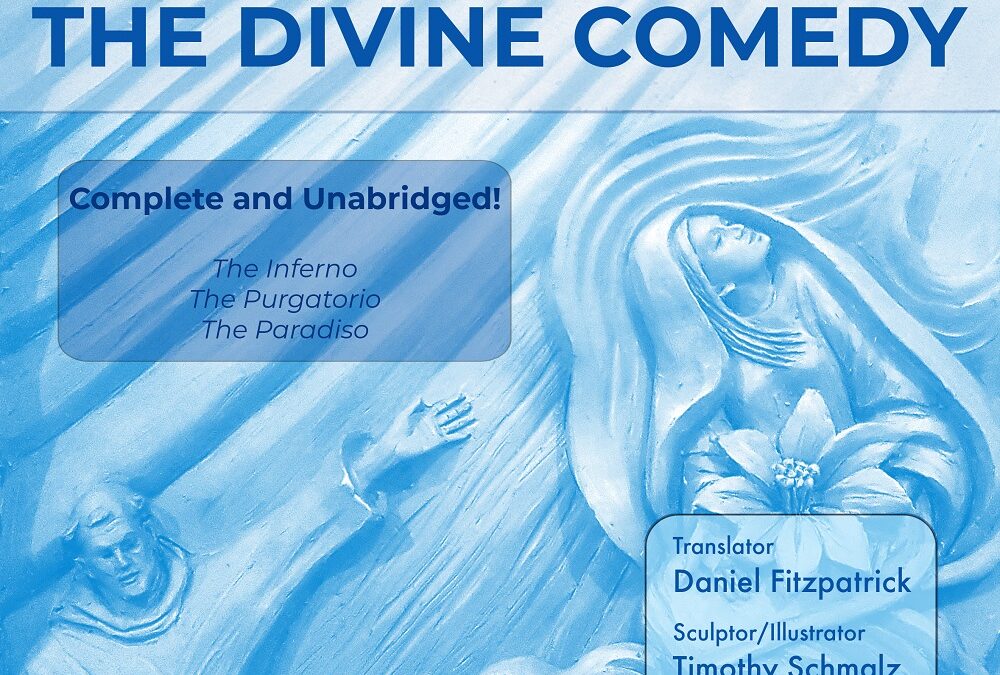
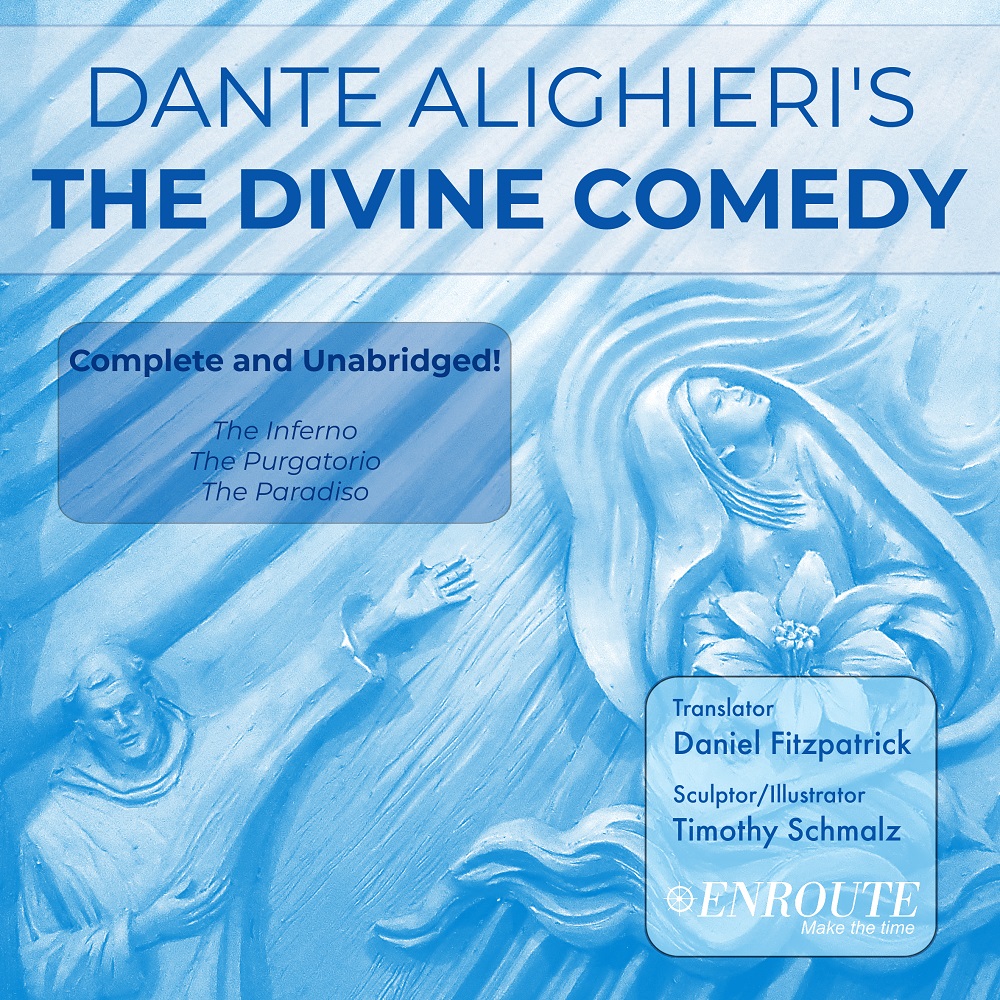
Dante Alighieri began writing his Comedy, which traces a pilgrim’s progress to our true home in heaven, in the year 1308 and completed the work in the year 1320, publishing the final canticle in 1321, the same year he died. The Comedy begins in a Dark Wood of Despair and ends with the Beatific vision as Dante enters fully into the mind of God.

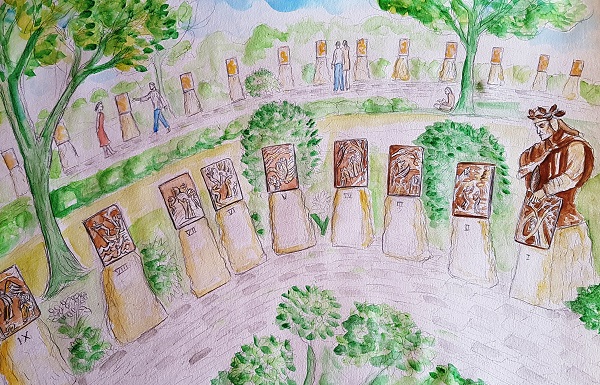
In this new translation, written in this interim septuacentennial anniversary period between completion and publication, and beautifully illustrated with the sculptures of Timothy Schmalz, Daniel Fitzpatrick makes the work accessible to the 21st century reader in celebration of Dante’s septuacentennial anniversary.

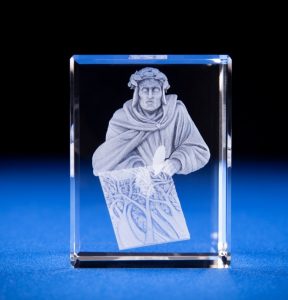
The translation and artwork was distributed via email at the pace of two cantos per week (Wednesdays and Sundays) beginning on March 25, 2020, the first Dantedì, a day dedicated by the Italian government to celebrate the accomplishments of the Florentine poet, and was completed on March 25, 2021, in time for the celebration of the septuacentennial. Those who donated $250 or more received this holographic crystal designed by Timothy Schmalz.

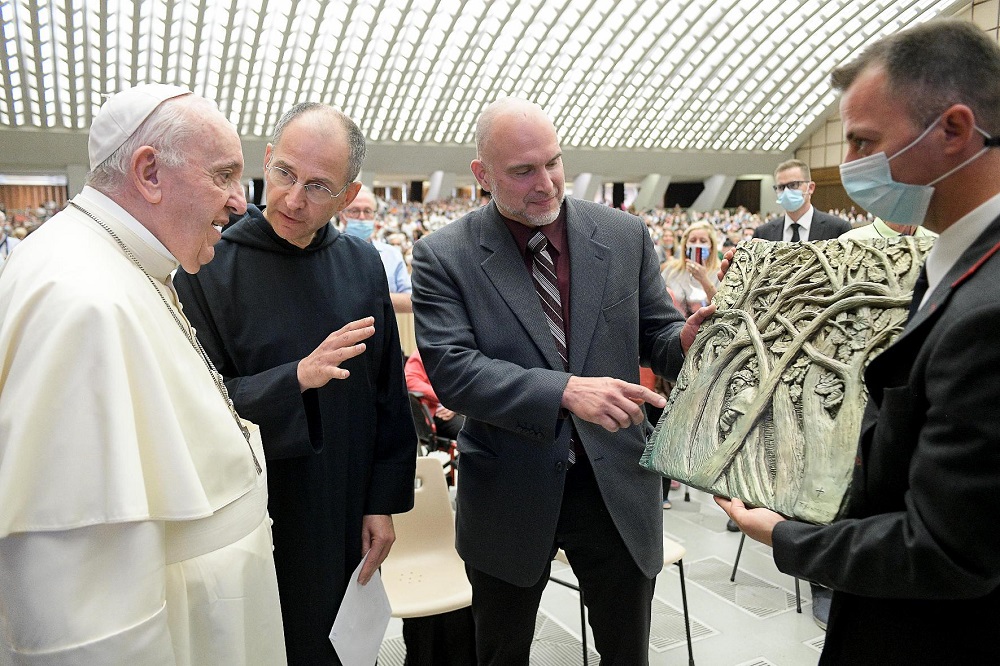
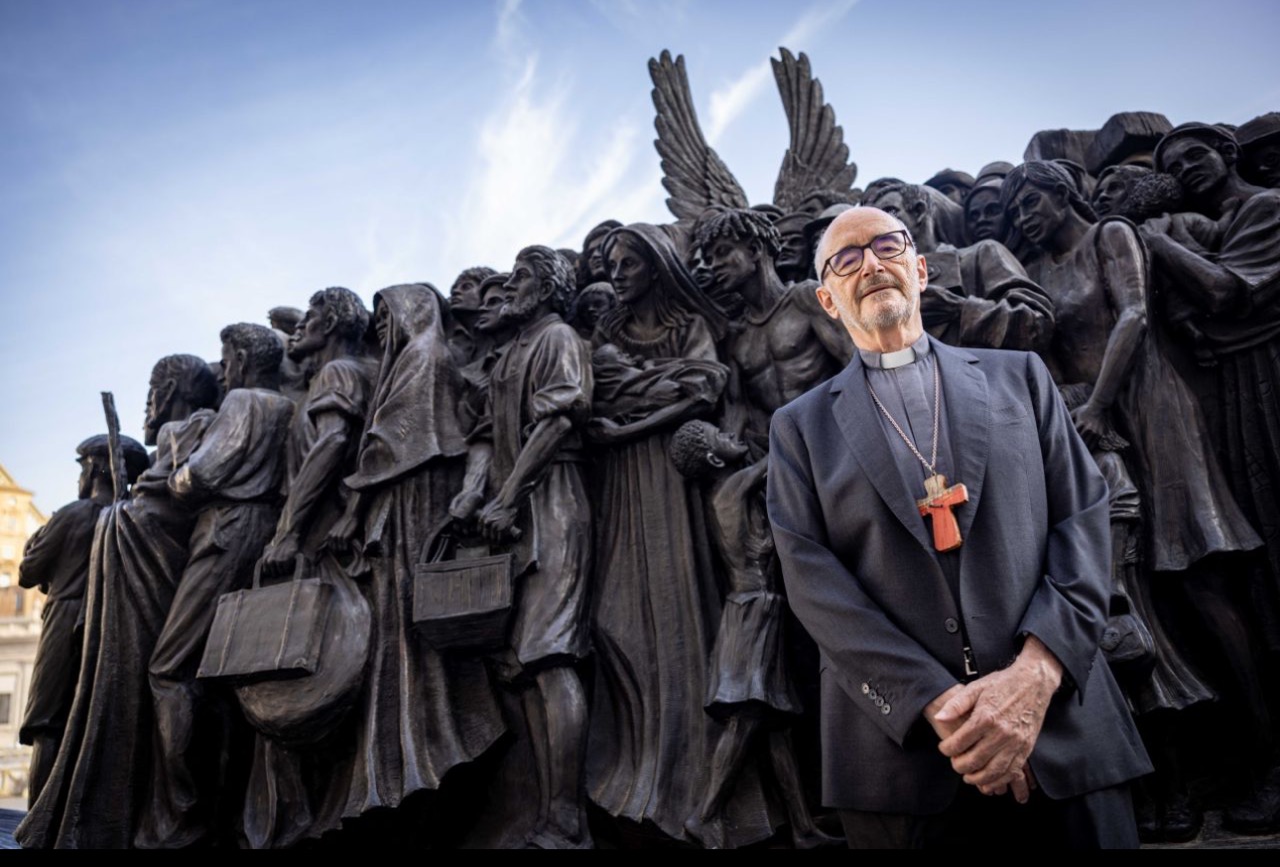
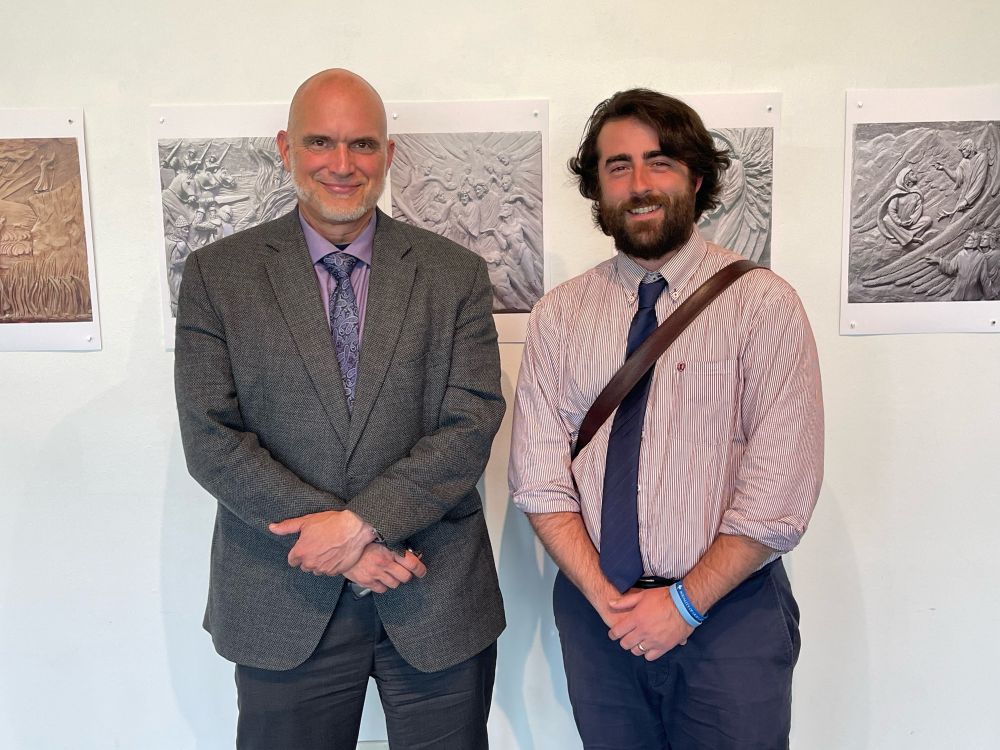
Pictured above in front of “Angels Unawares,” a sculpture by Timothy Schmalz, Cardinal Michael Czerny, Prefect of the Dicastery for Promoting Integral Human Development, to whom the proceeds from the project were forwarded to provide assistance to migrants and refugees during Covid. From one time of plague to another, Dante’s legacy offered support.

Edward and Melanie McCormick receiving the statue and first printing of Dante Alighieri’s Inferno, translated by Daniel Fitzpatrick and illustrated by Timothy Schmalz

Dante Alighieri

(1265-1321)

The Dark Wood – March 25, 2020
to
The Mind of God – March 25, 2021

About the Translator

Daniel Fitzpatrick grew up in New Orleans, LA, studied Philosophy at the University of Dallas and Holy Apostles College & Seminary, and lives in Hot Springs, AR, with his wife and two children. His poems and essays have been widely published. His first novel, Only the Lover Sings, was published by En Route Books and Media in 2020.

About the Illustrator

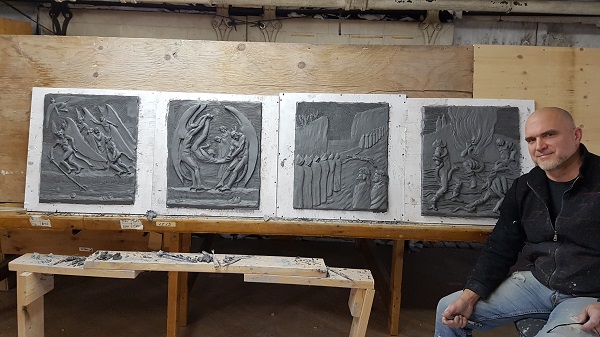
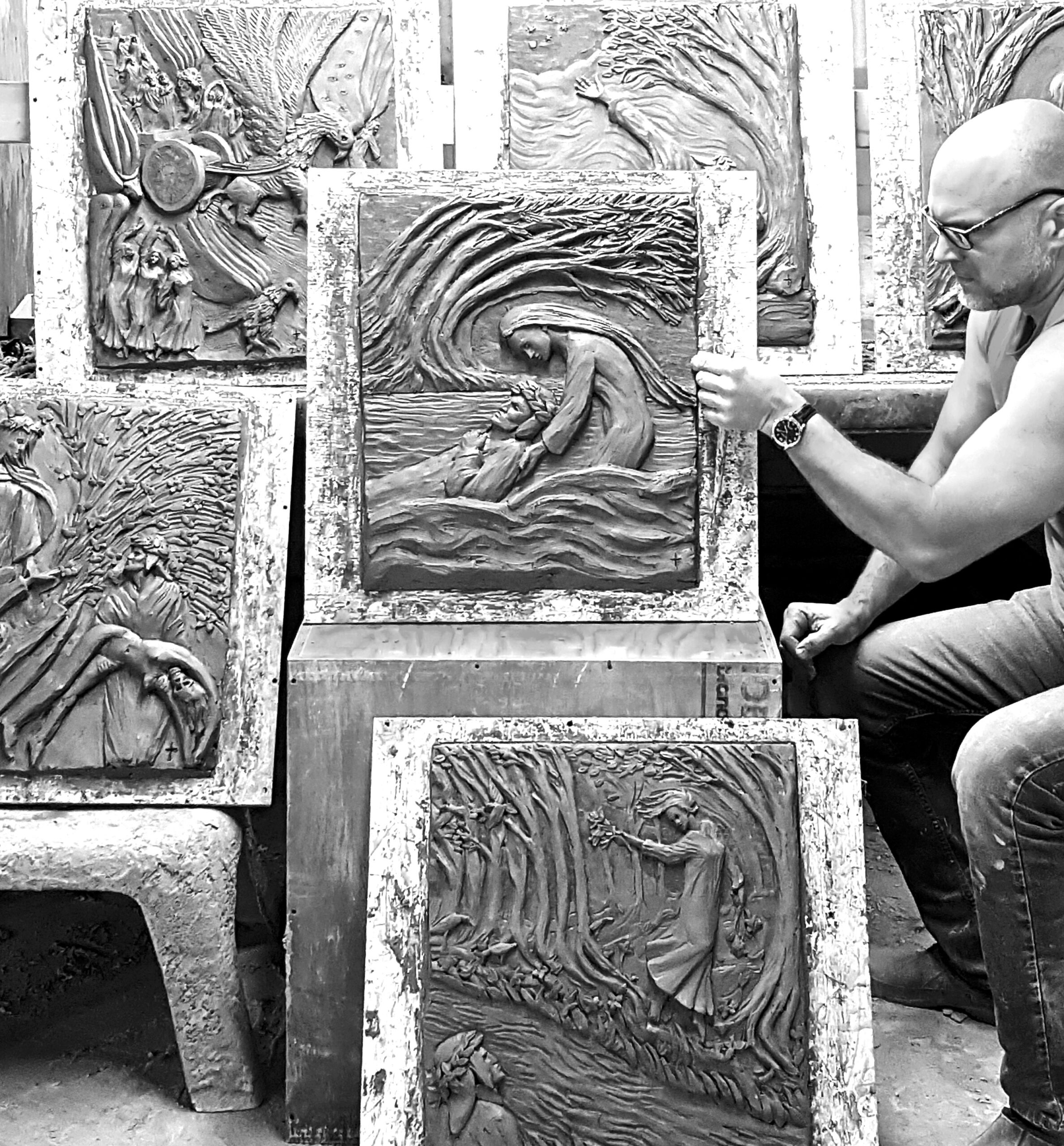
For over 25 years, Timothy Schmalz has been sculpting large scale sculptures. He is a figurative artist with his pieces installed worldwide. Some of his most reputed pieces are installed in historical churches in Rome and at the Vatican. Timothy describes his most important work as visual translations of the Bible. In this sculpture collection, Timothy provides visual translations of one of the greatest love poems Italy ever produced. Visit Timothy’s website today! https://www.sculpturebytps.com/

Reviews

Giangravé, Claire. “Catholic sculptor re-creating Dante’s ‘Divine Comedy’ aims to shift the emphasis off hell.” Religion News Service. July 21, 2020. Read the article here.

Hanson, Aprille. “Arkansas translator hopes new project will support hospital.” Arkansas Catholic. May 5, 2020. Read the article here.

Editorial. “Inspired by Dante, Alumnus Raises Funds for Italian Hospital.” The University of Dallas. April 6, 2020. Read the article here.

Editorial. “The Dante 700 Project by Timothy Schmalz.” La Gazzetta Italiana. April, 2020. Read the article here.

Schiffer, Kathy. “Celebrate Dante and Help Fight the Coronavirus: New sculptures and a new translation bring Dante’s Divine Comedy to life.” National Catholic Register. March 30, 2020. Read the article here.

Timothy Schmalz, Sculptor

Ignacio Travella and Juan Della Torre, Promotional Team

Inferno – Canto I (March 25, 2020 – Dantedì!)

In the midst of the journey of our life
I returned to myself through a shadowy wood,
for the right way was barred.

Ah! How very hard it is to tell
the way of that wood, so savage and harsh and strong
that to dwell in it renews the fear!

Death itself can barely be more bitter.
But to tell you all the good I found,
I will speak of the other things I saw.

How I came to that place I can’t well recount,
filled with sleep as I was at that point
where I forsook the fine way.

But then I found the foot of a hill,
there where that valley that pierced
my heart with fear had failed.

I looked to the height and saw its shoulders
clothed in the early rays of that planet
that takes us straight through every road.

And now the fear that had burned
in the lake of my heart through that night
I’d passed with such distress was quieted a bit.

And as one who, with labored breathing
escapes from the fury of the sea to the shore
and turns to gaze on the perilous water,

so my soul, still fleeing,
turned around to marvel more at the pass
no living person ever left.

Then when I’d composed my weary body a bit,
I took up the way through the desert slope again,
my firm foot always the lower.

And look! Close to the start of the steep
was a leopard, light, so swift,
and covered with a spotted pelt;

and it refused to turn from me
and so much impeded my path
that I was often turned to descend.

It was the time of the morning’s return,
and the sun was climbing with those stars
that were with him when divine love

first moved those beauties;
so that despite that beast in its gaudy pelt
there still was cause to hope

in the time and in the sweet season;
but hardly had the fear left
when the sight of a lion appeared to me.

He seemed to come against me
with his head held high and with rabid hunger;
even the air appeared to tremble.

And a wolf, full of all longing,
who seemed a carcass in her thinness
and makes many live in wretchedness,

this so yoked my soul with the weight
of the fear that rushed up at the sight of her
That I lost the hope of the summit.

And as much as the one who soars in his gains
when the time comes that he must lose them
begins to weep in all his thought,

so did the pacing beast make me,
that, coming against me, little by little
repelled me to where the sun is silent.

While I retreated to the low ground,
there, ahead, a faint figure was shown to my eyes
through the long silence.

When I saw him in that great desert
I cried out to him, “Have mercy on me,
whatever it is you are, whether shade or certain man.”

He replied: “Not a man, though man I was,
and my parents were from Lombardy,
both Mantuans by birth.

I was born beneath Caesar, though it was late,
and I lived in Rome under good Augustus
in the time of the false gods.

I was a poet, and I sang that just
son of Anchises who came from Troy
then when proud Ilium was burned.

But why are you returning to such suffering?
why do you not ascend the delightful mountain,
the source and cause of all joy?”

“Are you then Vergil, that fountain
pouring forth so rich a flow of speech?”
I answered him, my brow clouded with shame.

“O honor and light of other poets,
let the long study and the great love
that made me so search your work avail me.

You are my master and my maker,
you alone are him from whom I took
the lovely style that made my fame.

You see the beast from whom I turned;
protect me from her, famous sage,
from her who makes my blood and pulses falter.”

“For you there is another way to be taken,”
he said on seeing me weeping,
“if you wish to escape this savage place;

since this beast by whom you cry
allows no man to pass her way
but harries him so harshly as to kill him;

and her nature is so wicked and fierce
that her yearning want is never appeased
and after the feast is more famished than before.

many are the beasts by which she mates,
and still there will be more before the hound
should come to make her die hatefully.

This hound won’t eat of lands or riches
but of wisdom, love, and strength,
and his birth will be between felt and felt.

He will be the salvation of lowly Italy
for which the virgin Camilla, Euryalus
and Turnus and Nisus died by iron.

this hound will hunt her in every village,
until he’s returned her to the fire
from which the primal envy loosed her.

Thus for your sake I think you ought
to follow me, and I will be your guide,
and I will lead you from here through an endless place;

there you’ll hear the desperate shrieks,
you’ll see the ancient suffering souls,
crying out in their second death;

and you will see those content
in the flame for hope of coming among the blessed,
whenever that should be.

If then you should wish to rise to those,
you’ll find a worthier soul than I:
I’ll leave you with her in my parting;

for that emperor who reigns on high,
because I was a rebel to his law,
wills not that I should come into his city.

He reigns in every part and there he rules,
there is his city and the high seat;
oh, happy is he elected to be there!”

And I to him: “Poet, I entreat you
by that God you knew not,
that I might flee this evil and worse,

guide me to that city you’ve described,
that I might see St. Peter’s door
and those you call so sorrowful.”
And so he moved on, and I came close behind.