Western Civilization from the End of the Renaissance to Modern Times

Western Civilization from the End of the Renaissance to Modern Times
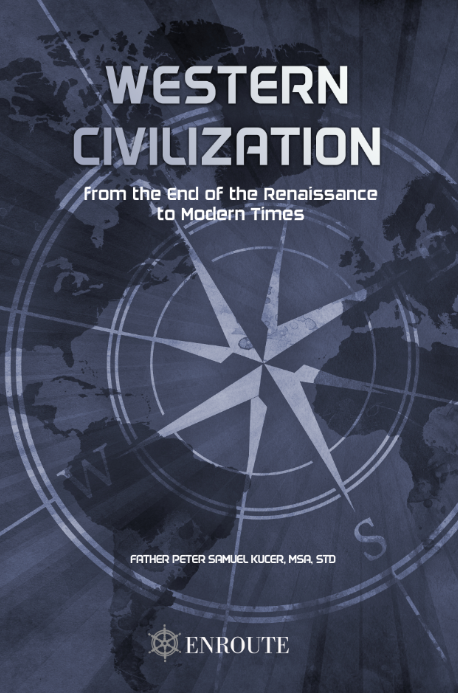
Western Civilization from the End of the Renaissance to Modern Times

by Fr. Peter Samuel Kucer, MSA

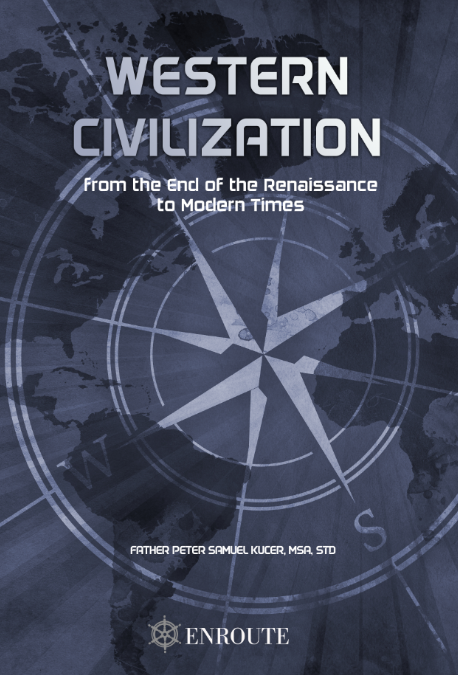
This book presents the history of Western Civilization from the end of the Renaissance to Modern and the so-called Post-Modern Times. Topics include the limiting of monarchies, the development of western science, revolutions (political and other), nationalism, imperialism, totalitarianism and other isms, World Wars, the Cold War, Post-Modernism, and the present multi-centric world. Integrated within these topics are selections and discussions of artistic/cultural expressions that represent these various times.
 
Paperback $19.99 | Kindle $9.99

TESTIMONIALS

Fr. Peter Samuel Kucer, MSA, has produced quite a grand opus in his collection of works on Marian Devotion, Catholic Church History, East and South East Asian History, Catholic Apologetics, Protology and the Priesthood, Western Civilization and Political Science. Each of his books provides wisdom for the beginner and clarity for the educated. – Dr. Sebastian Mahfood, OP, Professor of Interdisciplinary Studies, Holy Apostles College & Seminary

ABOUT THE AUTHOR
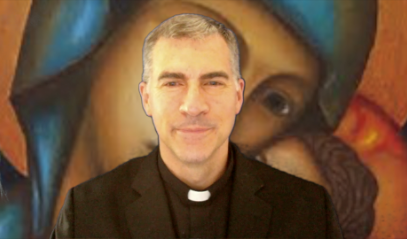
The Very Rev. Peter Samuel Kucer, MSA, STD serves as President-Rector at Holy Apostles College and Seminary in Cromwell, CT. He received degrees from Middlebury College, Holy Apostles College and Seminary, the Dominican House of Studies, and the Catholic University of America. He is intent on putting his educational background at the service of the New Evangelization promoted by the recent popes.

OTHER ACADEMIC BOOKS

No Results Found

The page you requested could not be found. Try refining your search, or use the navigation above to locate the post.
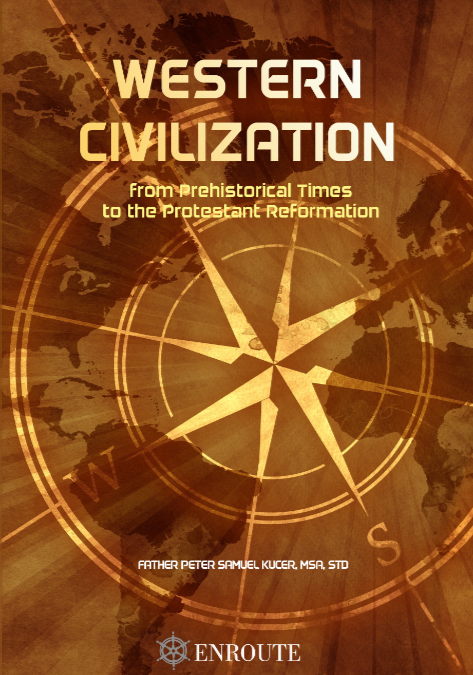
Western Civilization from Prehistorical Times to the Protestant Reformation

Western Civilization from Prehistorical Times to the Protestant Reformation

Western Civilization from Prehistorical Times to the Protestant Reformation

by Fr. Peter Samuel Kucer, MSA

Western Civilization owes a debt of gratitude to three ancient civilizations: Jewish, Greek, and Roman. The first half of this book studies each of these civilizations to show how they contributed to western belief, thought, and practice. The second half begins with early Christianity and ends with the fragmentation of the West in the 1300s-1500s.

Paperback $19.99 | Kindle $9.99

TESTIMONIALS

Fr. Peter Samuel Kucer, MSA, has produced quite a grand opus in his collection of works on Marian Devotion, Catholic Church History, East and South East Asian History, Catholic Apologetics, Protology and the Priesthood, Western Civilization and Political Science. Each of his books provides wisdom for the beginner and clarity for the educated. – Dr. Sebastian Mahfood, OP, Professor of Interdisciplinary Studies, Holy Apostles College & Seminary

ABOUT THE AUTHOR

The Very Rev. Peter Samuel Kucer, MSA, STD serves as President-Rector at Holy Apostles College and Seminary in Cromwell, CT. He received degrees from Middlebury College, Holy Apostles College and Seminary, the Dominican House of Studies, and the Catholic University of America. He is intent on putting his educational background at the service of the New Evangelization promoted by the recent popes.

OTHER ACADEMIC BOOKS

No Results Found

The page you requested could not be found. Try refining your search, or use the navigation above to locate the post.
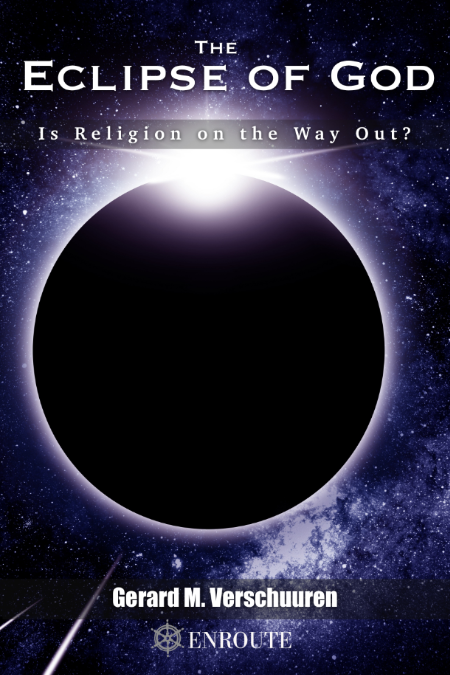
The Eclipse of God: Is Religion on the Way Out?

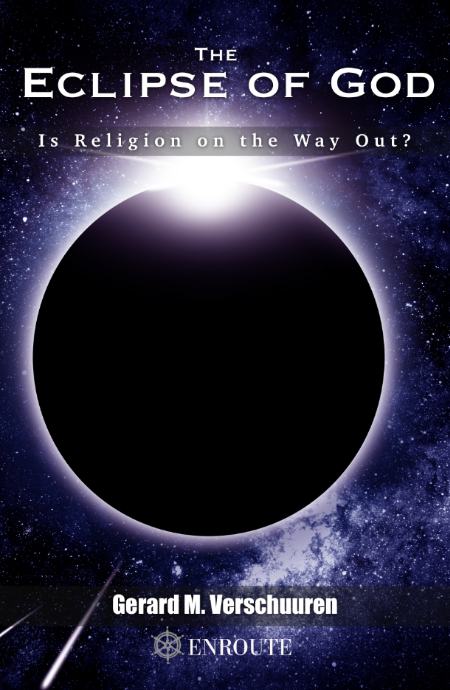
The Eclipse of God: Is Religion on the Way Out?

The Eclipse of God: Is Religion on the Way Out?

by Gerard Verschuuren

This book was specifically written for all those who feel lost in a world dominated by ideologies that obscure God. It is hard to pinpoint one particular cause of how we feel in such Godforsaken times and places, but science is likely one of the main perpetrators, as some scientists use their scientific “authority” to churn out, with the speed of light, books that promote opinions and views that go far beyond their scientific expertise, and that rob people of any religious beliefs they might have. These prolific writers are inundating the book market, magazines, and the internet with their message that a state of conflict exists between science and religion, and that science holds the winning hand. They loudly broadcast through the megaphones of our society their anti-religious propaganda: (1) Since there was a Big Bang, there is no creation. (2) Because there is only matter, there can be no spirit. (3) There is no purpose in life, for randomness is all there is. (4) There is no God, only a god-gene. (5) Neurons are in complete charge, so the mind is an illusion. (6) Everything is relative, for objective truth just does not exist. (7) Morality is only a matter of personal opinions and preferences. (8) All in all, God is dead.

If you wonder how you and your religious faith could ever survive in such an environment, this is the right book for you.

Paperback $18.99 | Kindle $9.99

TESTIMONIALS

“Gerard Verschuuren has written for us a very fine book. If you constantly find yourself in conversations about the Catholic Faith with skeptics, doubters, and seekers, this is the perfect book for you. It is first class apologetics. The book shows us with compelling arguments that there need not be any conflict between science and religion, or between faith and reason. The book does all of this in an incredibly accessible, engaging, and intelligent way. Buy it and read it.” — Fr. C. John McCloskey, STD, Former Director of the Catholic Information Center of the Archdiocese of Washington, Research Fellow at the Faith and Reason Institute, Washington, D.C


“Gerard Verschuuren has done what only the rarest of scholars can do. He has systematically blown away the gray masses that eclipse God in our world today and offered the reader a guide through Catholic thought, shining its light on origins, evolution, genetics, humanity, morality, society, and destiny. He communicates, and that is a gift to his readers. He makes it easy for them to see the simple truth of complex ideas. He has a passion for truth. I predict this book will be taught in seminaries, colleges, and high schools, and handed over in love from friend to friend and parent to child.” — Dr. Stacy Trasancos, Ph.D., Adjunct Professor of Chemistry, Holy Apostles College, Cromwell, Connecticut


“Gerard Verschuuren’s new book is a welcome addition to the conversation in our culture between faith and science. It is a guide to the perplexed for those afflicted by the falsehoods of a narrative of hubris that sees no room for God because it believes that when all you have is a scientific hammer, every problem must be a materialist nail.” — Mark P. Shea, columnist for the National Catholic Register who also delivers “Words of Encouragement” segments on Ave Maria Radio.

ABOUT THE AUTHOR 

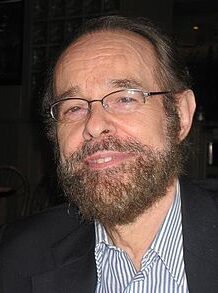
Gerard M. Verschuuren is a human geneticist who also earned a doctorate in the philosophy of science. He studied and worked at universities in Europe and the United States. Currently semi-retired, he spends most of his time as a writer, speaker, and consultant on the interface of science and religion, faith and reason.

Currently, while semi-retired, he writes about issues at the interface of

  • science and religion,
  • science and creation,
  • faith and reason.

All his books can be found at: www.where-do-we-come-from.com

OTHER ACADEMIC BOOKS

No Results Found

The page you requested could not be found. Try refining your search, or use the navigation above to locate the post.
Trinity Footprints

Trinity Footprints

Trinity Footprints

by Roger Skrenes

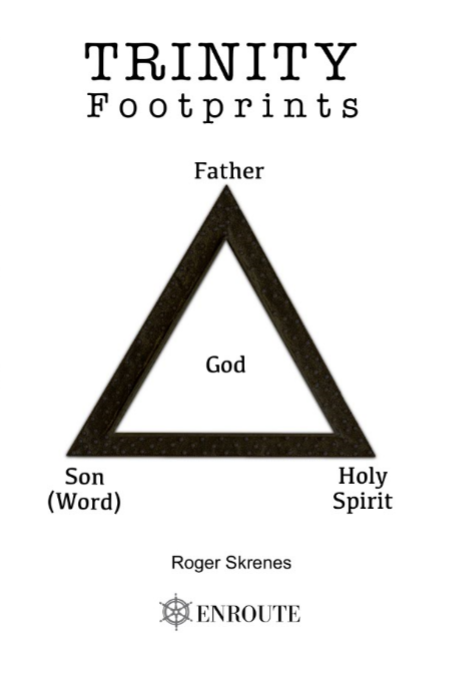
This book asserts there are evidences of the tri-une nature of God in both people and in the world. However, such instances of God’s presence are not generally known by Christians or by others around the world. This book is an attempt to inform readers of these triune (or three-in-one) footprints of God in everyday life. By reading this book, the reader should better perceive the presence of the triune God in our world and see how God impacts our lives in mysterious ways.
 
 
Paperback $14.95 | Kindle $9.99

TESTIMONIALS

“A stunning demonstration of how God has left evidence of Himself scattered throughout our psychology, anthropology, and interpersonal relationships. A must-read for anyone who doubts the reality of the Most Holy Trinity and an affirmation for those who already believe.” — Dr. Sebastian Mahfood, OP, Professor of Interdisciplinary Studies at Holy Apostles College & Seminary

ABOUT THE AUTHOR

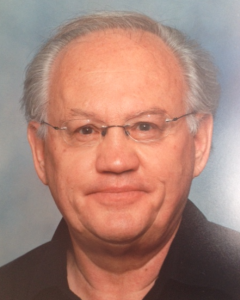
Roger Skrenes studied science as an undergraduate and history as a graduate. He holds a master’s degree in religion and has taught high school in Los Angeles, California, for over thirty years, including six summers in the California Youth Authority (a prison for teenage boys in Whittier, CA). He is the father of three adult children, Mary, Mark and Therese. His other books include History of the Eucharist (En Route Books and Media, 2017) and The Jesus Code (En Route Books and Media, 2016).

OTHER BOOKS ABOUT BEING CATHOLIC

No Results Found

The page you requested could not be found. Try refining your search, or use the navigation above to locate the post.
The Obligation of Perfect and Perpetual Continence and Married Deacons in the Latin Church

The Obligation of Perfect and Perpetual Continence and Married Deacons in the Latin Church

The Obligation of Perfect and Perpetual Continence and Married Deacons in the Latin Church

by Rev. Anthony McLaughlin, J.C.D.

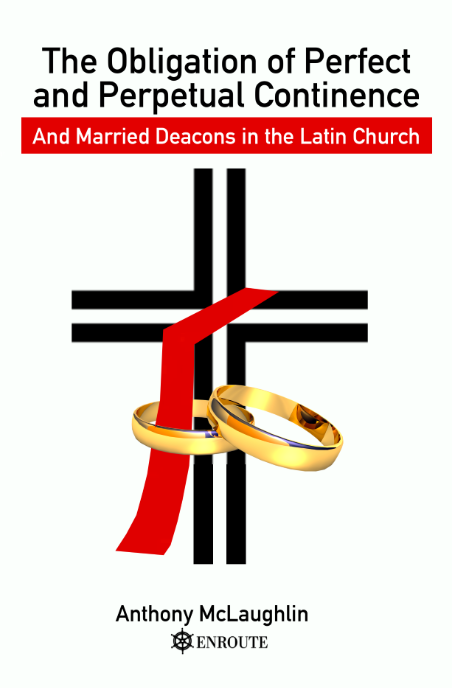
Through the reception of diaconate a man becomes a cleric. Canon 277 §1 states: “Clerics are obliged to observe perfect and perpetual continence for the sake of the kingdom of Heaven and therefore are bound to celibacy….” Accordingly, it would seem that clerics have two distinct obligations: sexual continence (no sexual relations) and celibacy (no marriage) with continence presented as the fundamental norm. With the restoration of the permanent diaconate by Paul VI in 1967 and the admission of married men to this order, a fundamental question arises: “Are married deacons, though dispensed from the obligation of celibacy, unless their wife dies, obliged to observe perfect and perpetual continence?” This book addresses that question.

Paperback: $19.95 | Kindle: $9.99

REVIEWS

A Review of Father Anthony McLaughlin’s The Obligation of Perfect and Perpetual Continence And Married Deacons in the Latin Church by Fr. Peter Stravinskas, The Catholic Response (Nov.-Dec. 2018), p. 60.

Father McLaughlin delves into a history not frequently trod as he demonstrates, rather conclusively, that in the Early Church deacons were held to perfect continence (even if they were married). Indeed, I have always maintained that the consent of wives during the ordination of permanent deacons is a relic of the ancient practice, whereby wives publicly agreed to the future continence of their husbands (and thus, their own). I suspect that not a few permanent deacons will not be thrilled with this work, however, it is an important contribution to the history of this office, with serious implications for how that vocation ought to be lived today.

A Review of Father Anthony McLaughlin’s The Obligation of Perfect and Perpetual Continence And Married Deacons in the Latin Church by Deacon Marty McIndoe

As a Permanent Deacon ordained in 1980, I was intrigued by the title of this work. I knew that perpetual continence meant abstaining from all sexual relations, and nowhere in my training as a deacon was I told that was an obligation. I have been happily married for 49 years, and sexual intimacy has been a very important part of my relationship to my wife. I would find it hard to believe that the Church would ever mandate that a married deacon be continent. If that were the case, I would never have considered becoming a deacon. I do realize that by becoming a married permanent deacon, I was taking on the obligation of celibacy if my wife were to die. I thought hard about that, and felt that hopefully it wouldn’t happen, and if it did, I would have the grace to do what I was obliged to do. I see practical and spiritual reasons for celibacy. I see no practical or even spiritual reasons for continence in a happily married young couple. I was one of the youngest members of my class to be ordained. I was dispensed of the 35-year-old requirement and was ordained at age 33. I have been ordained for almost 38 years, and I absolutely love my ministry as deacon. My wife is a big help in my ministry and I give thanks for the gift that she is to me and to my vocation as a deacon.

I received an advanced e-copy of this book and was asked to read and review it. As soon as I saw the title, I knew that I wanted to. I found this work to be extremely interesting and exceptionally well-researched. The book spends a considerable amount of time looking at how celibacy, chastity and continence developed in the Church from the New Testament times to the present day. It refers back to scriptures, traditions, early church writers, modern theologians, council documents and canon law. It is probably the most thorough writing on celibacy, chastity, and continence that I have ever encountered. If you want to know more about the Church’s development of the concepts of chastity, celibacy and continence, this is the book to read. It also deals with related issues such as marriage and procreation.

After reading this piece, I see that there still exists more clarification needed from the Church on what she did in making permanent married deacons. There is no doubt that ordaining married deacons has been a great benefit to the Church. The fruits of this can be seen in so many places. However, this is a big diversion from the traditional norms of the Church concerning celibacy, chastity, and continence. Having married clergy who are not continent is something quite new, at least on the scale of the current permanent diaconate. Married clergy is not new to the Church, but they have previously been required to be continent. Even the latest canon law is unclear and in at least one place seems to mandate that permanent deacons remain continent. This is not what is presently taught and practiced and apparently not what the Vatican Council seems to have meant in creating the married permanent diaconate. It is an intriguing quandary.

I would certainly recommend that anyone who is interested in looking at the development of celibacy, chastity and continence within the Church read this book. I also believe that permanent deacons would especially be interested in this book. Since considerable amount of time is spent on canon law, I would think that anyone interested in, or studying canon law should read this book.

TESTIMONIALS

“Fr. McLaughlin addresses an often neglected area of ecclesial discipline. Hopefully, good scholarship will encourage further study.” — Most Reverend Joseph E. Strickland, Bishop of Tyler, Texas

Fr. Anthony’s book is a great help in understanding the commitment being made by those who answer the call to the permanent diaconate— Fr. Luis Luna, MSA, General Animator of the Missionaries of the Holy Apostles

ABOUT THE AUTHOR

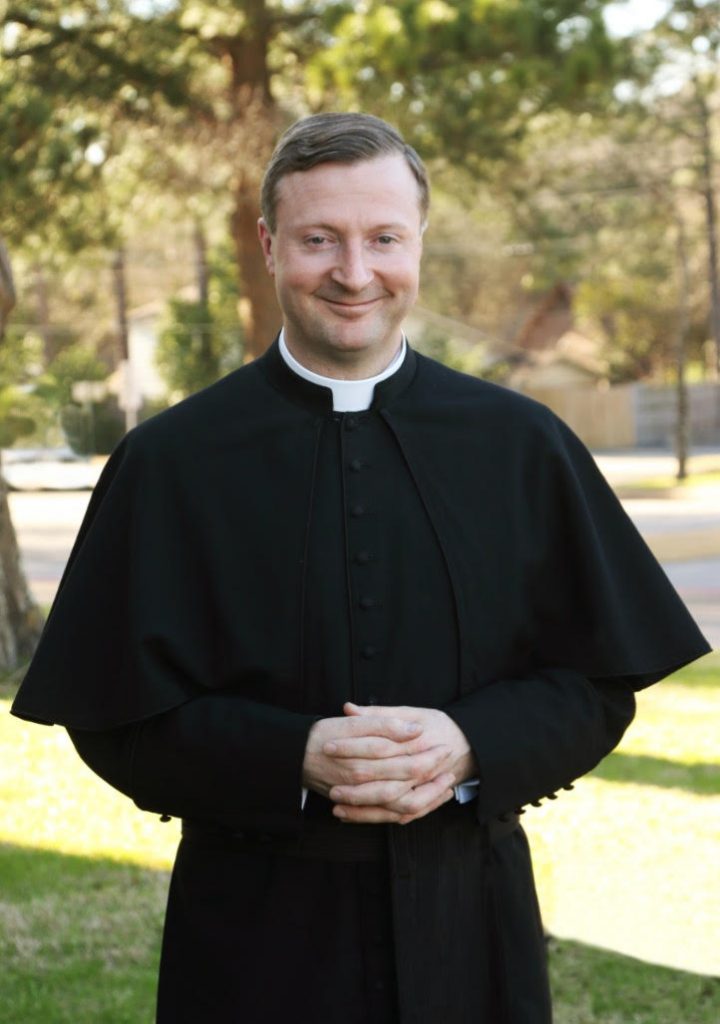
Rev. Anthony McLaughlin, J.C.D., a native of Belfast, Northern Ireland, has served Holy Apostles as its Vice Rector and as Professor of Canon Law and Homiletics since 2017.

Fr. McLaughlin was ordained to the priesthood for the Diocese of Tyler, TX, in 1997 and most recently served as Vicar General of the diocese and President of Tyler’s Bishop Gorman Catholic School.

He previously served as Rector of the Cathedral of the Immaculate Conception in Tyler, Judicial Vicar of the diocese, judge of the diocesan tribunal and Defender of the Bond.

During the 2014-2015 academic year, Fr. McLaughlin returned to CUA as assistant professor of Canon Law and director of the Institute on Matrimonial Tribunal Practice.

OTHER PRACTICAL THEOLOGY BOOKS

No Results Found

The page you requested could not be found. Try refining your search, or use the navigation above to locate the post.