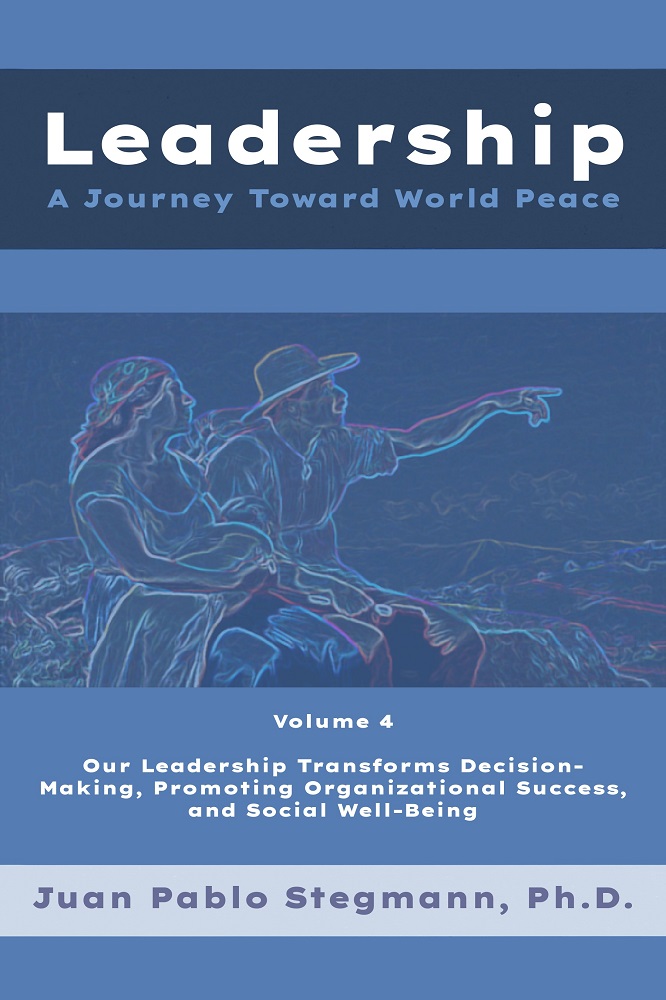
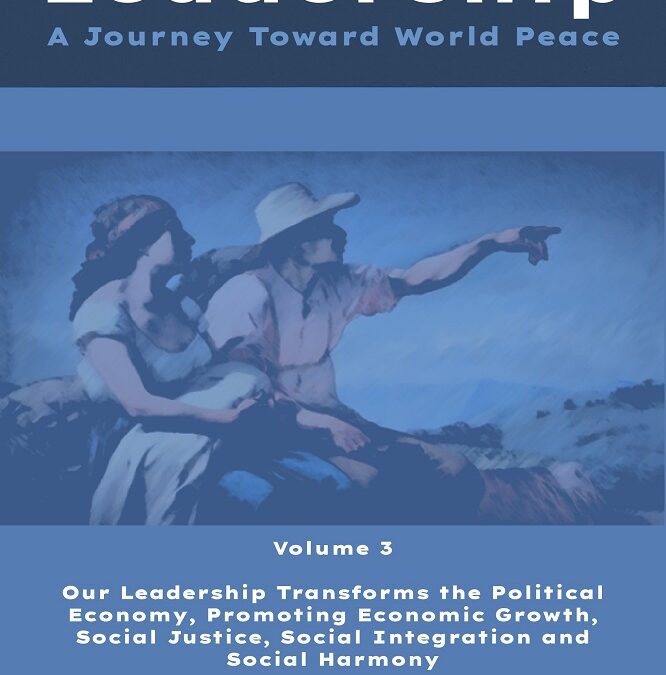
Leadership: A journey toward world peace – Vol. 4 Our leadership transforms decision-making, promoting organizational success, and social well-being

Leadership: A journey toward world peace – Vol. 4 Our leadership transforms decision-making, promoting organizational success, and social well-being

Leadership: A journey toward world peace – Vol. 4 Our leadership transforms decision-making, promoting organizational success, and social well-being

by Juan Pablo Stegmann, Ph.D.

This book is the fourth of the four volumes: “Leadership: A Journey Toward World Peace,” introducing an entirely new strategic management framework based on economic models, placing economic value creation and resources at the center of decision-making. It shows how to navigate all strategic management on one page, identifying the recommended strategies for the coming years and the theories that support them, knowing if our strategies help create economic value. A leadership culture maximizes resources in terms of Edvinsson’s Intellectual Capital: human, social, and structural capital, transforming strategic management, business ethics, and corporate social responsibility, promoting organizational success and social well-being. A leadership culture promotes decision-making based on discernment, far superior to traditional critical thinking, promoting harmony and cooperation among stakeholders, maximizing Intellectual Capital, solving strategic, social, and ethical dilemmas of organizations, and promoting world peace. This work results from a solid research effort, supported by more than 800 bibliographic sources and statistical analyses.

Paperback $12.99 | Kindle $9.99

1. Spirituality and Leadership Workshop. The cognitive dimension.
2. Spirituality and Leadership Workshop. The transcendental dimension.
3. Spirituality and Leadership Workshop. The axiological dimension.
4. Spirituality and Leadership Workshop. The religious dimension.
5. Spirituality and Leadership Workshop. The relational dimension.
6. Spirituality and Leadership Workshop. The discernment dimension.
7. Spirituality and Leadership Workshop. The existential dimension.
8. Spirituality and Leadership Workshop. The transformational dimension.
9. Spirituality and Leadership Workshop. The healing dimension.
10. Spirituality and Leadership Workshop. The social action dimension.

ABOUT THE AUTHOR

When Dr. Juan Pablo Stegmann turned 40, he decided to dedicate his life to deepen the understanding of the impact of spirituality in our lives, especially in the lives of vulnerable and suffering people. This required ample study and research to provide solid interdisciplinary foundations: he completed three doctoral dissertations, three master’s degrees, and three postgraduate programs in economics, management, finance, philosophy/ethics, international business administration, engineering, and spirituality, obtained in the United States, Europe and Latin America. He is the author of several books and articles published in the United States and abroad. He teaches a wide range of graduate and undergraduate courses, receiving important academic honors. Previous to this he held senior positions in most areas of the organization in leading multinational companies and worked with prestigious global consulting firms. He has been involved in various community service and volunteer activities. 


REVIEW BY PETER REDPATH

     While, by nature, in some respect, all somewhat psychologically healthy human beings desire to become leaders at some organizational activity in this life, precisely puzzling to answer are the questions: (1) Why, by nature, do we chiefly do so? (2) What is the nature of leadership in general and great leadership especially; and (3) How does anyone become a great leader?

     Most puzzling to some readers related to the work for which I am happily writing this testimonial might be the central idea of Juan Pablo Stegmann’s 4-volume, magisterial tome that attempts exhaustively to answer these questions. As he states toward the start of Volume 1: “The central idea of the book is how spirituality builds greatness and leadership, how these improve personal and social reality, creating a culture of leadership, improving the political economy and management of organizations.”

     In our contemporary, cynical global political and business culture we often hear the sophomoric quip, “Business ethics is an oxymoron.”  Despite the fact that all human leadership is a psychological activity (activity of the human soul) this same global political and business culture would likely incline to mock as oxymoronic and evidently foolish the claim that spirituality builds greatness and leadership. The entire New World Order appears Hell-belt on convincing all such cultural rubes who think this way the truth of the contrary opposite–that spirituality impedes leadership and destroys culturesI

     Juan Pablo Stegmann is no fool. Nor is he someone unfamiliar with businesses and how to build leaders. He has a wide international business and academic background that includes holding 3 Ph.D degrees; 3 Masters degrees; a B.S.; and three postgraduate works in economics, finance, business strategy.

     He has held senior leadership positions in almost every area of national and international business organization. These include general management, investment and commercial banking, finance, and strategic and knowledge management at leading multinational firms like Citibank, Bank of America, N.M. Rothchild (UK), and Telefonica. He also worked with leading consulting firms, such as McKinsey, Boston Consulting, A. T.  Kearney, Booz Allen, and others.

     He has published several books prior to this present multi-volume work and has taught a wide spectrum of graduate and undergraduate courses in management, strategic management, integrated enterprise management, enterpreneurship, organization theory and behavior, foundations of business, international business, cross cultural communications, cultural environment global business, business consulting, business ethics, economics, international economics, financial management, strategic resources management, and quantitative methods.

     I am most humbled that he considers me to be among his mentors. In this respect, I am especially delighted to note how, with some small assistance from my research, he has mastered the realization that the moral virtue of prudence (which creates in children and students the moral habit of docilitas [teachability!]) is a species of uncommon common sense that underlies all cultural and organizational development.

     Evident to any psychologically human being is that, absent the moral and the practical virtue of intellectual prudence, no healthy human individual, organization, or culture can ever develop any habitual common sense–much less a level of habitual uncommon sense needed to grow and flourish longterm.

     I encourage you to buy the 4-volumes linked to immediately below and tell others about them so that you and they can stand on the shoulders of a true organizational giant and learn how to apply these simple truths on a daily basis to improve all aspects of your daily life and that of the rest of us.


Peter A. Redpath is rector of The Adler-Aquinas Institute; CEO of the Aquinas School of Leadership; co-founder of the Gilson Society (USA), The International Etienne Gilson Society; and Founding Chairman of the Board of the Angelicum Academy. Presently Chair of the Thomistic Studies Graduate Concentration in Christian Wisdom at Holy Apostles College and Seminary, he is author/editor of 12 philosophical books and many articles and book reviews.

REVIEW BY LEIF EDVINSSON

     The work presented and packaged in the impressive three volumes has significant contributions to Leadership thought. It is very timely and apt, as we are in a time of rough/stormy knowledge navigation.

     The work’s title, “A journey toward world peace”, introduces an ongoing renewal process toward a better future, two dimensions of Intellectual Capital (IC). The subtitles of the three books, creating Leadership to transform the political economy and organizations, reinforce the connection with IC’s process and renewal dimensions. Volume 2 focuses on the crucial role of spirituality in promoting inspiration and creation for the success of society, emphasizing the renewal dimension of IC. The first chapter focuses on creating knowledge and relationships, the two other dimensions of the IC. The following chapters explain the impact of knowledge creation, generating a vision of the future, building higher values, creating a Leadership culture, and promoting a continuous individual and social transformation process. Volume 2 concludes that spirituality promotes greatness and Leadership, introducing an understanding of Leadership as an ongoing renewal process with a social orientation. Volumes 3 and 4 investigate how our greatness and Leadership enrich the IC of nations and organizations, promoting social welfare.

     Leadership is a challenging task, amplified by global geopolitics and the core of 3-dimensional knowledge navigation. The political economy is more than ever very dynamic. Part of it might be handled by learning life cycle maps from the late prof Jay Forrester at MIT. But also integrating forward into the contributions from Quantum Physics and Life Science, for example, genetic research. Such cultivation might offer life science perspectives to the old Leadership paradigms, as it will amplify the continuous RENEWAL dimensions beyond the often one-dimensional economic paradigm of growth.

     Such navigation might be much more complex and require Leadership, as said above, of 3 D-dimensions.  But also a renewal of the agenda of Leadership, in itself. A Leadership of flow rather than stock. Some core dimensions of Leadership are still related to the geophysics of the Longitude theory. Consequently, Leadership navigation is about position, direction, and speed. A harmonizing Leadership by modern GPS tools.

     Perhaps we need to innovate and upgrade the new institutional Agency for Social Welfare navigation. The Agency for this new Leadership might operate with a much more refined compass. Core metrics will be in the eco dimensions and flow of welfare beyond the bulk thinking.

     As prof. Johan Rockström, Potsdam Environmental Institute, is advocating that we need to initiate the thrust as a global knowledge alliance to initiate, prototype, and cultivate the new sailing course for future generations after the Industrial Economics Era.

     A growing, dynamic paradigm of Life Science presents a Leadership role much more integrated with multi-talented knowing. The dynamics in a new agile agency of a networked global construct are more characterized by Intangibles, soft assets, and vivid flow, close to a DAO – Decentralized  Autonomous Organisation.

     This new Agency might be prototyped in a cross-disciplinary lab setup like we once prototyped in Skandia Future Center, Sweden. A new Navigation school and training program might be considered to initiate further learning and prototyping.

     The escalating opportunity is waiting for our and your new initiatives.


Leif Edvinsson Ph.D. The World´s first director of Intellectual Capital, Skandia. The Worlds´ first holder of Professorship on Intellectual Capital Lund University, Sweden. Professor at The Hong Kong Polytechnic University. Appointed the Brain of the Year, The KEN Practitioner of the Year. Listed in The World´s 50 Most Influential Thinkers. Listed in Who is Who in the World. Luminary Award 2013 by Peter Drucker Foundation, Intel and European Commission for Thought Leadership. Knowledge Award 2017 together with UN.

REVIEW BY ALEJANDRO PREUSCHE

     Juan Pablo Stegmann’s masterpiece

     First and foremost, this is a monumental piece of work. It is the expected outcome of a wonderful life journey devoted to rigorous researching, generous teaching, insightful writing and more importantly, to self-development and renewal. It hits the sweet spot of the balance between the personal and the professional lives.

     As I read it, I saw the personal quest Stegmann initiated years ago which resulted in a marvelous synthesis between civilization, culture, and business pragmatism: that spirituality is at the center of our lives. This is the fountain of coherence that he has found and that he now shares with everyone seeking a fulfilling life in the world of business. On a personal note, the book allowed me to take stock of my own personal and professional journey. Lots of insights and reflections. I want to share some with the readers as well.  

     The book highlights spirituality’s role in building greatness and leadership, transforming the political economy and the business reality. I have seen countless examples of great business leaders who testified to the centrality of spirituality. Enrique Shaw was a successful business leader, a great human being, the founder of ACDE (Christian Association of Business Leaders), an extraordinary institution I had the honor to preside in. In line with the book’s insights, he promoted the mission of the business leader as linked to the fulfillment of three duties: service, progress, and human advancement. For him, the company was a community of life, an instrument for the dignification of the person. No wonder Shaw is in a canonization process in the Vatican.

     The book provides a powerful interdisciplinary approach, connecting strategic management and political economy with our spirituality, greatness, and leadership. This was a challenge, as it required first simplifying and streamlining all strategic management and business disciplines in a simple model, incorporating the role of resources, something that I have done at McKinsey for years as a consultant and its CEO in Argentina.

     As the book states, several Nobel Prize winners and the prestigious Strategic Management Society during the last decades have supported incorporating resources and economic thinking into strategic management. The book goes a step further and investigates how the greatness and leadership of everyone, of each stakeholder, provide crucial resources, human capital, social capital, process, and renewal capital, promoting the success of the organization and the community, providing a strongly needed human approach to strategic management. As an active member of the Impact Investing Movement (investments with an explicit intention and objective to deliver positive, meaningful, and measurable social or environmental outcomes in underserved areas, alongside a financial return), I strongly believe this is the crucial condition for success. Sustainable social and environmental impact is achieved through business innovation, only when their leaders are driven by a genuine orientation to those less privileged. Only this attitude will help bring about peace and progress.

     The book also highlights the role of discernment, and its interaction with strategic management, solving strategic dilemmas for the organization’s success and social welfare. On my experience as a career coach to several hundred McKinsey Partners all over the world in the last 20 years, I have been privy to the crucial role of discernment in making high impact decisions. Any business leader, in fact, any leader, should get familiar with Stegmann’s comprehensive contribution to their success. This book is a must-read for any leader. It will surely become the main reference for those who want to lead a purposeful life. 


Alejandro Federico Preusche, MS Engineering Universidad Catolica Argentina and MBA Stanford University. Former President of ACDE (Christian Association of Business Leaders), former consultant and CEO McKinsey & Company, Argentina, former a member of the Justice and Peace Commission of the Argentine Episcopal Conference, founder and Manager of Almado, a consulting and impact business developer, member of the Global Impact Investments Group.

REVIEW BY NARCISO MUÑOZ

     Perhaps the idea that best summarizes this monumental work developed by Juan Pablo Stegmann is the passage of the Good Samaritan, who helped a homeless, wounded and helpless man: it was neither the markets, nor the governments, but a man with a good heart.

     For the past 5 years, with our families, friends and 500 volunteers, we helped the homeless of Miami, and along with them veterans, migrants, families, the elderly. We visited the streets where they are concentrated, supporting them with resources to improve their situation, recomposing their lives (health, work, finances, socialization and even spiritual support), trying to reunite them with their families, incorporating them into recovery programs, getting them permanent or transitional housing. Numerous donors and the state have supported us, providing 20 houses where the homeless can live, finding a community where they feel supported and regain their dignity.

     “Hermanos de la Calle” brings together people who want to help, with those who need that help, helping to rehabilitate more than 100 homeless people in Miami per month, 30% of them children, and is expanding to other U.S. cities. Our task is to see the person, with his or her dignity, behind each homeless person, to help him or her transform and reintegrate into society.

     As this book states, spirituality has been the driving force that led us to undertake this work; our spirituality is what makes us people, different from animals, it makes us brothers, it empowers us, it gives us that supernatural spark that we have and that we forget we have, or we do not dare to use it, or we were convinced that it is not there: but it is there. And when we use it, we impact many people, who begin to feel useful, unique and necessary. Our spirituality enhances and rediscovers that foggy mirror where we look for ourselves and sometimes, we do not see ourselves. Our spirituality brings us closer to God because we are made in his image and likeness, we have a little piece of God inside us.

     I hope that many will read this book, so that it will help them to walk a path of personal and community growth, to discover the extraordinary value that spirituality has in our lives, to make us grow, be transformed, and to transform society in order to build a better world.


Narciso Muñoz, CFA, MS Political Sciences. President Hermanos de la Calle Foundation. Managing Director Alex Brown, a Division of Raymond James.

REVIEW BY JEFF STEAGALL

     Stegmann provides a thoughtful new approach to modern economics. Moving beyond the twentieth-century focus on rationality, Stegmann carefully integrates spirituality as a key input for economic and social growth. He cleverly shows how this approach leads to increased happiness, goodness, beauty, truth and unity, offering a vision for a better future for both individuals and society. Stegmann’s paradigm challenges us to re-evaluate what leadership means. He argues persuasively that leadership is the key component to personal and societal evolution, offering a statistical analysis that demonstrates that leadership correlates better with the most desirable social outcomes than either individualism or collectivism. Given the frightening situation that the left-versus-right paradigm has generated in our world, Stegmann’s work should be required reading for anyone interested in leadership, economic growth, societal evolution and global improvement.


Jeff Steagall Ph.D. Professor of economics, Buehler Chair in Leadership and former dean of the John B. Goddard School of Business & Economics at Weber State University. At University of North Florida former professor of economics, winner of multiple awards, creator and leader of the international business program which became one of four UNF flagship programs.

REVIEW BY ANDRES GALLO

     The work of Juan Pablo Stegmann is an intellectual endeavor of great importance for our culture of confrontation and extremism. Stegmann delves into deep spiritual and philosophical traditions to bring a bridge to solve matters at the individual, corporate and national levels. This is an impressive work, which should help all of us to question and understand the diversity of decisions we face both personally, at our companies, and as members of society.

     This work starts at the personal level, looking for the significant impact of spirituality on our way of thinking and how our spiritual efforts impact our views and attitudes towards life problems. According to Stegmann’s research, spirituality is the source of our greatness and leadership. It builds our capacity to lead and approach our lives’ challenges.

     Second, our leadership strengthens human, social, renewal, and process capital, which Edvinsson calls intellectual capital, the engine of economic growth, social justice, competitiveness, and problem-solving at the micro and macro levels. Accordingly, Stegmann refers to ten dimensions of spirituality linked to creating intellectual capital in society.

     Third, Stegmann takes this framework into the political economy arena to create alternative solutions to the more traditional collectivist and individualist approaches. He shows the strengths and limitations of the epistemological foundations of both approaches, which is crucial to ending their confrontations. A leadership culture relies on a realist epistemology which eliminates the social fragmentation and radicalization generated by the confrontation between left and right, empowered by social media and populism. A leadership culture promotes knowledge and relationships, pillars of intellectual capital, social integration, and social harmony.

     Stegmann closes this intellectual journey with a positive and hopeful framework that people can use to improve decision-making. He started with a very theoretical and abstract development of spirituality and guided us to a practical and applicable improvement framework. His examples and descriptions help the reader through this journey and bring the value of our spiritual growth in our lives.

     This book can be extremely valuable for politicians, economists, business leaders, and any citizen to incorporate a new approach that promotes economic growth, social justice, and social harmony, creating a third political economy orientation based on leadership to solve unsolvable today’s problems. Furthermore, this book can be extremely valuable for anyone to learn how to build a leadership culture, transforming the person and society toward world peace.


Professor and Richard deRaismes Kip fellow at the Department of Economics and Geography and Director of the Flagship program in International Business at the Coggin College of Business, University of North Florida. Ph.D. in Economics at University of Illinois Urbana-Champaign. He has several publications in prestigious research journals.

OTHER CATHOLIC BUSINESS AND EDUCATION BOOKS

No Results Found

The page you requested could not be found. Try refining your search, or use the navigation above to locate the post.

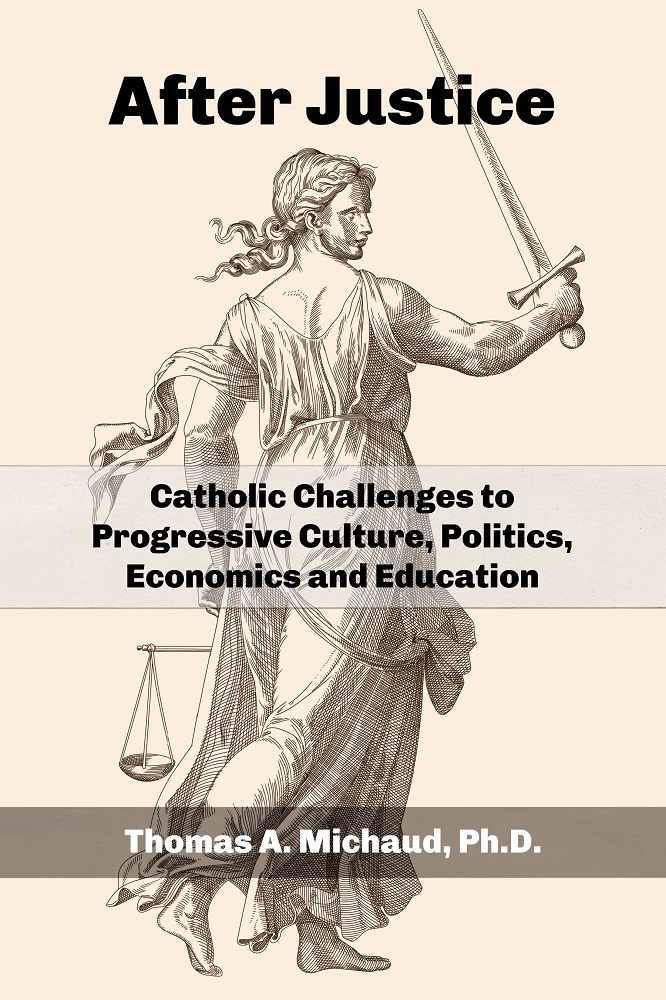
After Justice: Catholic Challenges to Progressive Culture, Politics, Economics and Education

After Justice: Catholic Challenges to Progressive Culture, Politics, Economics and Education

After Justice: Catholic Challenges to Progressive Culture, Politics, Economics and Education

by Thomas A. Michaud, Ph.D.

In recent decades in the United States, various derivative forms of Progressivism have emerged that manifest its lack of philosophical cohesion and authoritarian proclivity, such as:

1) Postmodernism, which was actually anti-Modernism with its rejections of Rationalism, Scientific Positivism and any traditional-based metaphysics and ethics;

2) Authoritarian Politically Correct and Cancel Culture standards of moral righteousness; and,

3) Woke mentality that employs social and mainstream media to transform the “people” into a conformist, hive-minded ruling mob.

This book demonstrates in an Augustinian manner how contemporary Progressivism, to its own detriment, has become a political ideology and can no longer be considered a political philosophy.

Paperback: $19.95 | Kindle: $9.99


REVIEW

Hancock, Curtis. (2023, Feb. 1). “The Catholic Challenge to Progressivism.” The Postil Magazine. To read the review, click here.


TESTIMONIALS

“What kind of Catholics are needed in modern politics? Considering Thomas Michaud’s book After Justice: Catholic Challenges to Contemporary Culture, Politics, Education and Economics, one can argue that modern politics especially needs Catholics of intelligence and virtue. For only an intelligent Catholic will recognize the fact that the contemporary political forum is under the spell of Progressivism, giving preference to opinion over truth, positive law over natural law, and ideology over philosophy. In turn, only a virtuous Catholic will be able to oppose the power of Progressive nominalism, conventionalism, and manipulation in the most ethical and effective way. With Michaud’s book comes the hope that the intelligence and virtue that make up Catholic ethos will also make it possible to protect current and future culture, politics, education, and economics against the disastrous consequences of Progressivism.” – Fr. Paweł Tarasiewicz, Ph.D. – Adler–Aquinas Institute, Colorado Springs, Colo., USA

“Thomas A. Michaud’s After Justice is a collection of the author’s articles focused on issues fundamental to understanding Western culture, including philosophy, religion, politics, democracy, leadership, education, rhetoric, and economics. Michaud explains these issues, pointing to their threats occurring in contemporary reality, as well as showing the deep context of philosophical transformations taking place in these areas of culture. He explains in a very perceptive way the causes of the phenomena discussed, which include nihilism, relativism, progressivism, atheism, liberalism, individualism, collectivism, and totalitarianism. The problems explored here are fundamental and eminently practical issues, both for humanity itself and for our culture.  The path we take in explaining them, however, is extremely important. It must be an authentic philosophical cognition, which is built on the search for knowledge of the ultimate truth about the meaning of human life, as well as reality as a whole. This cognition, which is essentially at the service of the truth and respect for the human good, offers the chance to reveal and overcome the evils of various errors and ideologies. Such is the very rich philosophical perspective that this book presents to us.” – Dr. Habil. Imelda Chłodna-Błach, John Paul II Catholic University of Lublin

“Tom Michaud is a genuinely unforgettable character. He has a certain American quality in strength of character and voice, and yet these qualities are complemented by a graceful and dexterous imagination, a razor-sharp intellect, and an irrepressible sense of humor. These talents combine to make him an arresting storyteller, with a talent for perceiving in ordinary events grounds for extraordinary narrations. Dr. Michaud is also an accomplished academic of international renown. He is a philosopher’s philosopher because he loves the truth, fortified by the conviction that reason and realism are necessary conditions to find the truth. As a lover of reason, he also explores truth in Christian teachings, recognizing, as did Aquinas, that reason is faith’s best friend. This book is both an intellectual treasure and a remedy for our deformed times, especially for those who hope for the triumph of justice.” – Professor Dr. Hab. Piotr Jaroszyinski, John Paul II Catholic University of Lublin, Poland

ABOUT THE AUTHOR

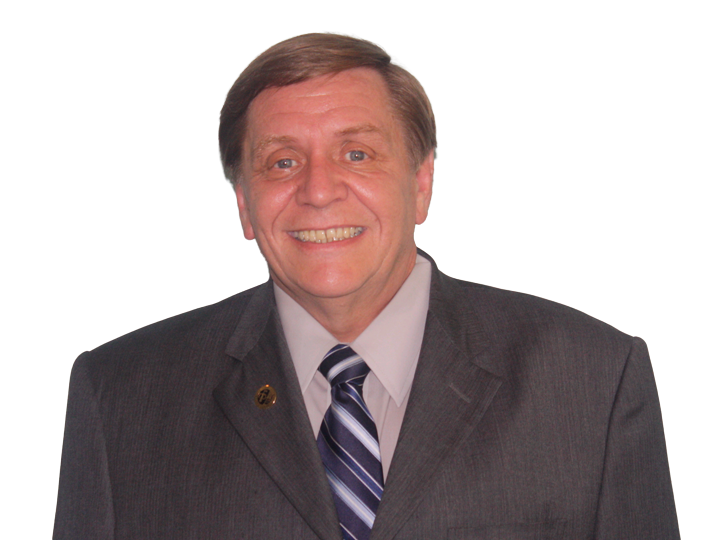
Thomas A. Michaud, Retired, Dean, School of Professional Studies and Professor of Philosophy, West Liberty University (WLU) earned his M.A. and Ph.D. from Marquette University and his B.A. (Honors) from Fairfield University (CT). He has taught at Wheeling Jesuit University, Marquette University, Mount St. Mary’s University (MD), Siena University (NY), and Rockhurst University (Kansas City, MO). His international experience includes a Smith Fellowship for the Husserl Archives at the University of Louvain (Leuven), Belgium, a Senior Fulbright Lectureship for the Federal University of Rio de Janeiro, Brazil, and the inaugural lecturer for the Rev. Jacek Woroniecki Memorial English Language Lectures in Philosophy, John Paul II Catholic University of Lublin, Poland.

Emphasizing his “common sense” approach, he has held seminars in leadership and ethics for many government and civic groups, professional associations, non-profit organizations, and educational institutions (including Duke Univ.’s Fuqua School of Business MBA program). In addition, Tom has designed and delivered extensive leadership ethics education programs for Wheeling Pittsburgh Steel Corp., Columbia Gas Transmission Corp., Columbia Gulf Transmission Company, Columbia Natural Resources Corp., Cabela’s Distribution Center and Dermox Corp.

He is the recipient of a WV Humanities Council Research Fellowship, former Director of the WV Business and Professional Ethics Project, a Kettering Foundation Contract Scholar, and a past-President of the Gabriel Marcel Society. He is also past-Vice President of the WV Humanities Council, and a former member of the Executive Council of the American Catholic Philosophical Association.

Besides writing a business ethics and leadership column (1996 to 2007) for The State Journal (WV’s leading business newspaper), he also has regularly written editorials for Nasz Djiennik (a Polish Catholic newspaper). His course text, The Virtues of Business Ethics, is published by Copley Custom Publishing Group, Third Edition, 2010.  His numerous papers, articles and reviews include publications in Philosophy Today, Renascence, The Review of Metaphysics, The Philosophy Research Archives, The lnter-American Review of Bibliography, Studia Gilsoniana, Man in Culture, The Kettering Review, Higher Education Exchange, Studia Philosophiae Christianae, Business Ethics Magazine and Ethics West Virginia. The anthology he edited and introduced, Gabriel Marcel and the Postmodern World, appeared as a special double volume of the Journal of the American Society of Philosophy in the French Language. He was also the Guest Editor for and a contributor to the Gabriel Marcel special issue of The American Catholic Philosophical Quarterly.

Dr. Michaud regularly designed courses for, taught in, developed and implemented various types of non-traditional, accelerated adult degree completion programs.  These include both undergraduate and graduate (Master of Science in Organizational Leadership, MBA, Executive MBA, Master of Professional Studies- MPS) programs. As Dean, Michaud essentially started the WLU School of Professional Studies (SPS), initiating its programs (Bachelor of Leadership and Administration, Professional Studies course concentrations, Master of Professional Studies in Organizational Leadership and Justice Leadership) and contributing to the management of the WLU Highlands Center.

OTHER CATHOLIC BUSINESS AND EDUCATION BOOKS

No Results Found

The page you requested could not be found. Try refining your search, or use the navigation above to locate the post.

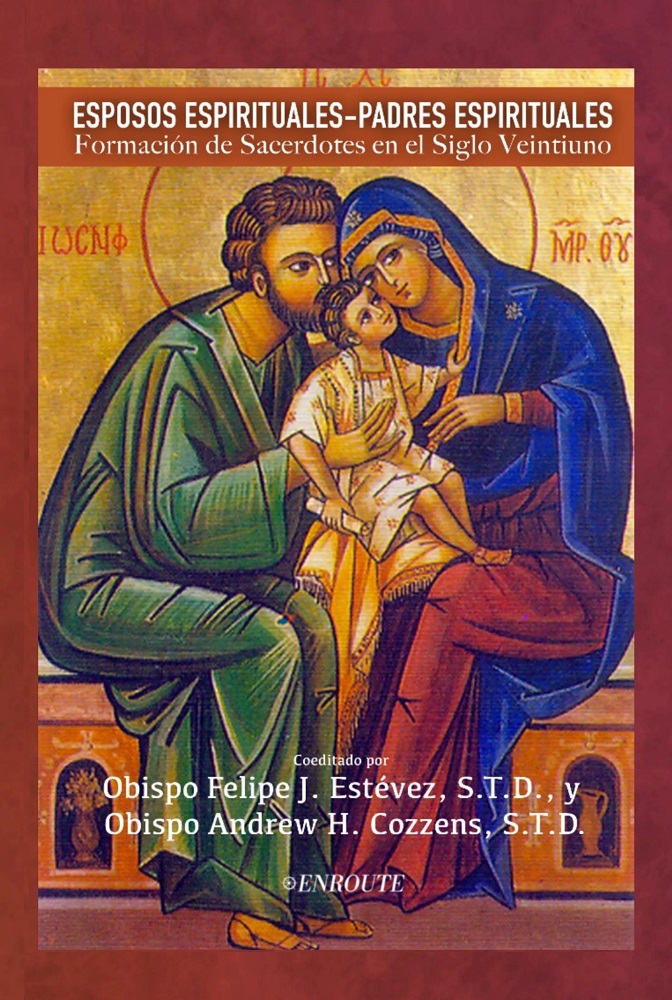
Esposos Espirituales – Padres Espirituales: Formación de Sacerdotes en el Siglo Veintiuno

Esposos Espirituales – Padres Espirituales: Formación de Sacerdotes en el Siglo Veintiuno

Esposos Espirituales – Padres Espirituales: Formación de Sacerdotes en el Siglo Veintiuno

por Obispo Felipe J. Estévez, S.T.D., y Obispo Andrew H. Cozzens, S.T.D.

¡Ahora en español!

En este libro se dan muchas referencias que asisten en la formación integral y que tienen en cuenta las necesidades humanas y espirituales de cada seminarista católico. El libro está dividido en tres secciones. La primera parte del libro suministra la meditación espiritual y teológica para ayudar a los sacerdotes y seminaristas a entender el don del celibato del esposo. La segunda parte del volumen presenta una colección de recursos psicológicos para la formación de la madurez afectiva. La tercera parte de este trabajo suministra las herramientas espirituales para profundizar la madurez afectiva. En esta sección lo espiritual y lo psicológico se unen, tal como lo saben los buenos formadores espirituales, para obtener una visión de la libertad espiritual de un hombre afectivamente maduro. La finalidad de este libro es escribir un recurso de ayuda espiritual y psicológica profunda que engendre madurez afectiva y una fructífera y casta celibato para la renovación de la formación de sacerdotes. Este es el deseo de la Iglesia expresado en la Ratio Fundamentalis de 2016 y en el Programa de formación sacerdotal, sexta edición. Esperamos que los formadores en el seminario, los seminaristas y muchos más encuentren en este libro un recurso que les ayude en su misión.

Libro en rústica: $29.95 | Libro electrónico: $9.95

LA PUERTA ABIERTA

THEOLOGY TODAY – ST. VINCENT DE PAUL REGIONAL SEMINARY

AUTHOR INTERVIEWS

Listen to "WCAT Radio Evening Review with Fr Kubicki on Consciousness Examen (February 18, 2009)" on Spreaker.

In support of Chapter 18 "Consciousness Examen" by Fr. George Aschenbrenner, SJ.

Rev. Larry Christenson on “Unilateral Forgiveness” – in two parts on YouTube.

TESTIMONIALS

“¡Esposos espirituales – Padres espirituales es una profunda contribución a la Iglesia y debe ser una lectura prioritaria para todos los obispos como formación episcopal permanente esencial! Esta colección de recursos, editada por los obispos, Estévez y Cozzens, proporciona una presentación esencial del celibato y una guía práctica para todos los que tienen encomendada la obra de formación en el seminario. La comprensión del celibato sacerdotal ricamente desarrollada en estos artículos es un recurso único en la Iglesia para formadores de seminarios, obispos y clérigos. Esposos Espirituales – Los Padres Espirituales serán altamente referenciados en el trabajo de formación sacerdotal para las generaciones venideras”. — Mons. Joseph Hanefeldt, Diocesis de Grand Island, Nebraska

“A menudo miramos a los sacerdotes como ‘Padres Espirituales’ y rara vez como ‘Esposos Espirituales’. Es un enfoque interesante y abarcador profundamente arraigado en la teología patrística con el objetivo de preparar a los seminaristas de hoy afectiva, intelectual, pastoral y espiritualmente para asumir ese papel de entregarse a la Iglesia (esposos) y al pueblo (padres)”. — Mons. A. Elias Zaidan, Eparquía Maronita de Nuestra Señora de Líbano de Los Ángeles.

“Tanto los obispos Estévez como Cozzens, así como los otros contribuyentes a este libro, tienen amplios antecedentes de formación en seminarios y clérigos, y ofrecen muchas ideas útiles tanto para formadores como para discernidores. Los autores ofrecen perspectivas equilibradas, aunque matizadas, para ayudar a nuestros futuros sacerdotes a entenderse a sí mismos como padres castos, célibes, padres espirituales y novios de la Iglesia. Los artículos contenidos en este documento ayudarán en la formación de hombres sanos e íntegros que sean capaces de convertirse, para el pueblo de Dios, en donación de sí mismos, a través del autoconocimiento y la curación. Después de casi una docena de años como formador de seminario, encuentro este libro una contribución útil a mi trabajo con ideas a las que a menudo volveré para una mayor oración y reflexión”. — Mons. David L.Toups, S.Th.D., Obispo de la Diocesis  de Beaumont, Texas, ex Rector/Presidente, St. Vincent de Paul Seminario Regional, Boynton Beach, Florida

“El llamado de cada discípulo cristiano es hacer un don sincero de sí mismo en amor y sacrificio por el bien del otro. Para el sacerdote, esto sucede de manera especial a través del carisma del celibato casto, donde se configura como novio de Cristo en su amor por la Iglesia. Este libro ayudará a los formadores de seminario en su tarea de ayudar a los seminaristas a recibir este precioso don y equiparlos para vivirlo por el resto de sus días en un servicio gozoso a la Iglesia”.  — Padre Joseph C. Taphorn, JCL, Rector, Seminario de Saint Paul, Saint Paul, Minnesota.

Esposos Espirituales – Padres Espirituales proporciona un exceso de riquezas para aquellos involucrados en el trabajo de formación sacerdotal. La variedad de autores proporciona una profundidad de perspectiva, y las múltiples áreas de experiencia representadas en este documento aseguran una presentación que es a la vez global y equilibrada. Este volumen será una adición bienvenida a la biblioteca de cualquier persona involucrada en el trabajo de formar a los futuros sacerdotes de la Iglesia de Cristo”. — Padre Robert S. Horihan, Rector del Seminario del Inmaculado Corazón de María, Winona, MN.

“El Papa San Juan Pablo II escribió en Pastores Dabo Vobis, n. 44. ‘ La madurez humana, y en particular la madurez afectiva, requiere una formación clara y fuerte en libertad». Los ensayos de este volumen ayudarán a formadores y seminaristas a formarse en la libertad que conduce a la madurez afectiva. Agradecido a los autores por este trabajo”. Mons. Dan Trapp, Director de  Formación Espiritual del Seminario del Sagrado Corazón de Jesús, Detroit.

“En estos tiempos difíciles en la historia de nuestra Iglesia, este libro es muy oportuno.  En estas páginas, los católicos descubrirán de nuevo la belleza del don del sacerdocio y la sabiduría de la Iglesia. Este libro es verdaderamente un tesoro de formación de artículos y ensayos inspiradores no solo para sacerdotes, seminaristas y sus directores espirituales y formadores, sino para todos los católicos que aman a la Iglesia y buscan inspiración y consejos prácticos para su propio crecimiento personal en santidad”. — Alicia G. Goodwin, M.A.T.S., Presidente de la Casa de Oración Nuestra Señora de la Divina Providencia®

“San Juan Pablo II escribió una vez: ‘Vive tu vida en la dimensión del don’. Toda vocación tiene que ver con esto; ciertamente el Santo Sacerdocio. Pero nemo dat quod non habet: uno no puede dar lo que no tiene. Es precisamente porque la auto posesión siempre precipita el don de uno mismo que requiere madurez afectiva. Esta colección de 22 artículos sobre la madurez afectiva es un tesoro para directores de vocaciones y formadores de seminarios escritos por algunos de los mejores educadores. ¡Será una tremenda bendición a medida que la Iglesia continúe progresando en la implementación de la Ratio!” — Padre Brett A. Brannen, autor de To Save A Thousand Souls: A Guide for Discerning a Vocation to the Diocesan Priesthood

“Basándose en las Sagradas Escrituras, los Padres de la Iglesia, los místicos, los concilios ecuménicos y los escritores espirituales contemporáneos, “Esposos espirituales – Padres espirituales,” habla directamente del deseo de cada sacerdote de una mayor conformidad con Cristo Sumo Sacerdote, a través de una relación más íntima y vivificante con María. Será una herramienta útil, especialmente para aquellos encargados de la formación de futuros sacerdotes en medio de estos tiempos difíciles”.   — Padre Mark Ivany, Director de Vocaciones Sacerdotales, Arquidiócesis de Washington, Director de Formación Pastoral, Seminario San Juan Pablo II

Esposos Espirituales – Padres Espirituales presenta una visión cautivadora para la formación sacerdotal basada en el llamado universal de todos los hombres a la paternidad fundada en un llamado esponsal. Ya sea que este llamado sea al matrimonio carnal, o espiritual, se cumple genuinamente con un compromiso maduro con un don de sí mismo libre, total, fiel y fructífero a su amada. Para el sacerdote, este don sincero de sí mismo se vive auténticamente a través del celibato casto, liberándolo para cumplir su llamado a ser el padre espiritual de su rebaño. Esta antología de artículos es un complemento importante a los recursos de formación sacerdotal”. — Catherine Loh, M.A. Teología, Diocesis de Palm Beach, Director de Matrimonios, Vida Familiar, Formación de la Fe, y Ministerio Joven.

ABOUT THE EDITORS

El Muy Rev. Obispo Felipe J. Estévez, S.T.D., nació el 5 de Febrero de 1946 en la Habana, Cuba y llegó a los Estados Unidos en la operación de los vuelos Pedro Pan cuando era todavía un adolecente. Fue ordenado en 1970 y ha hecho estudios extensivos en teología espiritual obteniendo su doctorado en la universidad Gregoriana de Roma. Habla con fluidez inglés, español, francés e italiano. De 2001 a 2003, el obispo Estévez sirvió como director espiritual en el Seminario Regional San Vincente de Paúl en Boynton Beach, Florida, en donde sirvió como rector entre 1980 y 1986. Durante 14 años, fue el pastor de San Agatha en Miami, dirigiendo al mismo tiempo el ministerio universitario en la universidad Florida International. El 21 de noviembre de 2003, fue nombrado Obispo Auxiliar y ordenado el 7 de enero de 2004. Estuvo a cargo de los servicios pastorales de la arquidiócesis incluyendo la vida familiar, la juventud, prisiones y respeto a los ministerios de la vida y de todos los movimientos de la iglesia y de las nuevas comunidades. En el año 2010, fue nombrado Vicario General de la Arquidiócesis de Miami. En Abril 27 de 2011, el Papa Benedicto XVI nombró al Obispo Auxiliar Felipe J. Estévez el décimo Obispo de San Agustin. En junio 2 de 2011, en la Iglesia Católica de San José de Jacksonville fue consagrado como Obispo. El obispo Estevez es el segundo de los tres hijos (Carlos y Marty) del difunto Adriano y Estrella Estévez.

El Reverendo Andrew Cozzens, S.T.D., es el obispo auxiliar de la Archidiócesis de San Pablo de Minneapolis. Actuó como formador del seminario durante ocho años, en el foro externo, profesor y rector interino. En el momento sirve como presidente del Consejo de Formación de Seminaristas, del cual también es socio fundador, y es el presidente del Instituto de Formación de Sacerdotes con sede en Omaha, Nebraska. Su disertación doctoral la hizo en Imago Vivens Iesu Christi Sponsi Ecclesiae: el sacerdote como imagen viviente de Jesucristo el Novio de la Iglesia a través de los consejos evangélicos, enfocado en la relación entre el sacerdote y los consejos evangélicos, basados en el llamado al sacerdocio para vivir en imitación de Jesucristo, el Novio de la Iglesia.

OTHER CATHOLIC BUSINESS AND EDUCATION BOOKS

No Results Found

The page you requested could not be found. Try refining your search, or use the navigation above to locate the post.

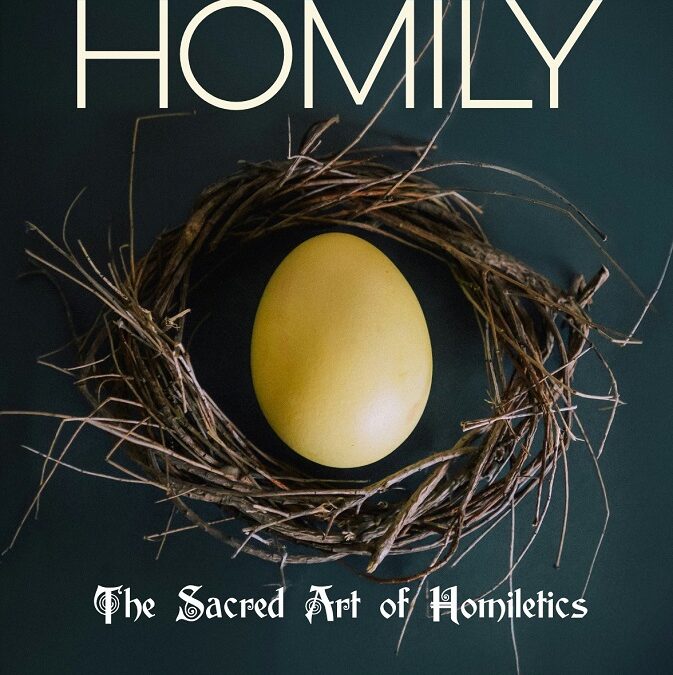
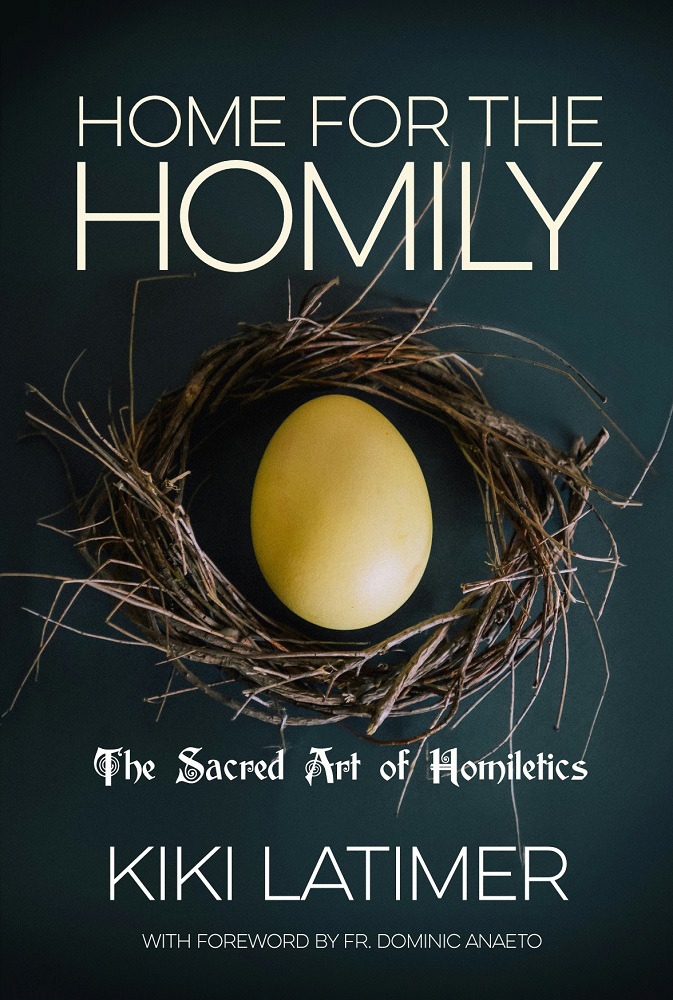
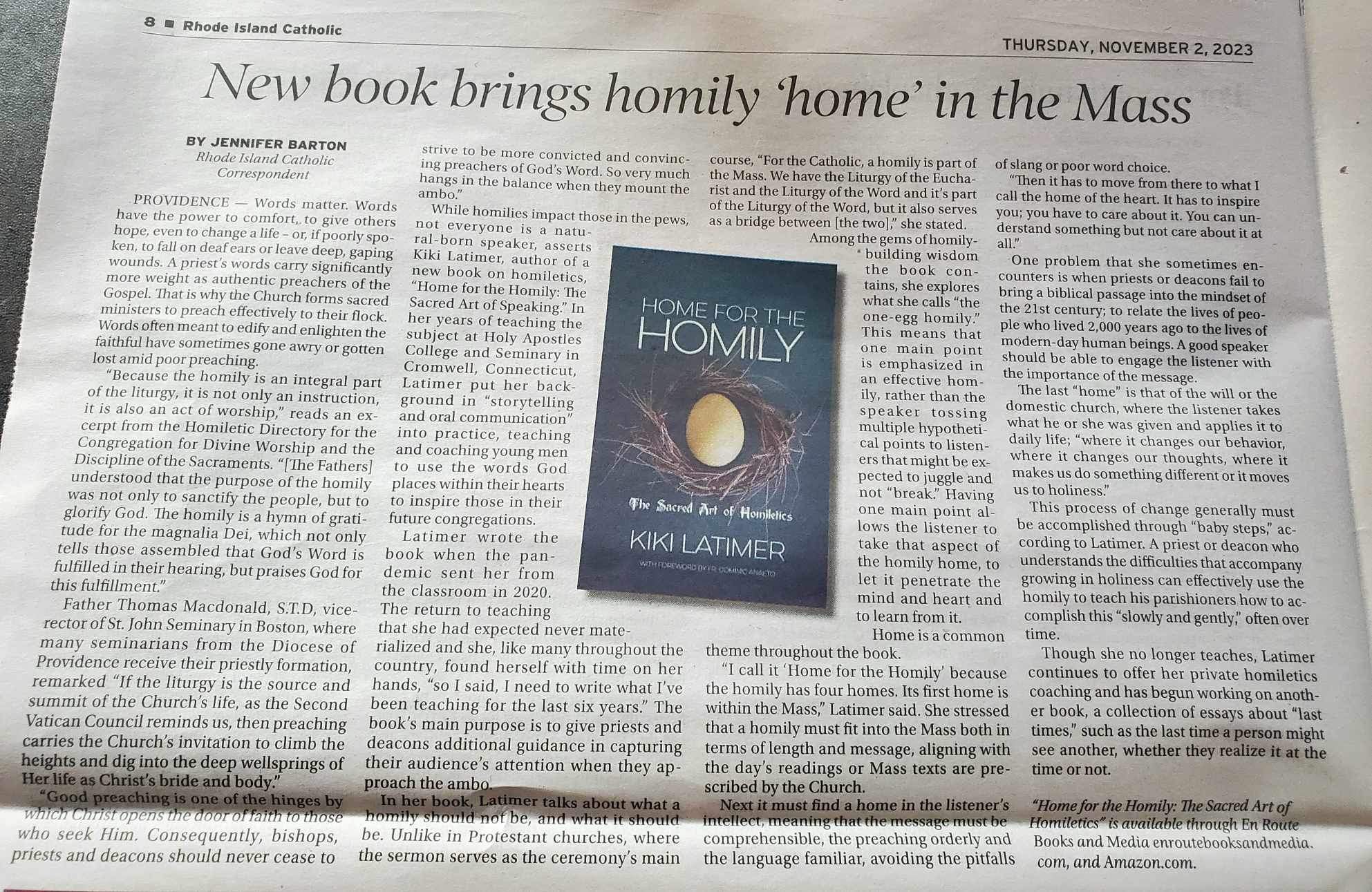
Home for the Homily: The Sacred Art of Homiletics

Home for the Homily: The Sacred Art of Homiletics

Home for the Homily: The Sacred Art of Homiletics

by Kiki Latimer

Home for The Homily: The Sacred Art of Homiletics concerns a new and required depth of preaching the word of God within the Mass. This calls for a new and deeper appreciation of communication skills. The homilist may no longer stand separately on the shoreline nor drift in the safety of shallow waters, rather he must have the faith of Peter to “put out into deep water.” This requires depth of soul, depth of character, depth of vulnerability, and depth of skill. When Christ asks Peter to “put out into the deep water,” Peter considers his level of faith in Jesus and decides, by grace, to do so. This is a pivotal moment; without this affirmative decision there will be no catch. It is no different for the homilist today. The intimacy and depth of the effective homily requires an affirmative decision to put out into the deep. May this book help you, the homilist, put out into the deep and thereby, allow the homily to reach its four sequential destinations: the home of the Mass, the home of the Intellect, the home of the Heart, and the home of the Will, the domestic Church where homily is lived out.

Paperback: $19.95 | Kindle: $9.99


TESTIMONIALS

“The author has produced a Homiletic Masterpiece, theologically sound and pastorally relevant for seminarians, Seminary formators and the ecclesial audience. Highly recommended.” Fr. Dominic Anaeto, Professor of Pastoral Theology, Holy Apostles College & Seminary, CT

“This book Home for the Homily is OUTSTANDING. Not to covet but I wish I had written it and I have so little I could possibly add to it. I was in National Public Speaking contests… You captured ALL the core elements and the most often ignored:  GREAT PUBLIC SPEAKING TECHNIQUES, preparation… This is a work of art and needs to be on all Priests and Deacons reading list!  Thank you for this work.” – Dcn. John Silvia, Rhode Island 

“I’ve known Kiki for many years and been a glad recipient of her Homiletics instruction. She offers important technical and practical insights to delivering God’s Word to the faithful, which has been invaluable. I wholeheartedly recommend her work.” Fr. Skip Thompson, MSA, Retreat Director, Santa Clara Parish, Oxnard, CA

I’ve been blessed to work with Kiki. Her guidance is simple, profound, and practical and deeply grounded in the Church’s homiletic tradition. I recommend her wisdom to both veteran homilists and preachers in initial formation. She has made a tremendous contribution to the preaching of the Church.” Fr. Erik Lenhart, OFM Cap. S.T.L. St. Lawrence Friary, Beacon, NY.

Kiki Latimer’s book is full of pungent insights into how priests should preach homilies. The fruit of years of teaching homiletics, I wish every seminarian, deacon and priest would read her book.” Dr. Ronda Chervin, retired philosophy professor, author of numerous books about Catholic Spirituality, and media presenter

ABOUT THE AUTHOR

Kiki Latimer, author, public speaking coach, editor, and teacher of Homiletics, received her BA from the University of Rhode Island in the Oral Interpretation of Literature, Psychology, and Philosophy and her MA in Moral Theology from Holy Apostles College & Seminary.  
OTHER CATHOLIC BUSINESS AND EDUCATION BOOKS

No Results Found

The page you requested could not be found. Try refining your search, or use the navigation above to locate the post.

Teaching and Learning in the Age of COVID19

Teaching and Learning in the Age of COVID19

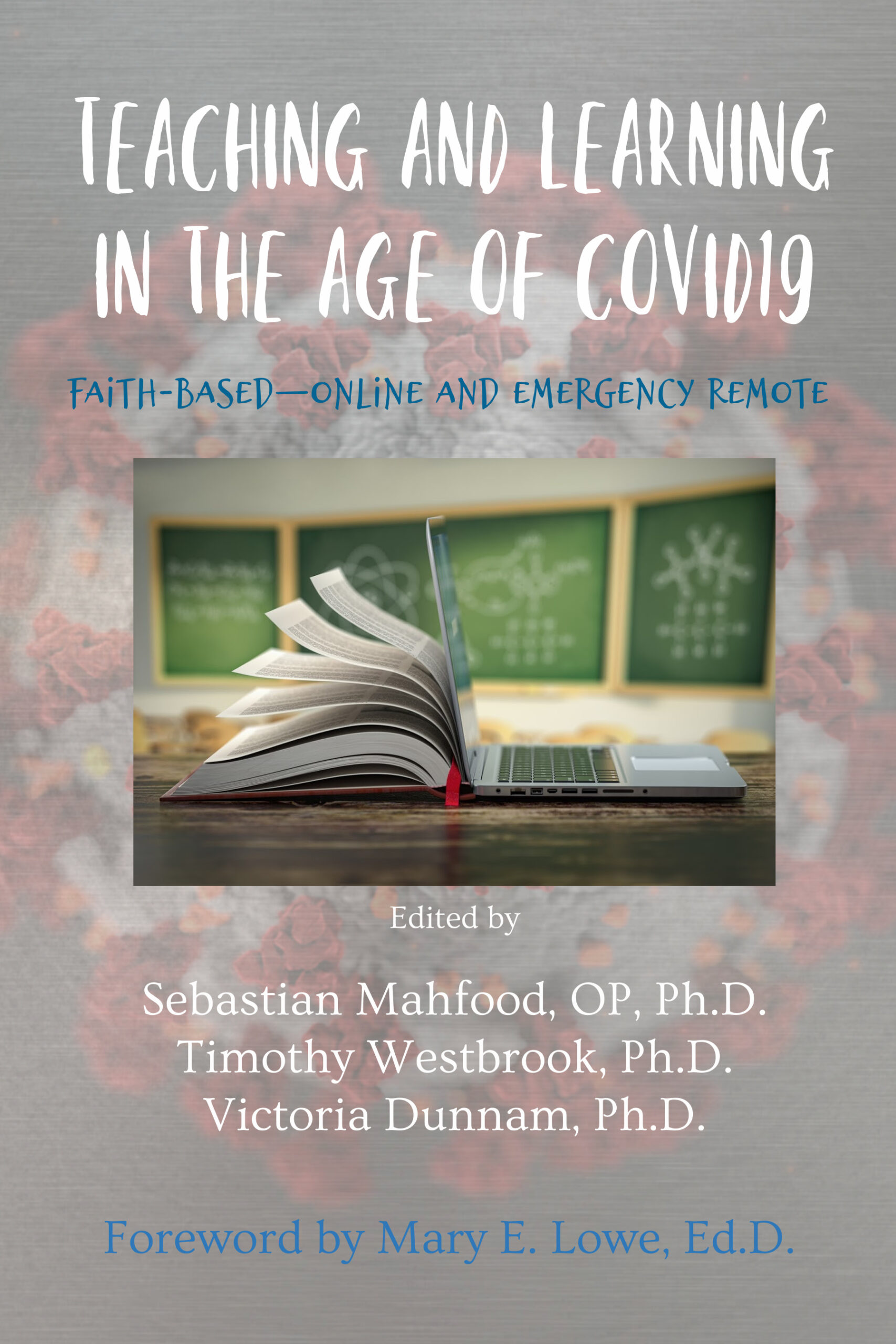
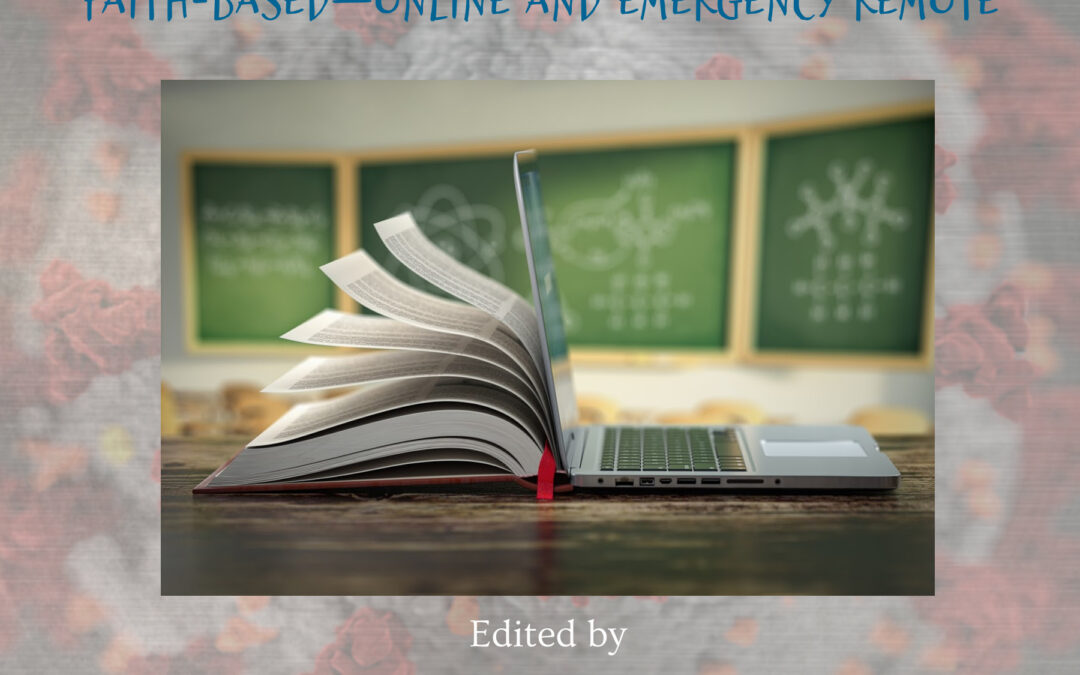
Teaching and Learning in the Age of COVID19: Faith-Based — Online and Emergency Remote

Ed. by Sebastian Mahfood, OP, Ph.D., Timothy Westbrook, Ph.D., and Victoria Dunnam, Ph.D.

with a Foreword by Dr. Mary E. Lowe

Over the past two decades, a generation of educational technologists and instructional designers have been working in our theological schools across the United States to assist faculty in the use of appropriate technologies within their teaching and learning environments. Originally, the classrooms in which they worked were of the brick-and-mortar kind with faculty and students physically showing up to a certain space within a scheduled time of the week. Increasingly, the classrooms have become of the digital kind with faculty and students meeting in a virtual commons over the expanse of a given week. With the rise of COVID19 in March, 2020, and the subsequent lockdown, faculty were asked to engage their students via Emergency Remote Learning, which required everyone to learn on the fly how to develop and manage a virtual classroom in real time. This book offers assistance to faculty as we continue our work of digitally engaging our brick-and-mortar students.

Paperback $19.95 | Kindle $9.99

CONTENTS AND AUTHORS

Foreword by Mary Lowe

Introduction by Sebastian Mahfood, OP

Engaging the Literature

1. Online Homiletical Pedagogy as Difficult Conversation by Dave Bland

2. Compensation and Ownership: The Current State of Online Course Development at Christian Colleges by Rebecca Hoey and Fawn McCracken

3. Online Doctoral Students at a Faith-Based University: Concerns of Online Education by Kelly Price, Julia Price, and Deborah Hayes

4. An Investigation into the Implications of Dewey’s “Learning Situation” for Online Education by Timothy Paul Westbrook, Morgan McGaughy, and Jordan McDonald

5. Teaching Presence (Course Design, Direct Instruction, and Facilitated Discourse) and the Impact on Student Success in Online Learning by Victoria Dunnam


Engaging the Learner

6. Engaging Online Students through Customer Service and Pastoral Care Mentality by Sunday Akin Olukoju

7. Steps toward Equitable Access for Faculty New to Online Learning by Lawrence Hopperton

8. Actively Engaging the Remote Learner by Matthew Boutilier

9. Facilitating Learner-Centered Online Education by Lawrence Hopperton

10. eQuity: Considering “Otherness” in the Online Classroom by Timothy Paul Westbrook

11. Flipped Classrooms: Reshaping the Tyndale Degree Completion Program for Engagement and Learning by Lawrence Hopperton

12. Building an Online Course for the Catholic Distance Learning Network: Teaching Theology and Science Online by Sebastian Mahfood and Michael Hoonhout

Dr. Sebastian Mahfood, OP on Online Teaching

Dr. Timothy Westbrook on Faculty experiences in this period of Emergency Remote Teaching (ERT)
Mr. Rollin Guyden "Expanding your Instructional Toolbox to Engage Students"
Dr Larry Hopperton, Dir. of DL Technology @ Tyndale on Accessibility Issues
Mrs. Phyllis Ennist on Community, Engagement, Belonging in Online Courses
Dr. Stephanie Mahfood presenting on Video Enhanced Observation
Dr. Sebastian Mahfood, OP, on CARES Act and its Impact on Theological Schools
Dr. Sebastian Mahfood, OP, on Flipping Emergency Remote Teaching through Audio and Video Podcasting
Dr. Mark Maddix on Online Learning
Dr. Lester Ruiz on Technology in Theological Education
Dr. Larry Hopperton and Dr. Matt Boutilier on Actively Engaging the Adult Learner
Fr. Sergius Halvorsen on Vulnerability and Trust: Building Communities of T & L

ABOUT THE EDITORS

Sebastian Mahfood, OP, Ph.D., has served since 2010 on the faculty of Holy Apostles in Cromwell, CT, after eleven years on the faculty of Kenrick-Glennon Seminary in St. Louis, MO. He has been a Lay Dominican of the Queen of the Holy Rosary Chapter in the Province of St. Albert the Great since 2008. His work in the areas of lay and priestly formation led him to found a Catholic publishing house called En Route Books and Media, which has produced almost two hundred titles since 2014, and an online Catholic radio station called WCAT Radio, which currently hosts over six dozen programs. Dr. Mahfood holds a doctorate in postcolonial literature and theory from Saint Louis University along with several master’s degrees in the fields of comparative literature, philosophy, theology, and educational technology.
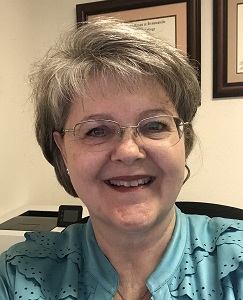
Timothy Paul Westbrook, Ph.D., is an associate professor of Bible and Ministry at Harding University and directs the Center for Distance Education in Bible and Ministry. He has been involved in distance edu-cation professionally since 2005 and has both published and presented on best practices and learning theory as they pertain to online course design. He serves as an executive officer for Faith-based Online Learning Directors (FOLD) and is a member of ACCESS and Society for Professors of Christian Education. Westbrook has earned his M.A. in doctrine and his M.Div. with a concentration in Old Testament from Harding School of Theology. He completed his Ph.D. in Educational Studies at Trinity Evangelical Divinity School.

Victoria Dunnam, Ph.D., currently is an Educational Technology Consultant for Union Theology Seminary, a Moodle Administrator, a Quality Reviewer/ Learning Architect for iDesign and is an Instructional Designer and Content Developer for online courses for universities, as well as an adjunct online instructor. She owns and operates Dunnam Consulting. She completed her doctorate from Grand Canyon University with Ph.D. in Psychology with Emphasis on Integrated Technology and Learning, She holds a Master’s Degree in Educational Technology from University of Texas in Brownsville and a BBA Computer Science degree from Hardin Simmons University. She is a member of the executive committee for Faith-Based Online Directors (FOLD) organization. Her interests and passion is online learning and creating quality online course design that impacts student’s online learning experience.

OTHER CATHOLIC BUSINESS AND EDUCATION BOOKS

No Results Found

The page you requested could not be found. Try refining your search, or use the navigation above to locate the post.

Teaching Research Processes by William Badke

Teaching Research Processes by William Badke

Customers who buy Teaching Research Processes also bought Research Strategies. Get your copy today!

Teaching Research Processes: The Faculty Role in the Development of Skilled Student Researchers, 2nd Edition

by William Badke

Today’s students struggle with the research processes required to problem-solve and enlist their findings into cogent academic writing. They lack skill in formulating problem statements, identifying the most relevant databases, using those databases effectively, and evaluating found information. More profoundly, they do not understand the confusing information landscape in which they are working.

Teaching Research Processes aims to help faculty members overcome these deficits and develop strong research abilities in their students.

Paperback: $19.95 | Kindle $9.99

Teaching Research Processes - Session 1
Teaching Research Processes - Session 2
Teaching Research Processes - Session 3
Teaching Research Processes - Session 4
Teaching Research Processes - Session 5
Teaching Research Processes - Session 6

Testimonials

“Badke provides a compelling argument that students do not know how to do research and that faculty are not addressing the problem. He shows that librarians and faculty can work together to teach the process of research to students. Until professors see the need for teaching research processes, students will continue to fumble their way through them. Teaching Research Processes could be a helpful resource for a faculty retreat or a conversation starter.”–Teaching Theology & Religion, January 2014, about the 1st Edition

“This book should prove valuable to anyone trying to design a relational approach to IL and integrate it within curricula.” — Journal of Information Literacy, about the 1st Edition

ABOUT THE AUTHOR

William Badke is Associate Librarian for Associated Canadian Theological Schools and information literacy at Trinity Western University in Langley, British Columbia, Canada. He has taught research processes to thousands of students for almost 40 years. His extensive publications show that he does research rather than just teach it.

No Results Found

The page you requested could not be found. Try refining your search, or use the navigation above to locate the post.