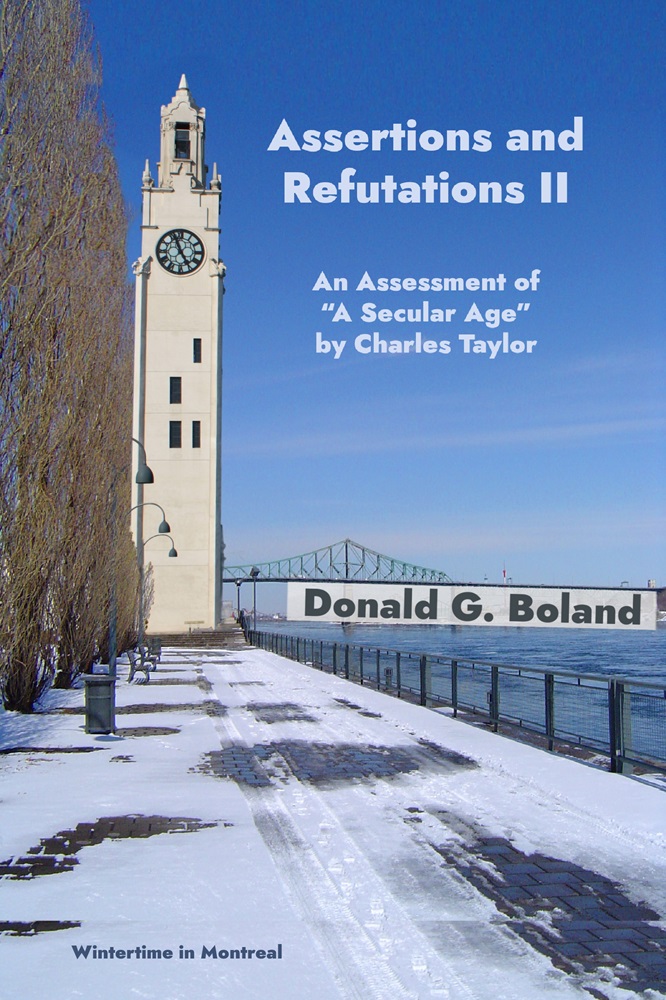
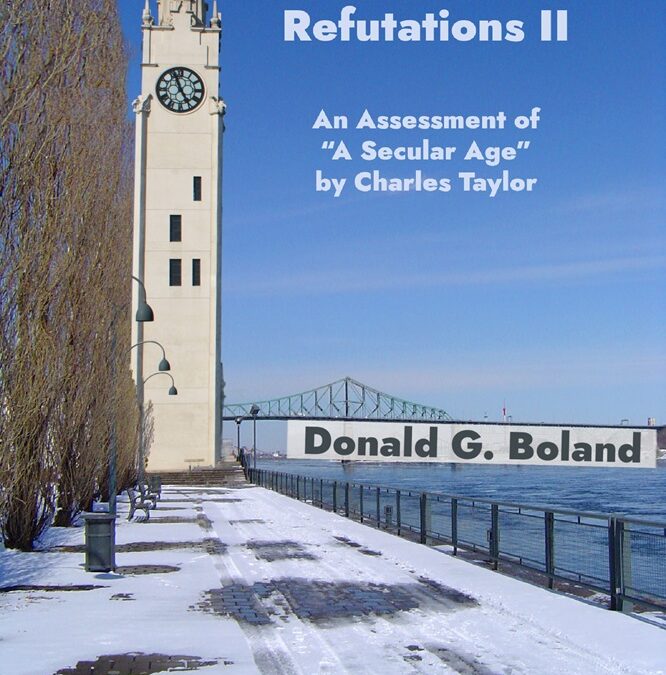
Assertions and Refutations II An Assessment of “A Secular Age” by Charles Taylor, authored by Donald G. Boland

Assertions and Refutations II An Assessment of “A Secular Age” by Charles Taylor, authored by Donald G. Boland

Assertions and Refutations II: An Assessment of “A Secular Age” by Charles Taylor

by Dr. Donald G. Boland

This book is as stated on its cover an assessment of a book by Charles Taylor entitled “A Secular Age” published in 2007. It serves mainly as a critique of Taylor’s book, which generally was received favorably, not only in religious academic circles, Taylor being Catholic, but also in the “secular” academic world engaged in the subject matter he was concerned with.

As may be appreciated, this latter part of the modern world of education, especially at the highest levels, would be commonly described as “secular” in an anti-religious, meaning atheistic, sense. The favorable reception of Taylor’s thesis in both seemingly opposed educational worlds is somewhat curious, prompting one to look more closely into its thesis and conclusions.

Dr. Boland is mainly concerned with challenging the book’s assertions from the point of view of a follower of the philosophy of Saint Thomas Aquinas. But, since its subject matter is most properly within the scope of social and moral philosophy, he is also concerned to show up its deficiency even from the point of view of the philosopher Aristotle.

The author’s assessment should therefore prove to be one of interest to both secular and religious readers, Catholic or not.

Paperback: $14.95 | Kindle: $9.99

REVIEW BY FRANK CALNEGGIA

I found Dr. Boland’s assessment of “A Secular Age” to be very informative. He first catches Taylor out using the word “secular” in an equivocal manner; assigning to it four significations, including one of his own invention. It is anyone’s guess as to which meaning the title of the book is meant to convey. Dr. Boland points out the specific meaning of the word as used in the Church. Taylor, a Catholic academic of high standing, seems oblivious to the simple and common sense meaning of the word “secular”, so frequently used in Church Teaching documents. 

   Taylor, as Dr. Boland emphasises, seems not to have grasped the first principle of Sociology: it is a practical science and not a theoretical one like mathematics. Taylor falls in with the modern and common academic misconception of Sociology and its resulting methodology. He fails to stand out from the crowd. What a pity. With guidance from St Thomas and Aristotle he would see why at bottom sociology is a practical science: because first and foremost it is an ethical science. Without this necessary insight and the assessment and commentary on Social questions that could and should go with it, an 800 page book on which ever of the four meanings Taylor associates in a particular “Age” with “Secular” can only be an attempt to fill a void with side issues and irrelevancies.

   Popes St. John Paul II and Benedict XVI have been particularly strong in their addresses to Modern Secular Society (see e.g. their Addresses to the United Nations), on the need for the natural moral law to be a guiding legislative principle for all Nations and Societies. (For confirmation see my Assertions and Refutations “An Assessment of Dr. Tracey Rowland’s ‘Natural Law: From Neo-Thomism to Nuptial Mysticism’.”)

   Another feature, or should I say debility, of “A Secular Age” Dr. Boland points up is Taylor’s lexical inventiveness.  He uses words such as “porous” and “buffer”: words that seem to me to have been borrowed from the construction or building industry (Dr. Rowland is another Catholic trail blazer in this respect); words that one would expect to find on blue-prints for the Hoover Dam.

   Dr. Boland has shown remarkable stamina with Taylor’s bloated book and much patience in commenting upon it. I highly recommend his assessment for the true Thomistic perspective it shines on “A Secular Age” (which ever of Taylor’s meanings you want to choose for “Secular” – he fiddles with “Age” as well) and the clear refutations of Taylor’s thesis it offers.

–Frank Calneggia, author of Assertions and Refutations: An Assessment of Dr Tracey Rowland’s Natural Law: From Neo Thomism to Nuptial Mysticism and editor of Analysing the Errors and Exposing the Real Agenda of Pierre Teilhard de Chardin, S.J.: The Selected Works of Frits Albers, Vol. 1

​ABOUT THE AUTHOR

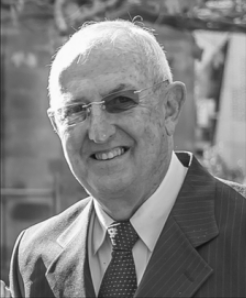
Donald G Boland Ll. B. (Sydney), Ph. D. (Angelicum) is a founding member of the Centre for Catholic Studies Inc. in Sydney Australia and is one of its former Presidents. He practiced for a number of years as a lawyer having a degree in law from the University of Sydney. Over much the same time, having obtained a doctorate in philosophy from the University of St. Thomas in Rome, he has taught philosophy and law in both Catholic and secular educational institutions, such as the University of Technology, Sydney, the University of Newcastle, the Aquinas Academy, the Centre for Thomistic Studies Inc., now operating under the name of the Centre for Catholic Studies Inc., and various Catholic seminaries, such as those of the Marists and the Vincentians. His doctoral thesis was on the concepts of utility and value in economics as found in the works of Aristotle and St. Thomas Aquinas.

OTHER CATHOLIC PHILOSOPHY BOOKS

No Results Found

The page you requested could not be found. Try refining your search, or use the navigation above to locate the post.

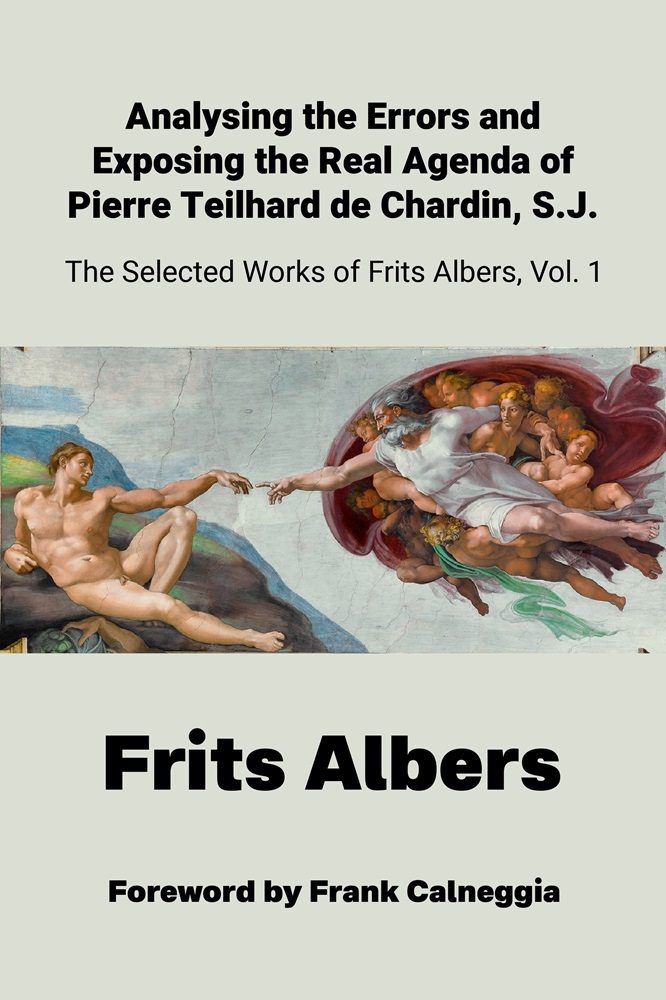
Analysing the Errors and Exposing the Real Agenda of Pierre Teilhard de Chardin, S.J.: The Selected Works of Frits Albers, Vol. 1

Analysing the Errors and Exposing the Real Agenda of Pierre Teilhard de Chardin, S.J.: The Selected Works of Frits Albers, Vol. 1

Analysing the Errors and Exposing the Real Agenda of Pierre Teilhard de Chardin, S.J.: The Selected Works of Frits Albers, Vol. 1

by Frits Albers, edited with a Foreword by Frank Calneggia

Selected for publication in this present volume are four of the principal works of Frits Albers wherein the errors of Pierre Teilhard de Chardin, S.J., are exposed and analysed in depth, their impact on critical areas of Catholic life made manifest, and Teilhard’s real agenda proved from Teilhard’s own words. These are:

  • Teilhard de Chardin and the Dutch Catechism;
  • The Hidden Schism;
  • The ‘Theology’ of the late Pierre Teilhard de Chardin, S.J.;
  • Tradition

The author shows that Teilhard’s agenda to spread his errors in the Church was continued after his death so that after Vatican II Catholics would be taught these errors were the ‘authentic interpretations’ of the Council. He further shows that this has had a most disastrous effect on Catholic life on a global scale. The author discusses and analyses in some depth and with much acumen the insidious preparation of this Teilhardian agenda and its widespread post conciliar implementation. He then turns his attention to the documents of Vatican II and shows that they can only be rightly understood (that is to say, in the light of Catholic Faith and right reason) when seen and accepted as a continuation of the uninterrupted Tradition (handing on of Revelation) that has always existed in the Church, and from which evolution has always been absent.

Paperback: $19.95 | Kindle: $9.99

REVIEW BY DR. DONALD G. BOLAND

I am old enough to remember the furore caused among the Catholic young and not so young with whom I had communication in the time after my attendance at the Law School of the University of Sydney, and during my attendance at the Aquinas Academy, on the publication, after his death, of the works of Teilhard de Chardin, prohibited to be published by the Church during his lifetime. The furore as I recall came to a head in the middle 1960s as the Second Vatican Council was ending or shortly afterwards. Dr. Woodbury was amongst the loudest in his condemnation of the materialist/scientistic evolutionism to be found in the works.

     Apart from the moral consequences of its teaching, the inanity, even insanity, of the “theological science” propounded, as well as the equivocations and general sophistry in its popular propagation, were so obvious to us at the time that we hardly gave it another thought. We did not pay that much attention to the sensationalist “press” that these works evoked.

     Being more interested in the revival of genuine Catholic thought in the likes of Chesterton and the books being written by a multitude of other marvelous English converts, such as Father Ronald Knox and Arnold Lunn, a mountaineer who invented the slalom ski event in the Olympics, we treated the “phenomenon” of de Chardin SJ as just another of the passing fashions to which the Catholic world had always been subject, and focused on the works of the Church’s “Common Doctor”, with their resources to retain the sanity of mind needed in our times, as at all times.

     Little did we realise that many in the Church, especially amongst de Chardin’s confreres, the Jesuits, were giving a lot of thought to his “revelations”, seeing it as a vehicle to bring the Church up to date, as it was supposed was the intent of the Vatican Council.

     For a time, we did not appreciate that the ideas of de Chardin were but a break out of a deeper disease/malaise in modern Catholic thought that had already been identified and condemned as strongly as possible by the Magisterium, namely, that “mother of all heresies”, Modernism.

     It is only in more recent times, as the depth of this intellectual and moral darkness has become more “visible”, that I have come to realise that, far from being a passing “phenomenon”, de Chardin’s “scientific evolutionism” has grown, like a cancer, to such monstrous proportions that it seems to be ineradicable. For it is evident now that the “forces” of the Evil One (Malignus), or the smoke of Satan as Pope Saint Paul VI put it, have indeed entered the very inner halls of the governing “Curia” (Latin for caring part) of the Church.

     If I had been aware of the work of Frits Adlers, who was well aware of what was happening even in the 1970s, and was describing it in detail in the books only now being published widely, I would have been much the wiser myself about the dire state of affairs the faithful was caught up in, like in a spider’s web.

     However, better late than never, and no doubt in God’s providence, we now have the malign situation exposed in the most thoroughgoing way. It is up to us to have the courage to face it, and condemn the error and evil it represents.

     I will add if I might my own view of de Chardin’s work, whose connection with Modernism can be traced quite clearly in retrospect. Like many of his generation, including Maritain, he was well educated in modern science, and greatly impressed with its power. But being deeply spiritual because of his Christian upbringing, he was also troubled by the apparent conflict between what he held by Faith and what his modern science told him was pure reason.

     He looked for a way out of this dilemma and through intellectual contact with Bergson’s philosophy, expressed especially in his book “Creative Evolution”, believed he had found it. He befriended Bergson’s closest associate Edouard Le Roy and discussed things over a long period.

     It is significant that Maritain was initially drawn to Bergson’s solution of his own dilemma – it became the prevailing solution of the day to the perceived view that human knowledge in science was mechanistic – but later through contact with the works of St. Thomas Aquinas (by the graces of his wonderful wife Raissa) Maritain was able to see through Bergson’s “evolution” philosophical solution.

     Importantly, the Church authorities of the time were alert to this mistaken approach, apparently perceiving the pantheistic implications of Bergson’s thought, and banned his books.

     De Chardin, one speculates, felt that this was either a misunderstanding of Bergson’s philosophy or, like many others both inside and outside the Church, an arbitrary exercise of ecclesiastical authority against the scientific search for truth.

     In fact, as we can now see, thanks in great measure to Frits Albers’ work, de Chardin’s adoption of scientific evolutionism, which evidently was influenced by the vitalism/intuitionism of Bergson, fell also into Modernism. Sadly for those deceived by it, de Chardin’s philosophy of science was just another philosophical error by which the heresy of Modernism, masquerading as Christian theology, was able to be perpetuated in modern Catholic thinking.

— Dr. Donald G. Boland, author of Rev. Fr. Austin M. Woodbury, SM, PhD, STD and the Aquinas Academy (1945 – 1975); also see his Compendium

ABOUT THE AUTHOR


Frits Albers Ph. B (1921-2000) was born in Holland and studied under the Jesuits at Nijmegen during the 1940s.  He emigrated to Australia in 1951, and travelled extensively within the south-east region of the ‘lucky country’.  He joined the Department of Education in Victoria and worked as a high school teacher who specialised in mathematics, French and English.

In the early post Vatican II period he realised that the strange interpretations of the recently concluded Council that were being forced upon Catholics were under pinned by the same philosophy he had been taught in the 1940’s by the Jesuits at Nijmegen in the name of St Thomas Aquinas, but which in reality was the systematic Modernism of Pierre Teilhard De Chardin, S.J. Thus, in the early 1970’s he began writing articles and books to expose the philosophical root of these errors and aberrations of Teilhard De Chardin, and to defend Catholic Faith, clear thinking, and right philosophy.

ABOUT THE EDITOR


The editor is a retired electrical engineer who worked for most of his professional career in the specialist area of power generation. In a sabbatical year, he completed post graduate research in the History and Philosophy of Science at the University of Melbourne. He has long loved the philosophy of St Thomas Aquinas.

OTHER CATHOLIC PHILOSOPHY BOOKS

No Results Found

The page you requested could not be found. Try refining your search, or use the navigation above to locate the post.

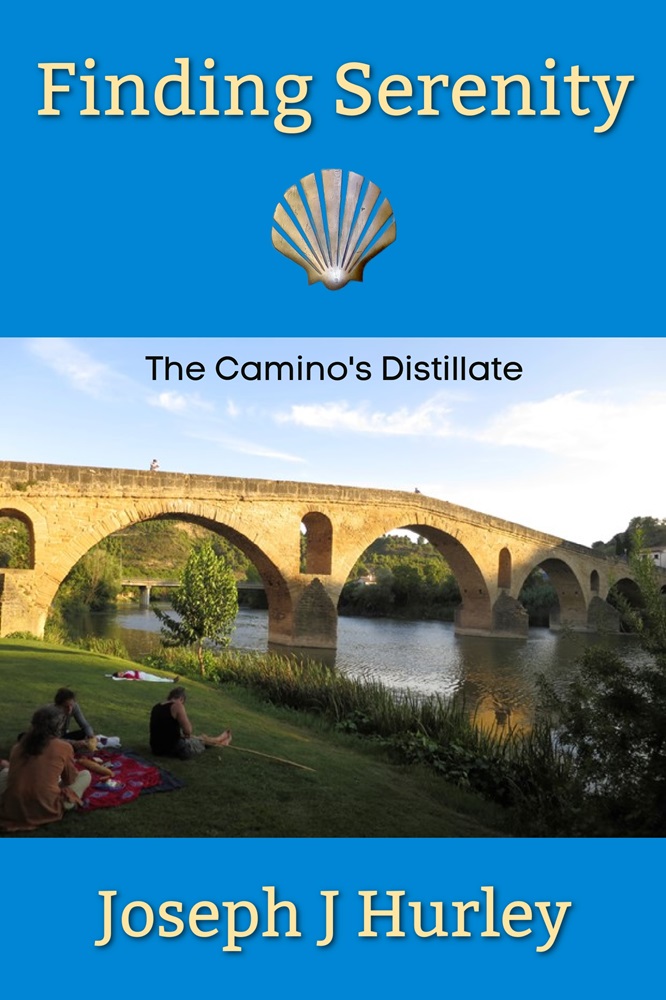
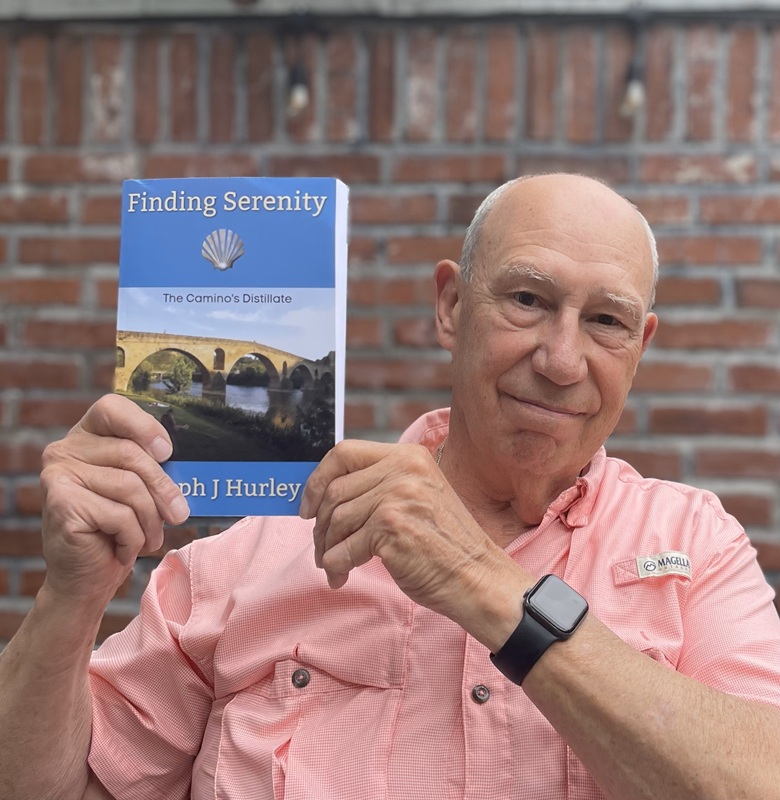
Finding Serenity: The Camino’s Distillate by Joseph J. Hurley

Finding Serenity: The Camino’s Distillate by Joseph J. Hurley

Finding Serenity: The Camino Distillate

By Joseph J Hurley

Joe Hurley walked thirty-three straight days. After crossing the Pyrenees into Spain, he trekked eight hundred more kilometers to Santiago de Compostela. For three days, he hiked alongside his son Mike. Then, for thirty days he wandered solo. Rarely was he alone, though. Everything needed, besides food, could be found in his pack. With each dawn’s arrival, he never knew where he would lodge that evening, except for two nights. While physically challenging, his journey was likewise joyous and extraordinarily uplifting. It gave him the precious gift of serenity. He would do it again in a heartbeat, if so blessed. After reading this book, you will want to join him!

Paperback: $19.95 | Kindle: $9.99


TESTIMONIALS

“Distillates are those substances that are concentrated or extracted. Dr. Hurley has concentrated the spiritual meaning and substance of the Camino in his book Finding Serenity. It is a journey of the external road imitating or extracting the internal life of the Spirit. Taking the time to walk (even if only by his words and images), allows one to go deeper via the simple pleasures and serenity of the path, experiencing more fully being alive and aware. Many thanks to Dr. Hurley for helping us deepen our appreciation for roads outwardly and more frequently traveled as well as those very human roads inside of us too often less traveled.” – Charlie Durban, author of Adventures with the Holy Spirit: A Journey with Ruach

It was on a Sunday morning on my own Camino de Santiago journey. From a mile away soft musical notes emanated across the open field I was crossing. Those magical mysterious notes increased in volume as it drew me closer, finally bringing me to the entrance of a Catholic Church where a Mass was about to begin. The words and expressions in Joseph Hurley’s Finding Serenity are like word notes inviting the reader to a destination. That destination will be the door to your heart, mind, and soul. Open that door to experience what a life changing walk can do to the walker as well as the reader.” Paul Stutzman, author of Hiking Through: One Man’s Journey to Peace and Freedom on the Appalachian Trail, and Pilgrims: On the Camino de Santiago.

“The Camino provides is a saying many of us have experienced and usually when we least expect it. Joseph’s delving into the history and spirituality of this journey is truly enlightening. I love to encourage people to undertake a journey of self-discovery by walking the Camino — and then life will never be the same.” – Nola Vulling, a Camino pilgrim who has made six pilgrimages to Santiago de Compostela including one of over 1000 miles from Amsterdam

ABOUT THE AUTHOR

Joe Hurley is a retired physician residing in St Louis with his wife Ellen. A frequent urban and backwoods hiker he has shared numerous outdoor trips with his nine children. As a practicing Catholic he was drawn to experience the ancient practice of pilgrimage upon his retirement in 2014. This book is a long look back on his solo journey in the Summer of that year.

OTHER CATHOLIC MEMOIRS

No Results Found

The page you requested could not be found. Try refining your search, or use the navigation above to locate the post.

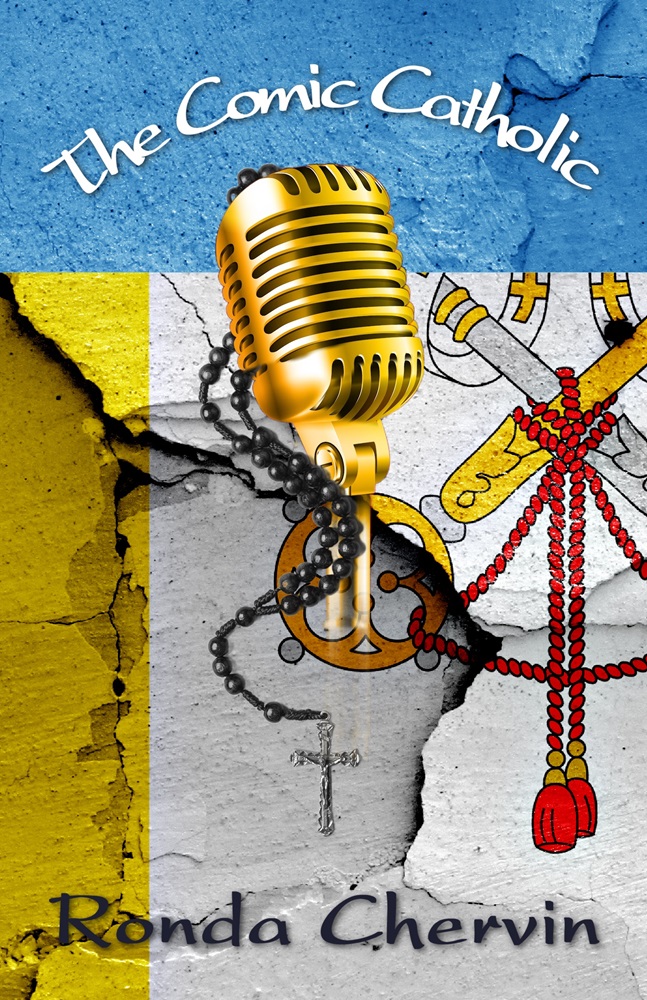
The Comic Catholic

The Comic Catholic

The Comic Catholic

By Ronda Chervin

In this witty, literary stand-up routine, Ronda Chervin takes a bow to a key property of the human person as understood in our philosophical anthropology, namely, that of risibility. It is a trademark of our humanity that we were made not only to find wonder in the ironies of this world, but also to laugh at them loudly, boisterously, and even wryly.

Paperback: $9.99 | Kindle: $9.99


TESTIMONIALS

“Ronda Chervin tugs at that funny bone in all of us, engaging us at the core of our personhood.” – Dr. Sebastian Mahfood, OP, author of The Narrative Spirituality of Dante’s Divine Comedy

ABOUT THE AUTHOR

Ronda Chervin, PhD, is a professor of philosophy, widow, grandmother, and great grandmother. She has taught at Loyola Marymount University, St. John’s Seminary of Los Angeles, Franciscan University of Steubenville, Our Lady of Corpus Christi, and Holy Apostles Seminary and College. She is the author of numerous books about Catholic living and presents on EWTN and Catholic Radio. Most well-known of her books are The Way of Love, Treasury of Women Saints, Avoiding Bitterness in Suffering: How our Heroes in Faith Found Peace amid Sorrow, and, most recently, with co-author Albert Hughes: Escaping Anxiety on the Road to Spiritual Joy. 
OTHER CATHOLIC SPIRITUALITY BOOKS

No Results Found

The page you requested could not be found. Try refining your search, or use the navigation above to locate the post.

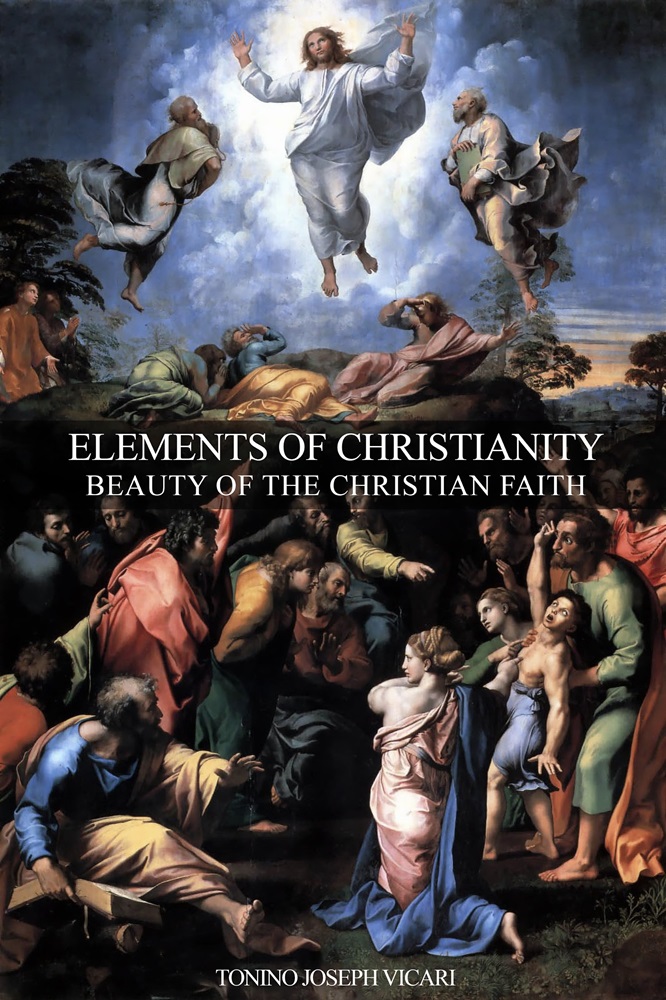
Elements of Christianity: The Beauty of the Christian Faith

Elements of Christianity: The Beauty of the Christian Faith

Elements of Christianity: The Beauty of the Christian Faith

by Tonino Vicari

This book attempts to make accessible to the average reader the basic elements of Church teaching concerning morality, natural law, and supernatural truths that have been passed down through the Holy Scriptures and Tradition from the time of the Apostles from Jesus Christ himself. 

Hardback: $39.95 | Paperback: $19.95 | Kindle: $9.99

TESTIMONIALS

“With his training in architecture and theology, Tonino Vicari demonstrates the beauty, wisdom, and logic of the Catholic faith in this compelling volume. Drawing upon Scripture, the Catechism of the Catholic Church, and outstanding works of art, Elements of Christianity makes an ideal textbook for   higher level catechetical classes and adult education. In 1802 François-René de Chateaubriand published his Genius of Christianity as a response to the anti-clericalism of the French Enlightenment. In a similar way, Tonino Vicari has published a book on the beauty of the Catholic faith that responds to the secular culture of today.” Robert Fastiggi, Ph.D. Professor of Dogmatic Theology, Sacred Heart Major Seminary, Detroit, Michigan

“Tonino Vicari has produced a handy compendium of our Catholic faith tradition, which will be of great help to students entering into their studies and a resource for those who teach them.” – Dr. Sebastian Mahfood, OP, author of The Narrative Spirituality of Dante’s Divine Comedy

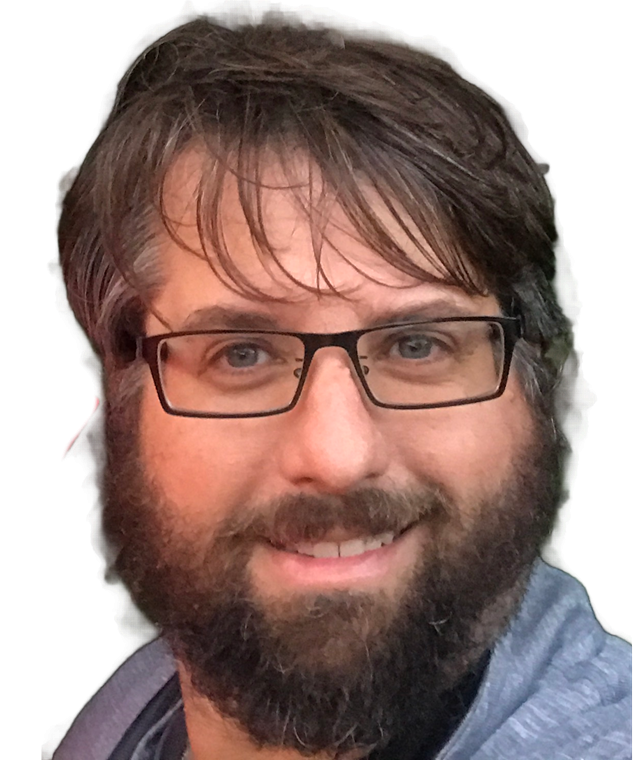
ABOUT THE AUTHOR

Tonino Vicari is a husband, father, author, and educator. He received his Master of Arts in Theology from Sacred Heart Major Seminary. He has been involved in teaching the Catholic Faith for the past 12 years. He lives in the Coachella Valley with his wife, and two children. His hobby includes fine art landscape photography.

OTHER CATHOLIC ACADEMIC BOOKS

No Results Found

The page you requested could not be found. Try refining your search, or use the navigation above to locate the post.