In Praise of Life by Dr. Donald DeMarco This book illustrates how ten different factors can improve our appreciation of life: Evolution prepares it, Meaning justifies it, Love enhances it, Truth directs it, Freedom crowns it, Virtue strengthens it, Sexuality promotes...
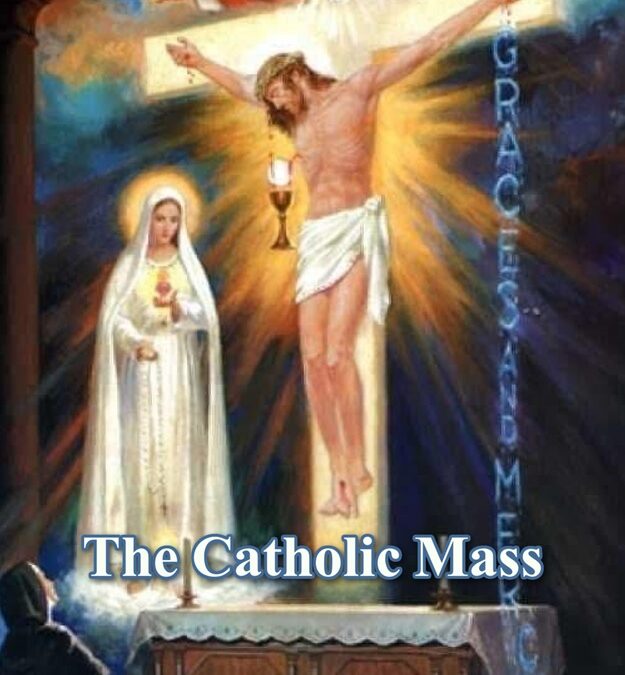
The Catholic Mass by Frits Albers
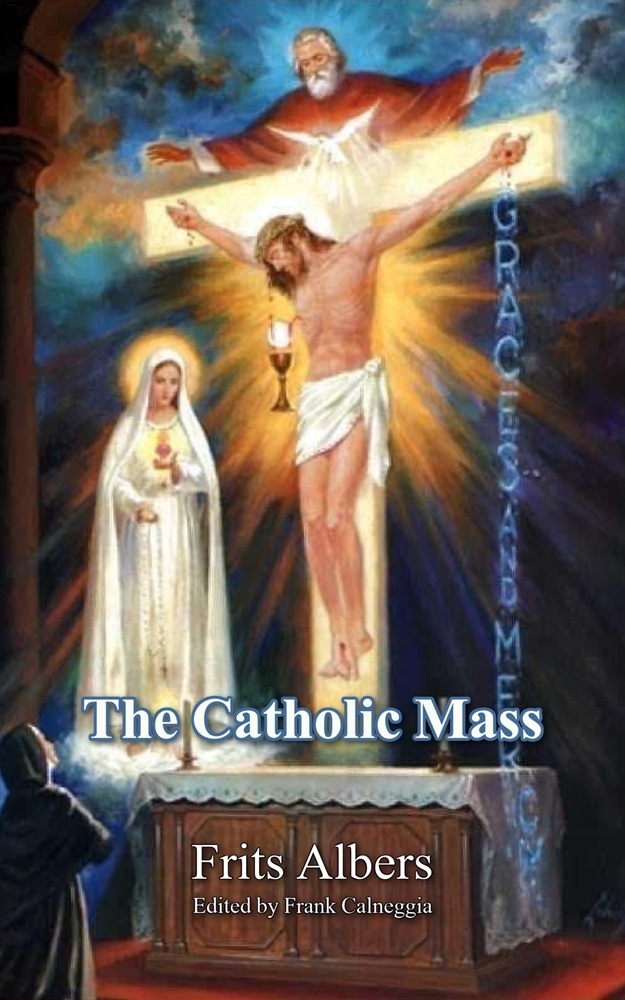
The Catholic Mass
by Frits Albers, edited by Frank Calneggia
The Catholic Mass is a systematic exposition and explanation of all the parts of the Holy Sacrifice of the Mass. It is written in plain language so that parents can better understand the Mass themselves and can better explain it to their children. For in the author’s own words “this book is written and published for Catholic parents who want their children to be brought up in the timeless and eternal stream of Catholic Truth and practice as they are contained in, and learned from, the Catholic Mass …. if every child in a Catholic school was taught these fundamental Truths leading them to a lifelong understanding of, and love for, the Holy Catholic Mass, the vast majority would never shirk their duty of attending Mass on every Sunday of the year”.
Paperback: $14.95 | Audible: $14.99 | Kindle: $9.99
TESTIMONIALS
“Frits Albers invites readers into the mystery of the Mass with clarity, conviction, and theological depth, offering a compelling guide that renews reverence and deepens understanding of the Church’s most sacred and transformative act.” – Dr. Sebastian Mahfood, OP, co-author with Ronda Chervin of Catholic Realism: A Framework for the Refutation of Atheism and the Evangelization of Atheists
ABOUT THE AUTHOR
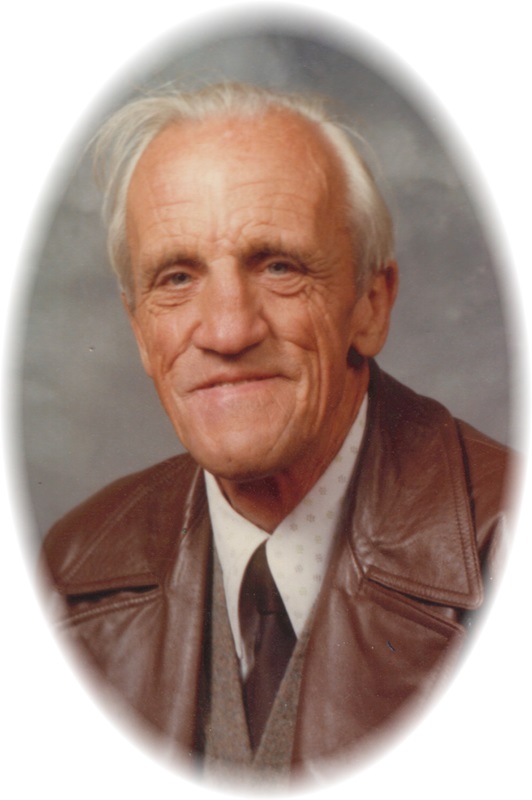
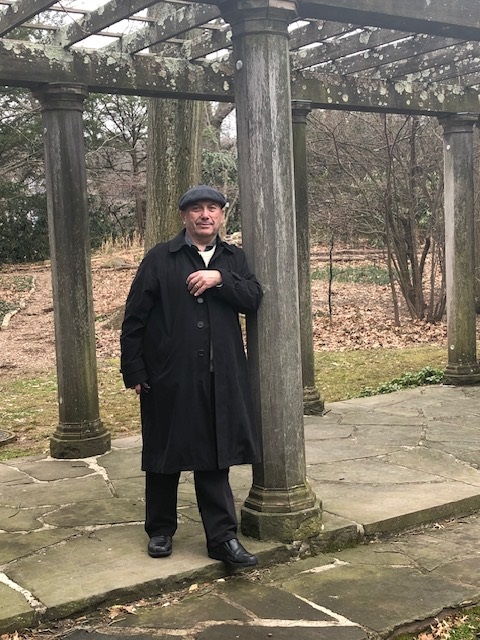
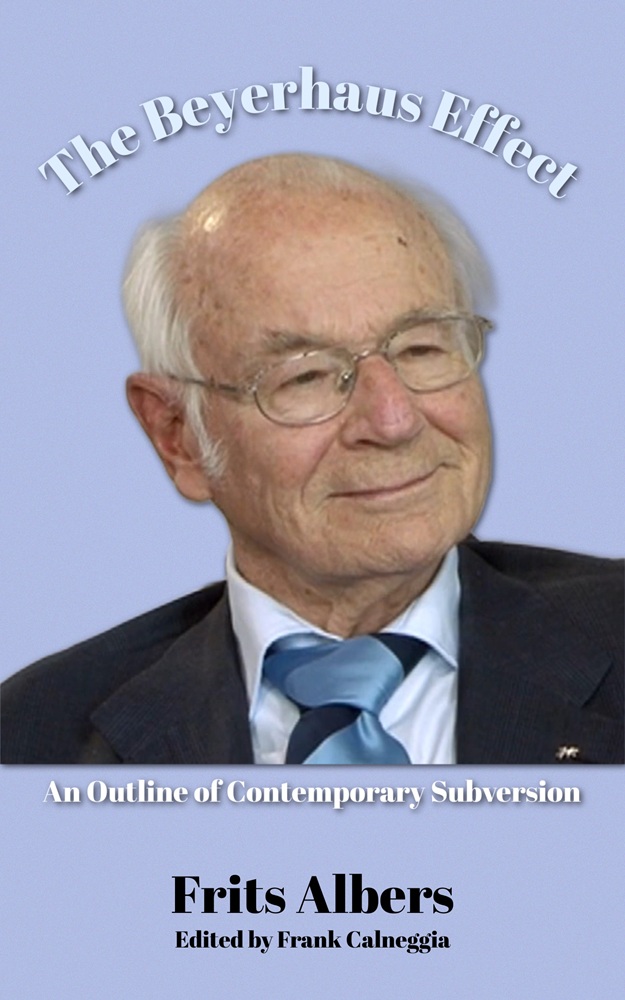
Frits Albers Ph. B (1921-2000) was born in Holland and studied under the Jesuits at Nijmegen during the 1940s. He emigrated to Australia in 1951, and travelled extensively within the south-east region of the ‘lucky country’. He joined the Department of Education in Victoria and worked as a high school teacher who specialised in mathematics, French and English.
In the early post Vatican II period he realised that the strange interpretations of the recently concluded Council that were being forced upon Catholics were under pinned by the same philosophy he had been taught in the 1940’s by the Jesuits at Nijmegen in the name of St Thomas Aquinas, but which in reality was the systematic Modernism of Pierre Teilhard De Chardin, S.J. Thus, in the early 1970’s he began writing articles and books to expose the philosophical root of these errors and aberrations of Teilhard De Chardin, and to defend Catholic Faith, clear thinking, and right philosophy.
ABOUT THE EDITOR

The editor is a retired electrical engineer who worked for most of his professional career in the specialist area of power generation. In a sabbatical year, he completed post graduate research in the History and Philosophy of Science at the University of Melbourne. He has long loved the philosophy of St Thomas Aquinas.
OTHER BOOKS ON CATHOLIC FAITH AND MORALS
In Praise of Life
read more
The Jesus Code: In the Beginning was the Word
The Jesus Code: In the Beginning was the Word by Roger Skrenes Jesus is the only person in the history of the world whose biography was known before he was born! He wanted everyone on earth to know of this miraculous Old Testament portrait of himself (Luke 24:27), and...
The Way of Love: The Path of Inner Transformation
The Way of Love: The Path of Inner Transformation by Dr. Ronda Chervin A reprint of Dr. Ronda's The Way of Love: The Battle for Inner Transformation, this new edition under a new subtitle puts back in front of the world the nature of human love alongside human passion...
The Human Person: A Bioethical Word
The Human Person: A Bioethical Word by Francis Etheredge Is bioethics a technical specialization or a profound expression of human being? Wonderfully answering this question, the book is beautifully enriched by eight Forewords. Beginning again and again, Etheredge...
History of the Eucharist
History of the Eucharist by Roger Skrenes The Eucharist is not a topic of the moment. Like any good teacher, God took “his time” in revealing the Eucharist slowly, step by step, throughout Biblical history. In this history there are two main tracks: 1) the history of...
Political Science from a Catholic Perspective
Political Science from a Catholic Perspective by Fr. Peter Samuel Kucer, MSA Today, many specializations within the field of political science identify it particularly as a social science, and these are namely political theory, government and politics, comparative...
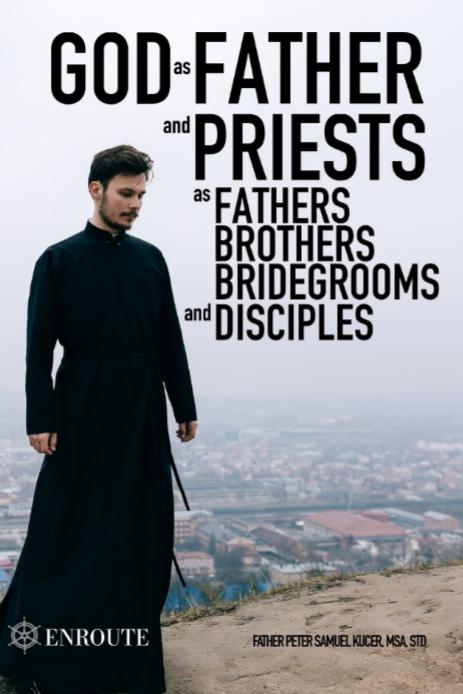
God as Father and Priests as Fathers, Brothers, Bridegrooms, and Disciples
God as Father and Priests as Fathers, Brothers, Bridegrooms, and Disciples by Fr. Peter Samuel Kucer, MSA The vocation to the priesthood does not simply entail doing specific actions that only priests can perform. Being a priest essentially means being grounded in a...
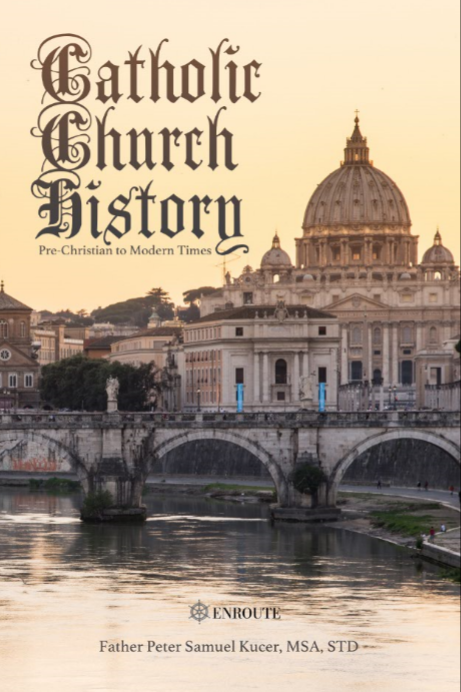
Catholic Church History: Pre-Christian to Modern Times
Catholic Church History: Pre-Christian to Modern Times by Fr. Peter Samuel Kucer, MSA Catholic Church History: Pre-Christian to Modern Times presents how the Catholic Church developed from her earliest days up to modern times. The reader will encounter the mystical...
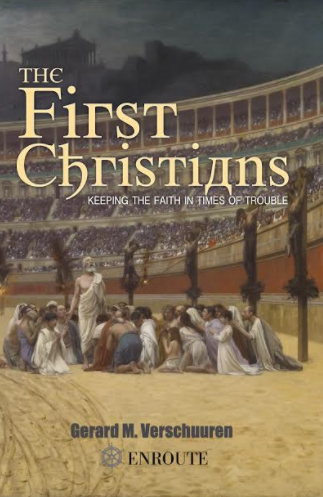
The First Christians: Keeping the Faith in Times of Trouble
The First Christians: Keeping the Faith in Times of Trouble by Gerard Verschuuren In this book, we speak about these first Christians mainly through the people who gave them a voice and a compass: the Church Fathers. They were their leaders and their teachers, heirs...
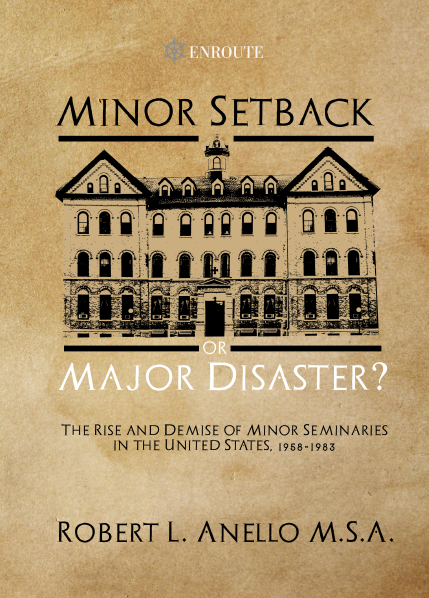
Minor Setback or Major Disaster? The Rise and Demise of Minor Seminaries in the United States, 1958-1983
Minor Setback or Major Disaster? The Rise and Demise of Minor Seminaries in the United States, 1958-1983 by Fr. Robert Anello, MSA Interested in how this happened?"Catholic Ministry Formation Enrollment: Statistical Overview for 2017-2018," Center for Applied Research...

 ABOUT THE AUTHOR